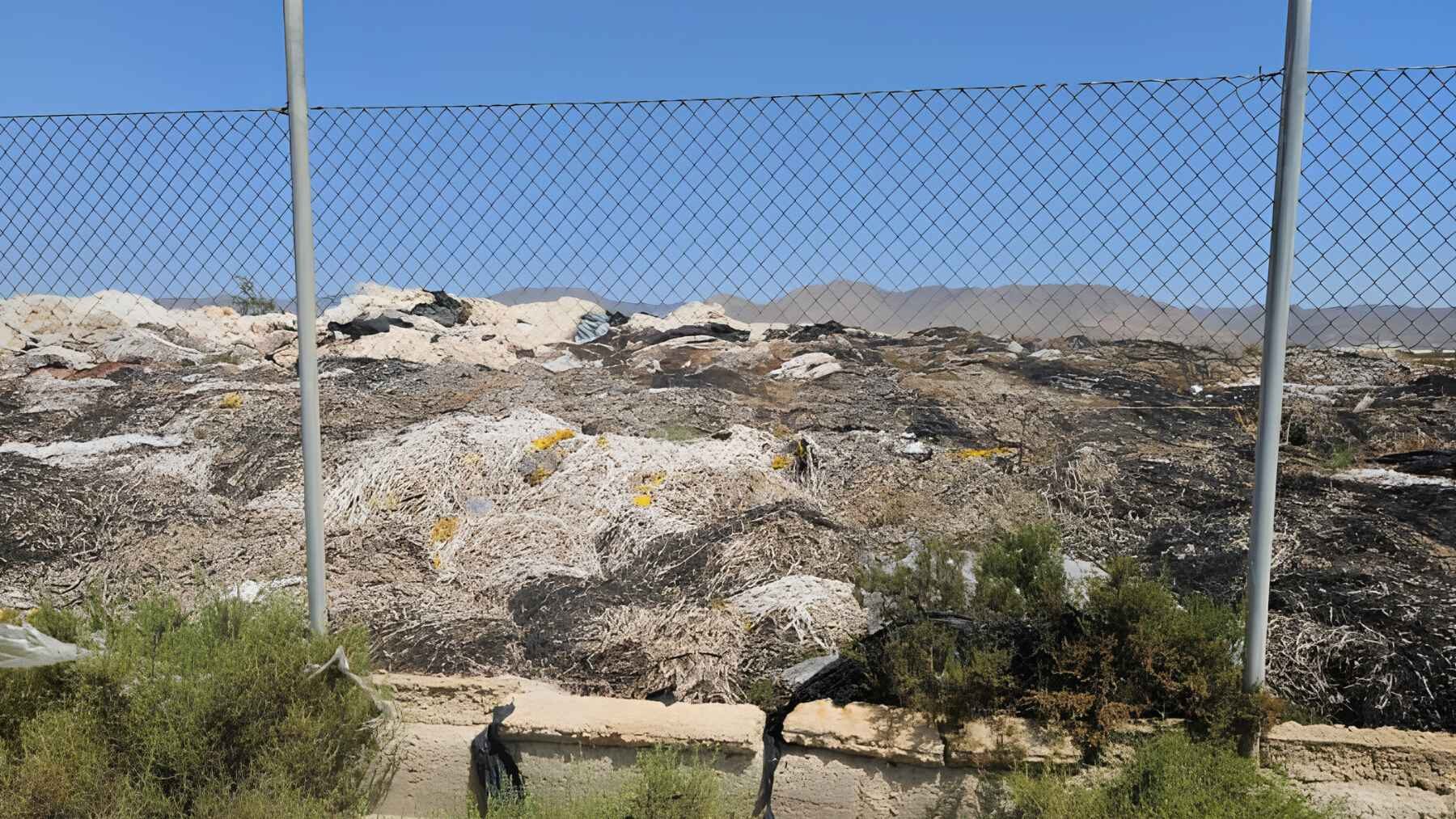
A sprawling illegal dump in Boqueras Altas, near Níjar in Spain’s Almería province, has become a stark symbol of what happens when agricultural plastic waste is documented again and again but never removed. The site covers about 3.2 acres, roughly the area of two soccer fields, and is buried under greenhouse twine, pesticide containers, irrigation hoses, and polyethylene sheets.
Ecologistas en Acción filed a complaint with provincial prosecutors in Almería on July 10, alleging a possible crime against natural resources and the environment. The move came after at least four administrative actions failed to produce an effective cleanup order or stop more waste from accumulating.
A dump hidden among greenhouses
Reaching Boqueras Altas means leaving paved roads and following dirt tracks through Almería’s vast landscape of white-covered greenhouses. These farms supply tomatoes, peppers, and other produce to markets across Europe, but one nearby plot grows nothing at all. It has become a stationary mountain of discarded agricultural materials.
The waste has reportedly been building for more than a decade. Wind tears fragments from the pile and scatters them across neighboring fields, scrubland, and drainage channels. What looks like an isolated rural mess can quickly spread far beyond the property line.
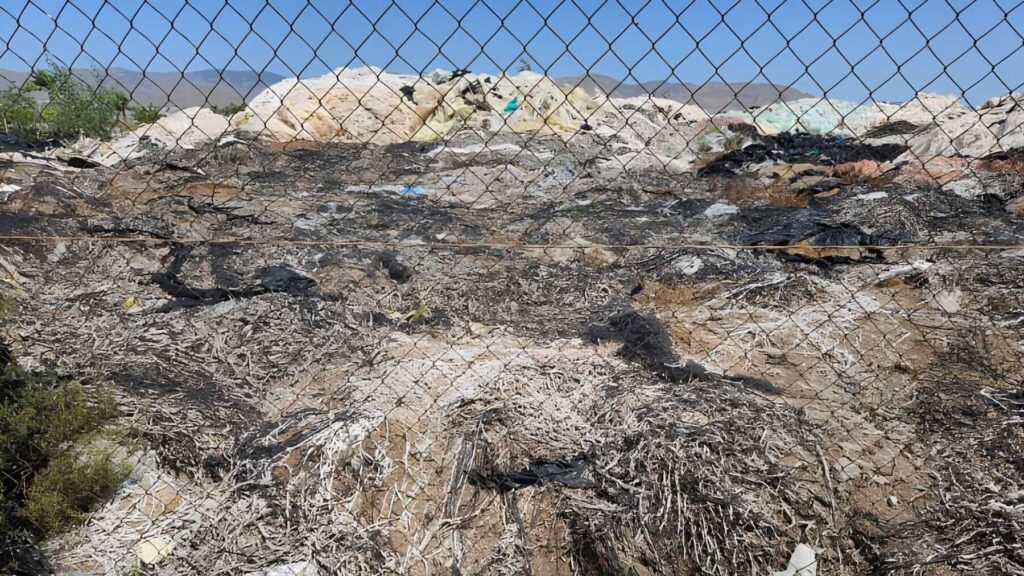
Waste exposed to wind and rain
Raffia twine, commonly used to support greenhouse plants as they grow, is tangled through bushes around the site. Pesticide containers are also mixed into the dump, including some that allegedly lack required labels or signs of proper rinsing before disposal.
There is no perimeter fence, no sign identifying the landowner or waste manager, and no visible system to contain runoff. During heavy rain, debris and possible chemical residues could be carried toward the Granatilla channel, a normally dry waterway that can flood and eventually connects with the Mediterranean Sea.
Plastic does not remain where it was dropped.
Four actions with no cleanup
The documented timeline begins in 2014, when the Andalusian regional government inspected the site and opened a penalty case over the uncontrolled storage of plastic waste. According to the information gathered by the environmental group, a fine was issued but never firmly collected because officials could not locate the responsible person.
The Civil Guard’s Nature Protection Service, known as Seprona, filed two additional reports in 2019 and 2021 and forwarded them to Níjar’s local government and regional authorities. A fourth intervention followed in early 2025 after another alert, producing a new environmental inspection report that again described the dump’s size and associated risks.
Still, the waste stayed. The repeated pattern was paperwork without restoration.
“The perfect case” of failed control
Francisco Marín, the group’s spokesperson in Almería, described Boqueras Altas as “the perfect case for understanding the failure of plastic waste control in Almería.” He said the dump had been reported, inspected, and photographed for years, yet the competent authorities had not restored the land or established responsibility.
“Anyone can pile up their garbage in the countryside without fearing the consequences,” he said, arguing that the lack of enforcement sends a damaging message to the agricultural sector. His criticism is aimed not only at the original dumping, but also at the long official delay that allowed the site to become permanent.
The legal question now is whether that delay and the environmental risks are serious enough to justify criminal proceedings.
A province-wide plastic problem
Boqueras Altas is presented in the complaint as more than one abandoned lot. Almería generates more than 33,000 tons of agricultural plastic waste every year, according to figures from the producer-responsibility system and regional sustainability authorities.
Raffia twine and irrigation tape are among the hardest materials to recycle because they are often contaminated with soil and plant matter. Processing them may not be economically attractive, which can leave a gap between the amount used in greenhouses and the amount that enters legal collection channels.
An environmental technician who was not identified said thousands of tons fail to reach authorized collection systems during each growing season. Some are allegedly burned, buried in dry channels, or left at abandoned farm buildings and vacant plots.
Prosecutors asked to identify responsibility
The complaint invokes Articles 325 and 326 of Spain’s Criminal Code. Those provisions address illegal discharges or waste activities that may seriously damage the balance of natural systems.
Prosecutors are being asked to determine who deposited the waste, who currently owns the property, and who controlled it when the accumulation began. The group also wants the plastic removed immediately and the soil decontaminated, with the cost charged to any responsible party or, if necessary, to the public bodies that allowed the situation to continue.
This is not yet a finding of criminal guilt. It is a request for an investigation, evidence gathering, and urgent measures to prevent further harm.
Agriculture’s sustainable image at risk
Almería’s greenhouse industry is closely tied to European food supply chains, where retailers and consumers increasingly expect environmental standards to match claims of sustainable production. Illegal dumps undermine that message, especially when plastic waste becomes part of the landscape beside the farms producing everyday groceries.
The issue is not only how much plastic agriculture uses. It is whether the waste is tracked, collected, recycled when possible, and removed when it is found outside the legal system.
For now, Boqueras Altas remains unchanged. Wind continues to pull apart the twine, pesticide containers remain among dry vegetation, and 3.2 acres of waste are still waiting for the response that four earlier actions failed to deliver.