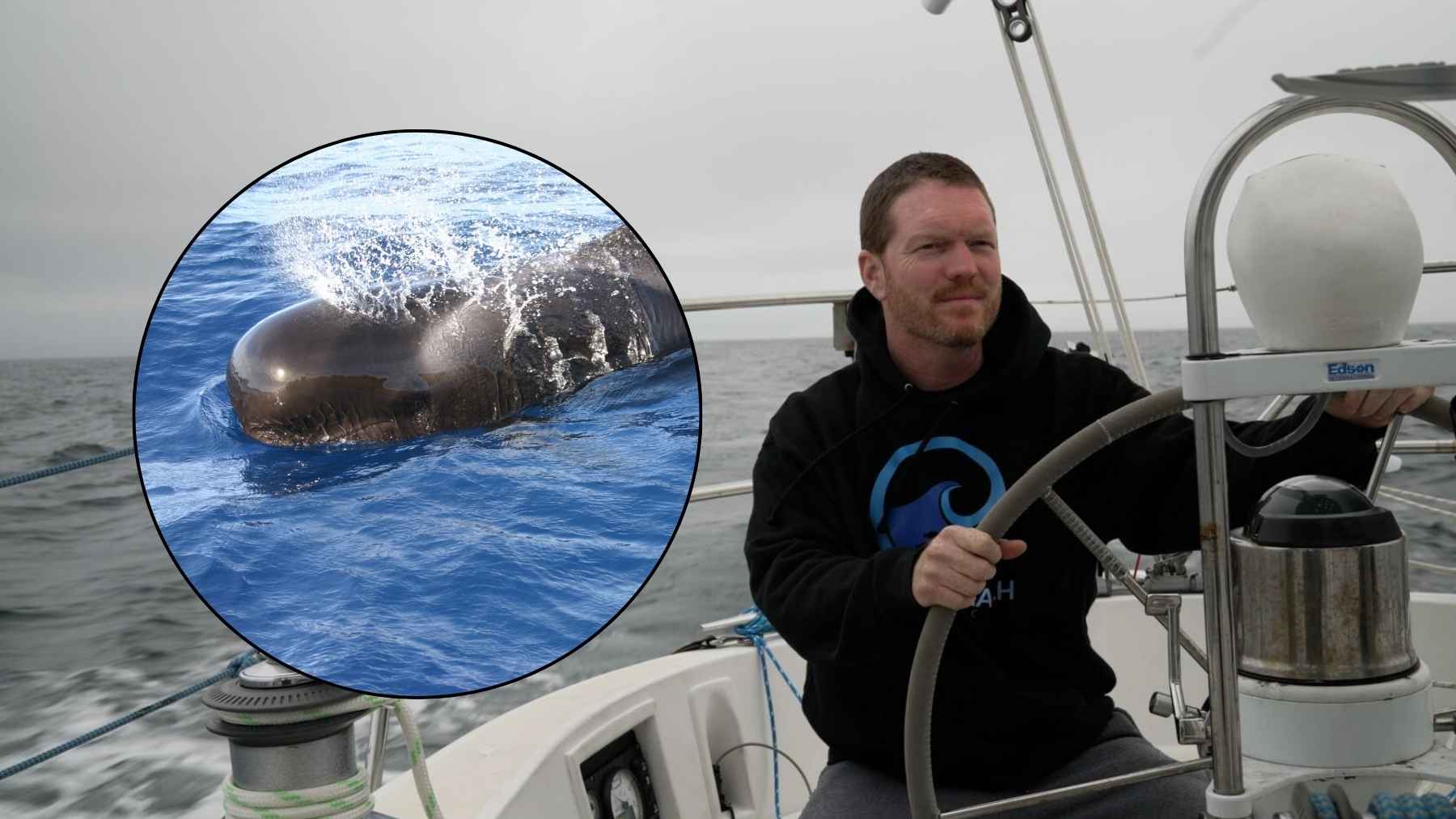
Just one week after starting his 10,000-mile solo journey around the Arctic Ocean, Matt Rutherford detected some movement through the gray fog. He saw a pod of pilot whales swimming next to his boat. He grabbed his camera to record them, as they occasionally broke the surface before disappearing into the water. It was a very pleasant surprise for Rutherford, who received these remarkable visitors during his attempt to sail nonstop and on his own through some of the planet’s most isolated waters.
What made the encounter even more fascinating was that once Rutherford went below deck, he heard the whales’ calls through the hull. It sounded like there was a conversation taking place just outside the cabin. However, this playful scene reveals a harsher reality: the reason why this Arctic journey is possible is because the region’s retreating sea ice has cleared a route that sailors would not have even attempted in the past.
Pilot whales rise from the fog
At the beginning of Rutherford’s footage, the sea is gray and has very poor visibility. Then, the camera moves, showing several dark fins that appear alongside his sailboat. The whales rise to breathe, disappear below the surface, and reappear near the wake. They do not strike the boat or approach aggressively, they just swim calmly beside him.
Rutherford has two decades of experience at sea, but he had never seen whales as curious as these ones. He could still hear them even after he went inside the cabin. “When you are inside the boat you can still hear them talking to each other through your hull,” he said. Their calls traveled through the water and were perfectly heard in the boat, so it seemed they were much closer than they were.
Why pilot whales move in groups
Pilot whales are not actually whales. In a biological sense, they are one of the largest species of the oceanic dolphin family. Scientists differentiate two species, long-finned and short-finned, although Rutherford’s source material does not confirm which one he really encountered. Without that detail, it is not possible to properly identify the animals from the video.
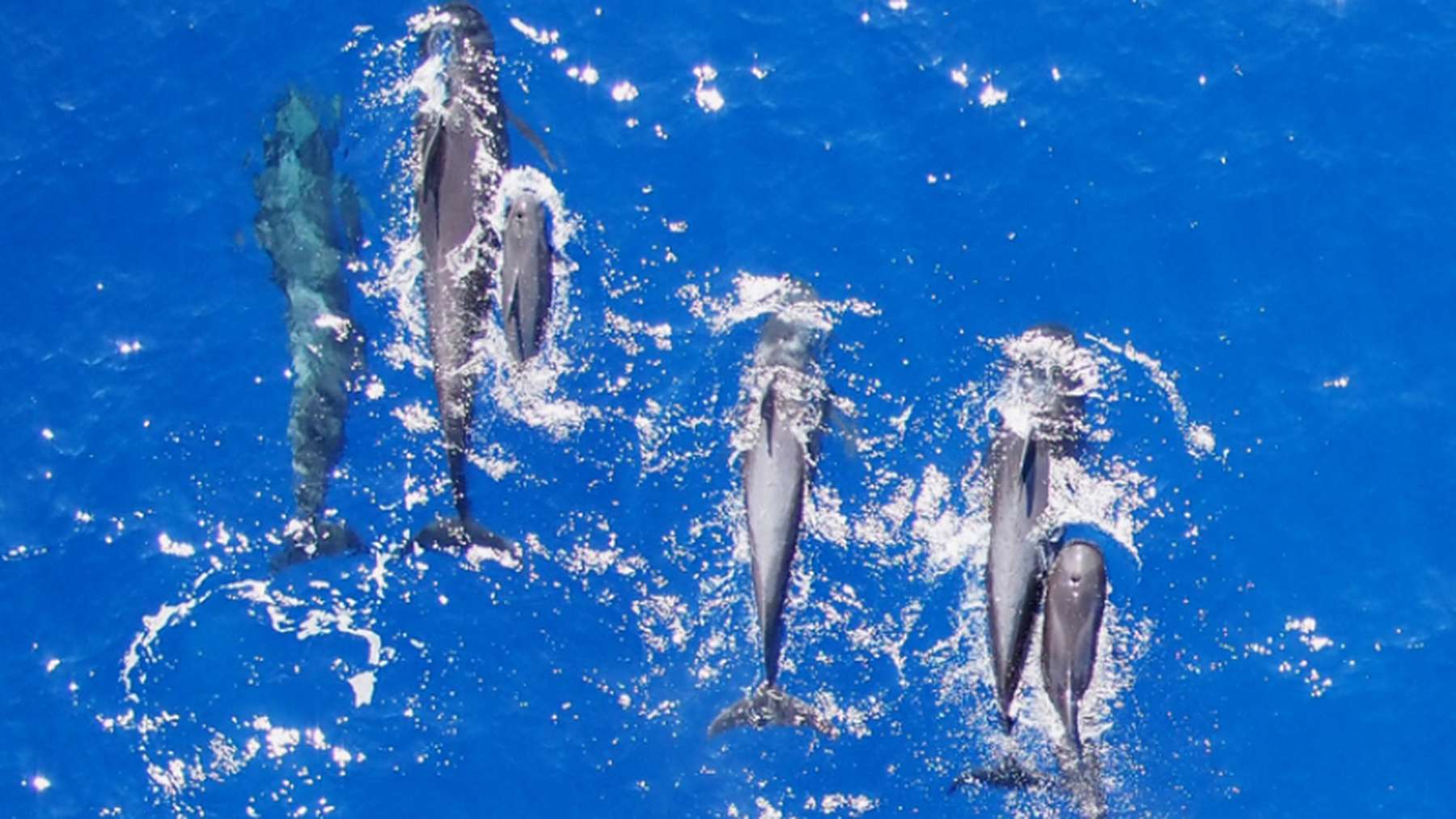
According to NOAA, long-finned pilot whales are very social and vocal animals, which tend to travel in groups of around 10 to 20 individuals. Researchers have also identified different types of calls that are thought to depend on specific social behaviors. So, the calls Rutherford heard could have been communication between them, although it is not possible to really know what was going on beneath that boat.
A record attempt in a changing Arctic
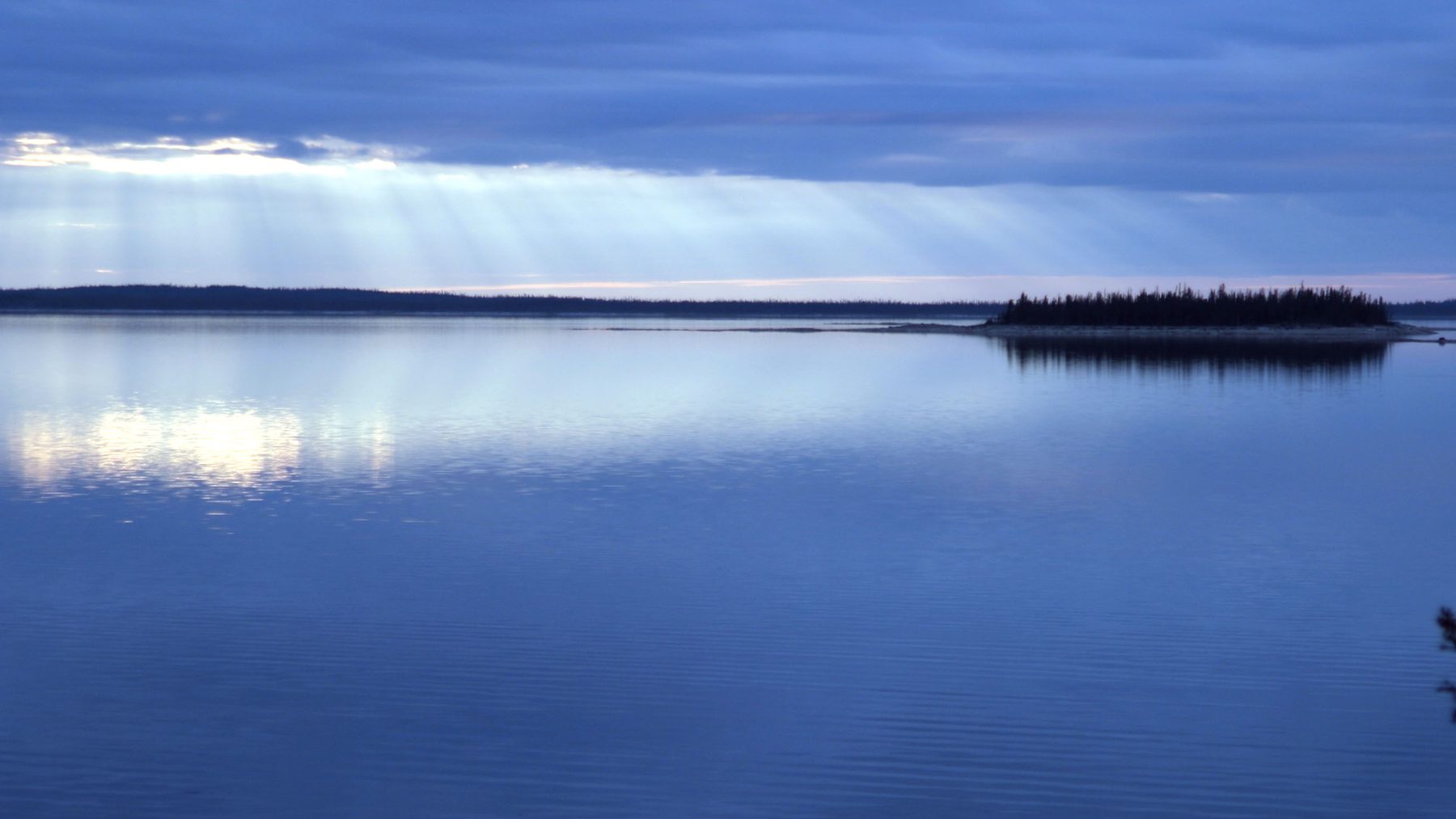
Rutherford departed from Aasiaat, Greenland, on June 25. His planned route circles the Arctic through the North Atlantic, the Russian Arctic, the Northwest Passage, and then back to Greenland. His idea is to make the entire journey alone, without stops or assistance. This means he cannot anchor, go ashore or even rely on anyone else for help. No matter what he encounters, from thick fog and mechanical problems to dangerous ice, he must deal with it himself.
The environmental contradiction is difficult to miss. Rutherford has said this once-impossible route can now be attempted because there is less ice, and there is less ice because the planet is warmer. The National Snow and Ice Data Center reports that the Arctic is warming up to four times faster than the global average, while September sea ice extent declined 12.1 percent per decade from 1979 through 2024.
This voyage also presents an uncomfortable reality. A journey that was once considered unimaginable, today is possible because a significant part of the Arctic ice has disappeared as the planet is warmer. According to the National Snow and Ice Data Center, the warming in the Arctic is four times faster than in the rest of the world. Between 1979 and 2024, September sea ice also declined by an average of 12.1 percent per decade.
Wildlife and climate warning
The video does not indicate that climate change was responsible for the encounter of the whales and Rutherford. Pilot whales usually move through the North Atlantic, and just one sighting cannot prove that there are changes in their movements or behavior. Instead, the footage shows marine life in an area of the Arctic where shrinking ice is giving sailors new possibilities.
Ice helps maintain the Arctic cool, as it reflects much of the Sun’s energy back into the atmosphere. After it melts, the dark water below absorbs its heat. The National Snow and Ice Data Center found that during summer, open waters can absorb at least nine times more solar radiation than the sea ice. This is similar to what occurs with black pavement, when it becomes hot in direct sunlight. With less ice covering the ocean, it keeps more heat and continues to warm at an increasing rate.
More than a simple encounter
By August 6, Rutherford had spent more than 40 days alone at sea, and he shared regular updates as he traveled. The whales offered a quick break from the fog, maintenance, ice watching, and long hours without spotting any person nearby. However, this brief moment has become one of the most memorable moments of this experience.
Whether this sailor completes the planned circumnavigation or not, this journey already offers two very different sides of the Arctic. One of them, describes curious and social marine creatures, while, the other one, talks about a new path enabled by disappearing ice.
The official expedition statement was published on Ocean Research Project.