A breakthrough occurred in solar photovoltaics when scientists established quantum dots (QDs) as the new technological basis. Semiconductor nanoparticles in quantum dots will revolutionize solar panel manufacturing by offering enhanced performance and increased durability. According to recent research, QDs demonstrate great potential to optimize perovskite solar cells (PSCs) because these solar cells exhibit high efficiency and affordable production. This article delves into the groundbreaking advancements in QD technology and their impact on solar panels.
The power advantage of quantum dots elevates solar cell performance through proven breakthrough technologies.
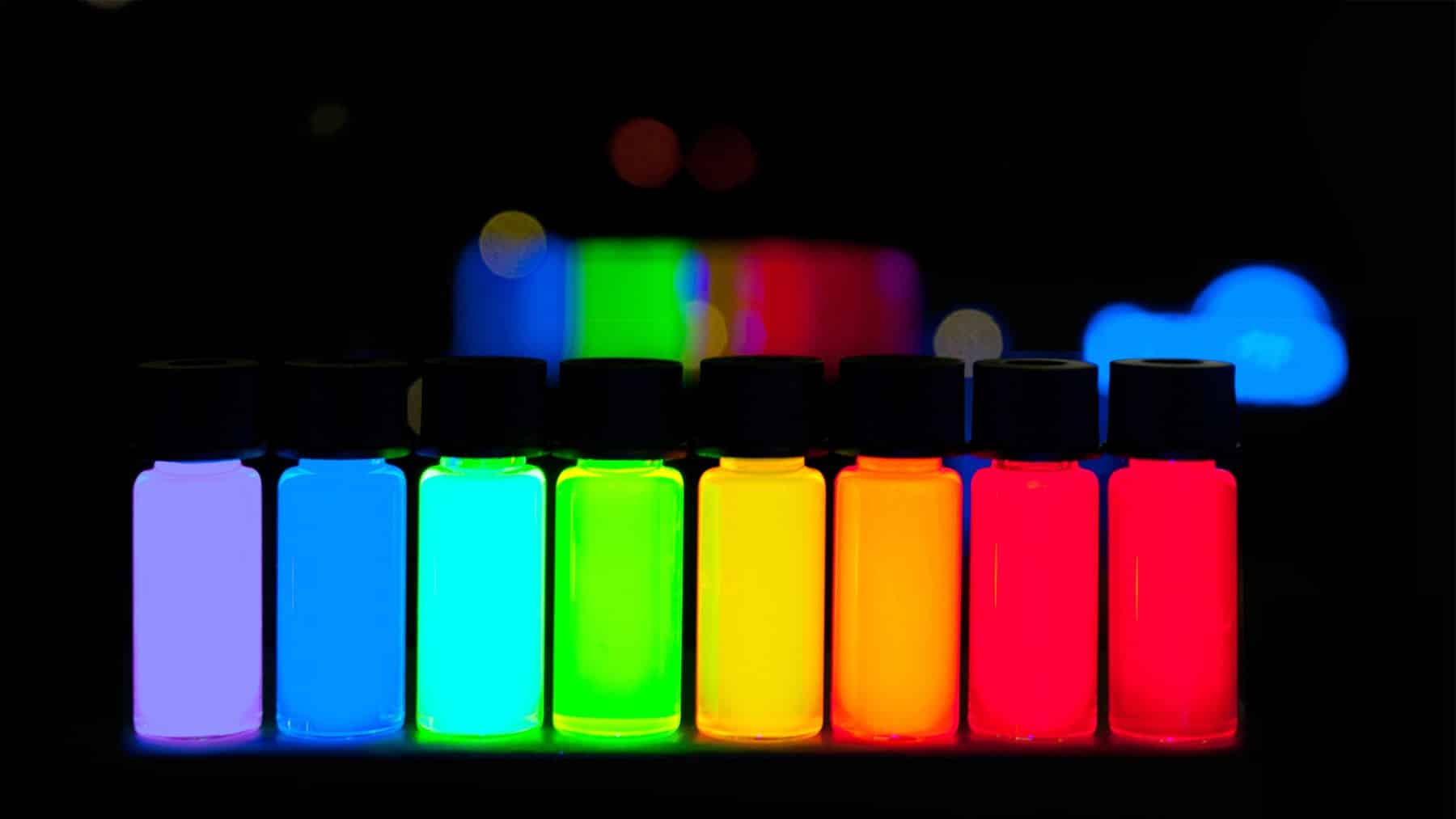
Solar cells benefit from quantum dots because they possess distinctive functional properties that suit solar cell technology. The dimensional flexibility of QDs provides a broader range of sun wavelengths that solar cells can capture, leading to substantial enhancement of power conversion efficiency (PCE). QDs can maintain high photostability because engineers can develop them specifically to endure as solar panels operate continuously.
Scientists have established different methods for incorporating QDs into PSCs. The pulsed laser irradiation in colloids (PLIC) technique gives scientists precise control over QD size and produces high-purity results. PLIC enables the creation of QDs that successfully eliminate perovskite layer defects to enhance PSC efficiency by reducing charge recombination.
Perovskite solar cells have achieved greater efficiency rates because QDs provide key functionality in their structure.
Solar cells based on perovskite materials attract scientific interest because they demonstrate high-performance efficiency and remarkable potential for cost-effective manufacturing. These materials’ operational performance suffers from defects present within their structure and instability factors. Introducing QDs to PSC technology reduces defects and optimizes charge carrier performance to fix current disadvantages.
Scientific research has proven that QD synthesis through PLIC leads to a marked enhancement of PSC performance levels. Liquid metal quantum dots made from Galinstan have been used to fix PSC imperfections, thereby reaching a peak power conversion efficiency of 21.32%. Using carbon QDs, researchers have achieved PCE results of 14.95% by integrating them into a perovskite layer for grain boundary passivation. Scientific research demonstrates that Quantum Dots enable improved effectiveness in perovskite solar cells.
QD solar panels need to solve several remaining implementation issues.
The successful integration of QDs into PSCs requires improved solutions to resolve remaining obstacles. Synthesis of QDs faces an essential obstacle, which involves precisely controlling both their size and purity. The PLIC method provides an effective solution, yet more studies are required to optimize its industrial scalability.
The continued operational stability of QD-enhanced PSCs represents a vital point of concern. Studies in progress aim to find innovative materials and construction techniques that enhance the persistence of solar cell devices. Applying self-assembled molecules known as SAMs and passivation approaches proves successful in improving hole transport layer (HTL) performance and diminishing interfacial energy loss. The commercial success of QD-enhanced PSCs depends on resolving current technological obstacles.
Solar energy research focuses on quantum dots as possible breakthrough technologies for the future.
Perovskite solar cells have experienced a new technological milestone by integrating with quantum dots. Using QD characteristics in research has generated major progress toward developing more efficient and durable solar panels. The future course of QD-enhanced PSCs holds positive potential because these systems demonstrate potential for solar energy breakthroughs alongside environmental sustainability advancement. Future years will demonstrate the effectiveness of these advancements in becoming practical industrial solutions.
Scientists continue to investigate combining QD-perovskite materials to boost solar cell capabilities. They are also working on advanced coating techniques and encapsulation methods to increase the durability of solar cell components. When QDs are used with tandem solar cells, they enable solar cell efficiency to surpass current limits. These innovative developments will enable solar energy to become more available and commercially viable worldwide.