Archaeology
147 stories · since 2025 · latest, November 20, 2026
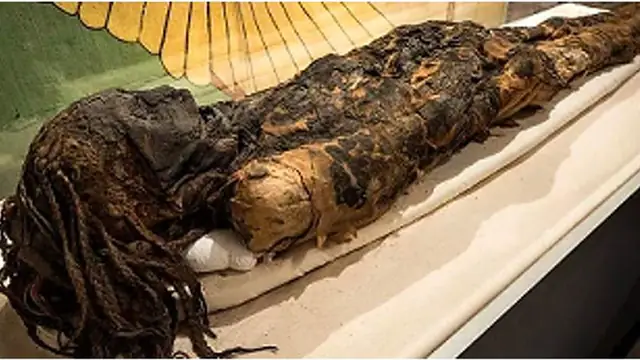
An Egyptian mummy whose braids survived thousands of years left Egypt in 1860, and a CT scan has now revealed what embalmers left inside her body
Egyptian mummy known as the Braided Lady, taken from Egypt in 1860, reveals preserved organs, worn teeth and clues to her social rank in a new CT study.
ECOnews Newsroom · October 29, 2026
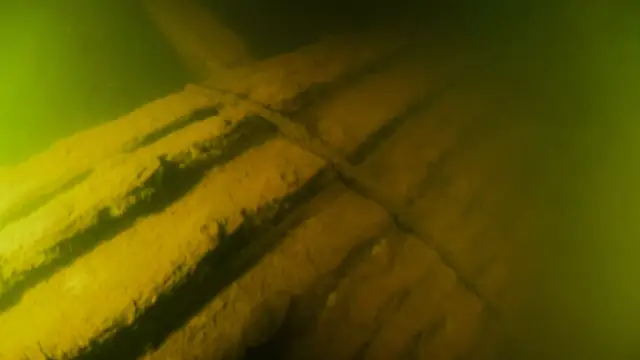
Marine archaeologists from Sweden’s Vrak museum made the first dives in decades on Kantinen, a barge that sank in Lake Hugn in 1808 carrying five heavy cannons, and the guns were nowhere in sight
Lake Hugn hides Kantinen, a 46-foot barge that sank in 1808 with five cannons, and Vrak divers filmed it for the first time in decades.
ECOnews Newsroom · October 26, 2026
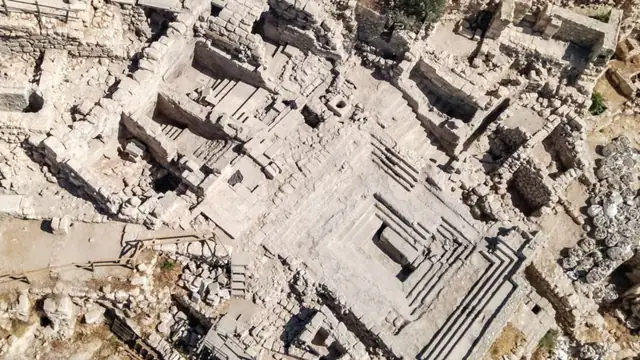
A ritual bath preserved 13.8 feet from floor to ceiling stands in a monumental purification complex at the foot of Jerusalem’s Temple Mount, and archaeologists say pilgrims likely purified themselves there before entering the Temple
Purification complex at the foot of Jerusalem's Temple Mount holds three ritual baths, one still 13.8 feet tall to its stone vault after 2,000 years.
Adrian Villellas · October 25, 2026
Archaeologists mapping a Qin royal cemetery beside Xi’an’s airport in China recovered 258 finds around a 656-foot tomb, and one researcher argues it belongs to Queen Dowager Huayang, the first emperor’s adoptive grandmother
Queen Dowager Huayang may lie in a Qin royal cemetery beside Xi'an's airport, where archaeologists mapped a 656-foot tomb and recovered 258 finds
ECOnews Newsroom · October 22, 2026
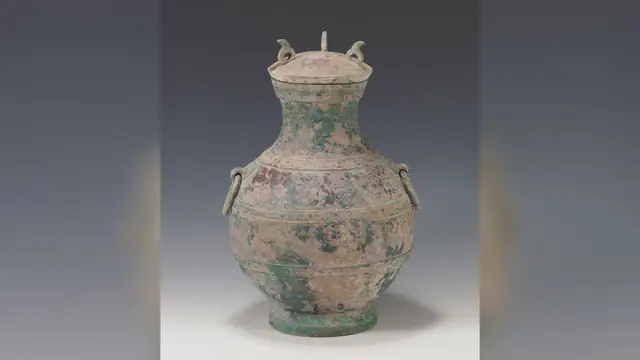
On the Corent plateau in central France, archaeologists uncovered a Gallic mint of 5 or 6 workshops stretching more than 131 feet, and a lead disk carrying 2 coin-punch impressions matches a known Arverni stater
On the Corent plateau in France’s Puy-de-Dôme department, archaeologists have uncovered what was most likely a Gallic mint: five or six stone-built…
ECOnews Newsroom · October 20, 2026
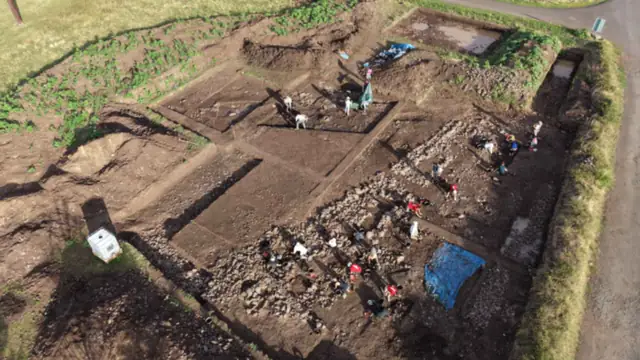
Aboriginal ranger-divers and archaeologists found underwater stone tools at a Western Australian spring drowned at least 9,000 years ago, and nearly half came from rock about 14 miles away
Aboriginal ranger-divers and archaeologists have pulled nine stone tools from a drowned freshwater spring in Flying Foam Passage, in Western Australia’s…
Adrian Villellas · October 19, 2026

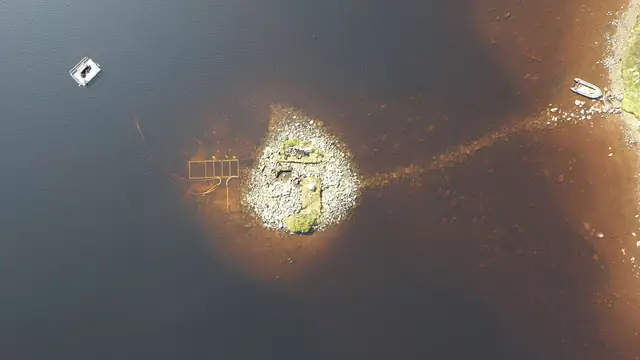
An islet in Scotland’s Loch Bhorgastail is a 5,000-year-old artificial island built on a 75-foot timber platform, and hundreds of Neolithic potsherds, some holding food residue, lay around it
In July 2023, archaeologists in Loch Bhorgastail, on Scotland’s Isle of Lewis, dug a small pit through a layer of laid logs and found more timbers…
ECOnews Newsroom · October 19, 2026
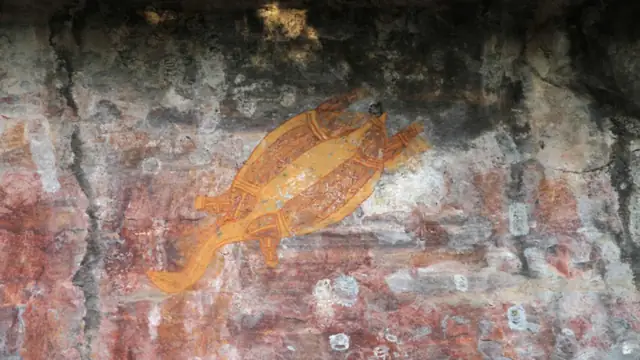
Awunbarna in western Arnhem Land holds 20 of the 52 known recent Rainbow Serpent rock paintings, one 20 feet long, and archaeologists argue artists painted them big as colonization upended their world
On the ceiling of a rock shelter at Awunbarna, in Australia’s Northern Territory, a white serpent with a crocodile-like head and a tongue poking out…
Adrian Villellas · October 18, 2026
Archaeologists packing up a Roman-era cemetery near Wrocław, Poland, found a 5,000-year-old grave with a necklace of 42 drilled teeth and two extra skulls, and researchers want to know whether the heads were cut off
Archaeologists digging a late Roman cemetery outside Wrocław, Poland, had started tidying up the site when a circular outline about 13 feet (4 meters)…
ECOnews Newsroom · October 18, 2026
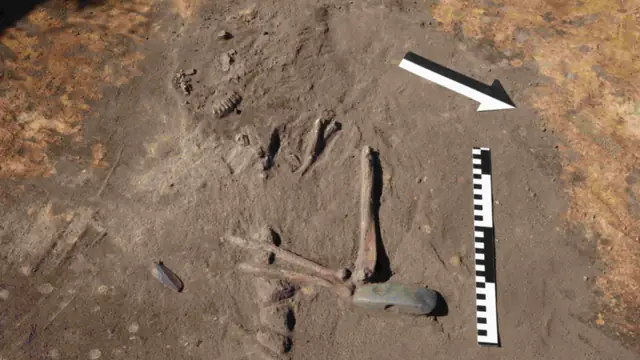
On a ridge above Alaska’s Tanana River, archaeologists recovered more than 80,000 objects from a 13,800-year-old Ice Age base camp, and its diamond-shaped stone points match ones found in Siberia
Inside what its excavators describe as the earliest potential habitation structure in North America, archaeologists digging an Ice Age base camp in…
ECOnews Newsroom · October 17, 2026
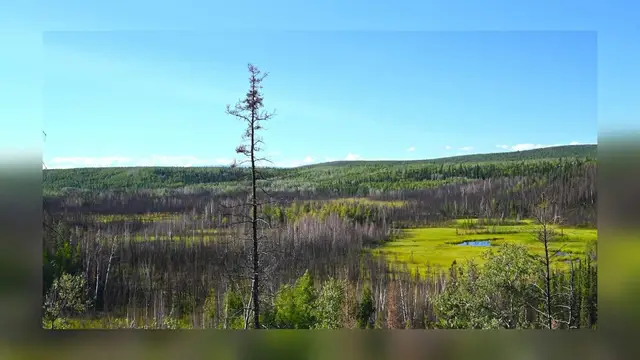
On Santorini, a Bronze Age toilet about 3,600 years old survives on the upper floor of Akrotiri’s West House, and its clay pipes once carried waste to a sewer beneath the town’s streets
Room 4a of the West House at Akrotiri, on the Greek island of Santorini, is an upstairs space partitioned off with mudbrick walls. A database entry on the…
ECOnews Newsroom · October 17, 2026
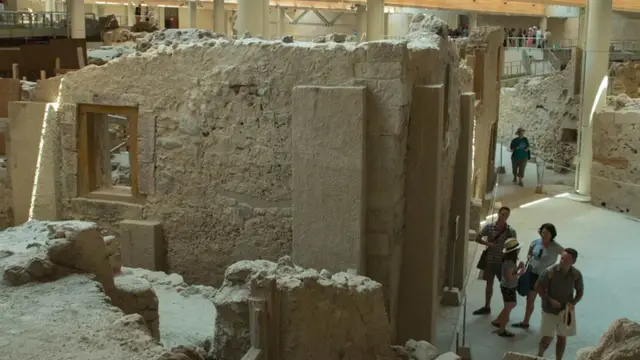
Two amateur archaeologists found 141 Roman gold coins in a field in Luxembourg, and beneath them, they also discovered a fortification that had been buried for more than 1,600 years
Two amateur archaeologists prospecting a plowed field near Holzthum, a village in northern Luxembourg, set off a find that ended with 141 Roman gold coins…
ECOnews Newsroom · October 16, 2026
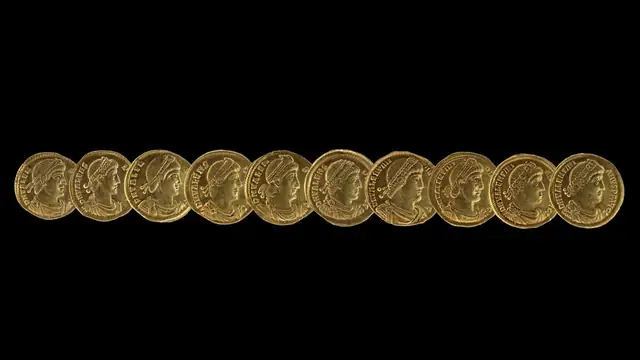
An excavation in Barcelona has revealed that Neanderthals not only carved stone but also made spears, bark trays, and wooden structures as far back as 62,000 years ago
Neanderthals at Abric Romaní, a rock shelter in Capellades, Barcelona, made spears, a club-like tool, bark trays and wooden structures between about…
Adrian Villellas · October 16, 2026
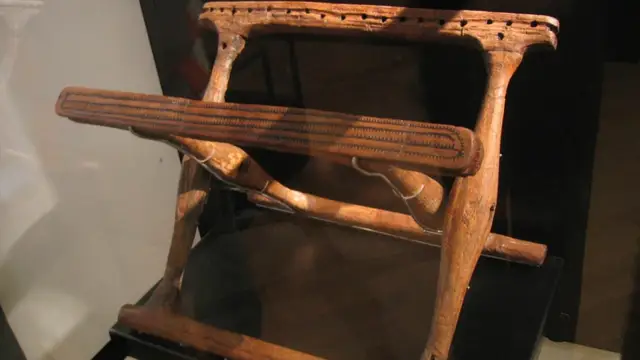
In a Danish burial mound in 1891, archaeologists found a 3,400-year-old Bronze Age folding chair, the only completely preserved chair from Bronze Age Europe, and its finder wondered if it was a table
In July 1891, in the rain, archaeologist Vilhelm Boye opened a plow-damaged burial mound near Vamdrup in southern Jutland, and the National Museum of…
ECOnews Newsroom · October 15, 2026
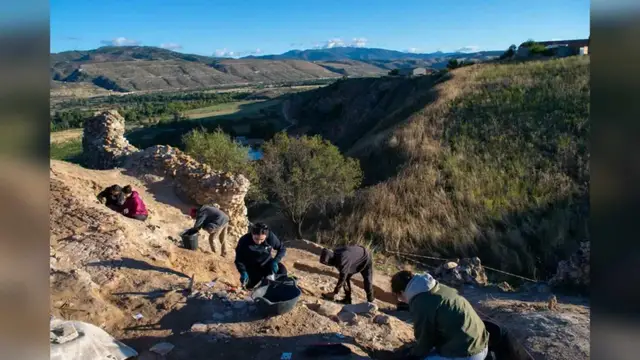
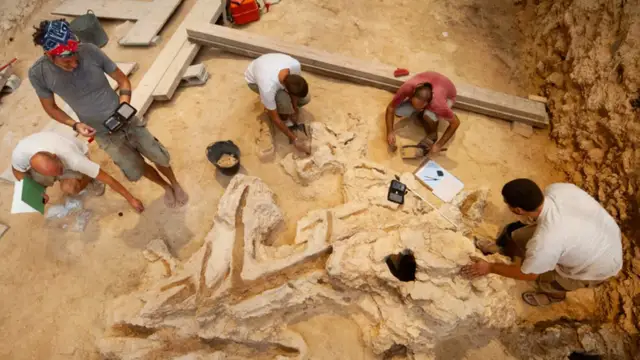
Uceda, a small town in central Spain, wants volunteers to excavate its hilltop castle and a buried 30-acre Islamic medina, and the archaeologists running the dig offer six weekly spots with breakfast until October 20
“Open to participation as volunteers,” says the poster the town hall of Uceda put out for the 2026 excavation campaign on September 2. The next line…
Adrian Villellas · October 15, 2026