The Aral Sea has long stood as a warning about what can happen when agriculture takes more water than a landscape can spare. Now scientists say the disaster between Kazakhstan and Uzbekistan carries another cost that has been largely missing from climate calculations.
A Spanish-led research team estimates that the exposed lakebed has released about 825 million U.S. tons of carbon dioxide since 1960. Another 667 million U.S. tons could still escape, but reflooding part of the former lake may keep much of that carbon underground and help turn restoration into a climate investment.
A lakebed that started releasing carbon
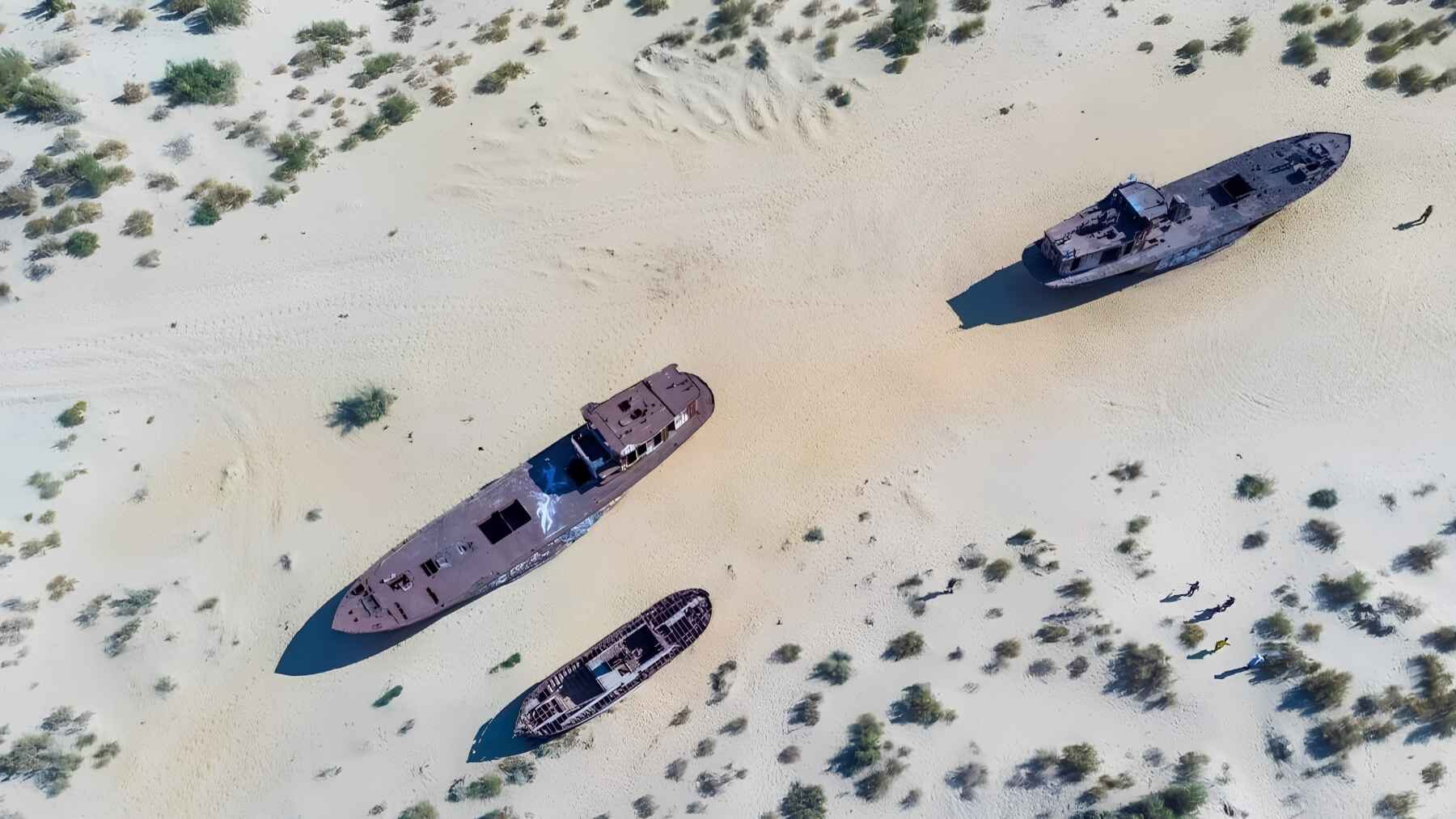
The Aral Sea was once the fourth-largest lake in the world. Beginning in the 1960s, the Soviet Union diverted water from the rivers feeding it to support large cotton-growing projects, and today less than 10% of the former water body remains.
That retreat did more than expose salt and abandoned fishing ports. According to the study, sediments uncovered by the shrinking water released roughly 825 million U.S. tons of CO₂ between 1960 and the present.
Why would a dry lake emit carbon? Lakes normally store organic material in their sediments, where water limits contact with atmospheric oxygen. Once the water disappears, oxygen penetrates the exposed bed, microorganisms become active, and they begin breaking down material that had accumulated for decades or centuries.
Scientists followed the lake backward in time
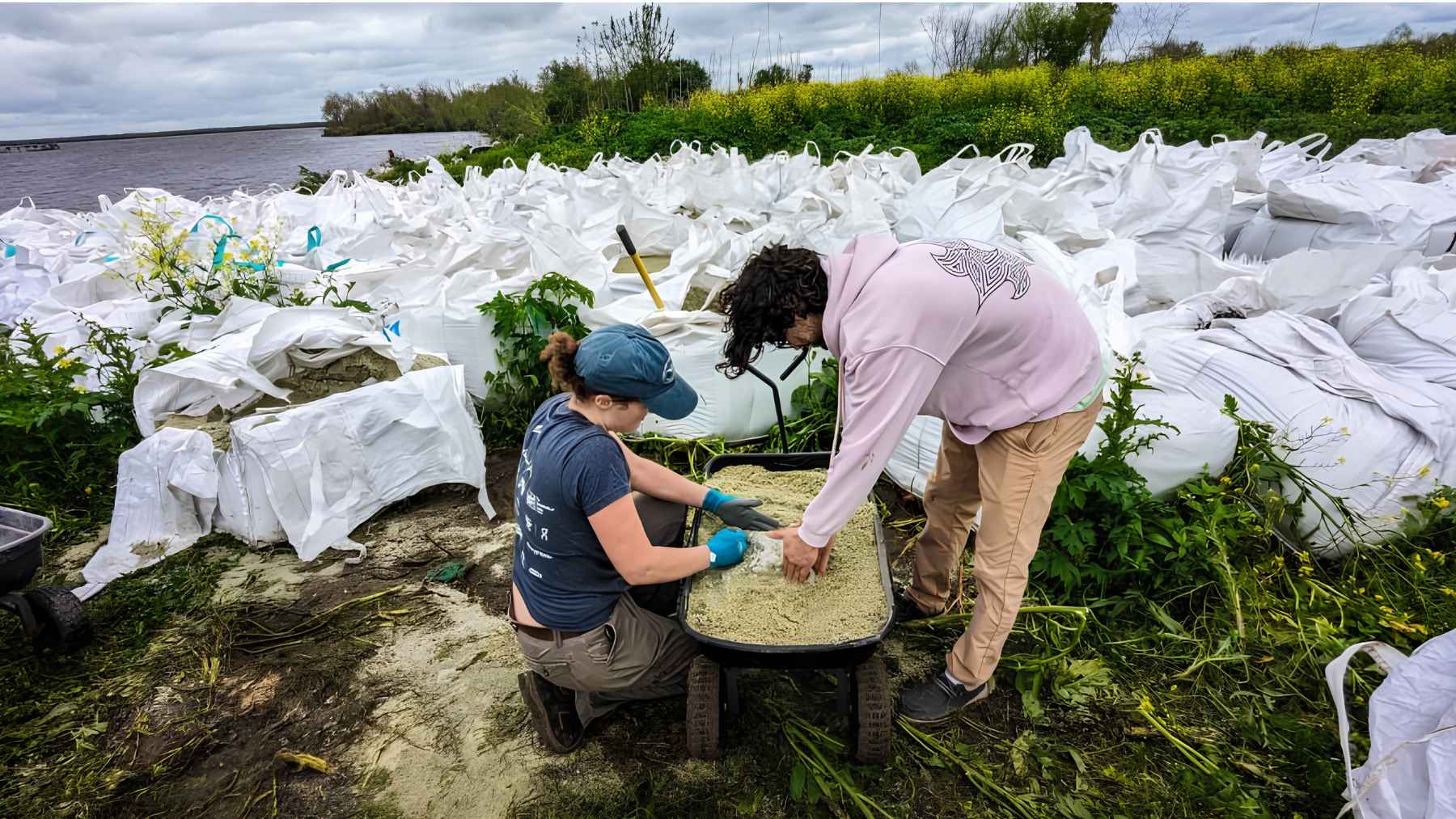
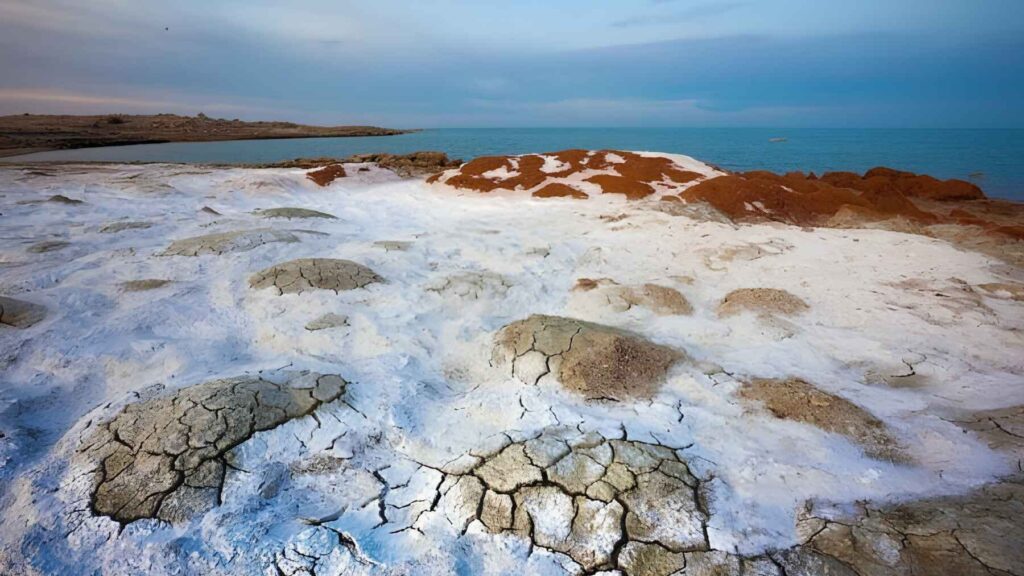
The researchers could not travel back to the 1960s, so they used the geography of the retreat as a natural timeline. During a 2022 expedition, the team drove across the saline desert and collected soil from areas that had dried at different stages as the shoreline moved farther from the center.
They combined sediment analysis with direct CO₂ measurements, satellite observations, and drone mapping. Recently exposed areas still contained much more organic carbon than sections that had been dry since the 1960s, allowing the team to estimate both the carbon already lost and the amount that remains vulnerable.
That remaining stock is enormous. The researchers calculate that close to 667 million U.S. tons of CO₂ could still be released if the sediments remain exposed.
Planting vegetation is not enough
Efforts to restore vegetation across parts of the former lakebed can reduce dust, stabilize soil, and provide some ecological value. However, the study found that, in this dry environment, new plant growth absorbs too little carbon to cancel out the emissions coming from the sediments.
In practical terms, the researchers argue that water is the crucial barrier. Reflooding would limit oxygen exposure and slow the microbial decomposition that turns buried organic matter into atmospheric CO₂.
“There is a hidden carbon treasure beneath the Aral Sea,” lead author Rafael Marcé of CEAB-CSIC said. The point is not that every acre can quickly be restored, but that keeping water over selected areas could protect a measurable carbon reserve.
Carbon credits could help pay the bill
Restoring a lake on this scale would be expensive, and that is where the team’s most unusual proposal comes in. The researchers estimate that avoiding the remaining emissions could be worth between $3.6 billion and $18 billion in tradable carbon credits, based on 2024 voluntary market prices.
In theory, companies buying those credits would help finance avoided emissions while using the units to compensate for emissions elsewhere. It is a controversial mechanism, especially when projects claim climate benefits that are difficult to prove, would have happened anyway, or may not last.
The authors argue that the Aral Sea presents a stronger case because the carbon is physically present in the sediments and its release can be measured and modeled. Even so, carbon finance would need strict monitoring, clear rules, and guarantees that reflooded areas remain protected rather than becoming a temporary accounting exercise.
The water problem comes first
Carbon credits cannot create water by themselves. The study draws on restoration scenarios that focus on improving the region’s highly inefficient irrigation network, reducing losses in canals, and coordinating how countries across the basin use the rivers that once supplied the lake.
The researchers estimate that about $9.7 billion in water-management improvements could restore roughly half of the Aral Sea’s 1960 surface. That scenario could generate around 356 million U.S. tons of CO₂-equivalent credits while also supporting broader ecological and social recovery.
Still, the obstacles are real. Any large reflooding plan would have to balance farming, local livelihoods, national water demands, infrastructure costs, and cooperation across borders. The carbon market may offer money, but politics will decide whether that money can become water.
The warning reaches far beyond Central Asia
The Aral Sea is an extreme case, but it is not alone. The Great Salt Lake, the Salton Sea, Lake Urmia, Lake Chad, and the Caspian Sea are among the inland waters facing major shrinkage, raising the possibility that exposed sediments are adding emissions that national inventories do not fully capture. The study also challenges climate accounting because farmland may appear to absorb carbon even when its irrigation helped dry a lake and awaken a much larger carbon store.
That is the deeper lesson. A disappearing lake is not only a water crisis, a biodiversity crisis, or a public health crisis, since it can also become a long-running source of greenhouse gases that may be slowed by protecting or restoring water cover.
The study was published in Science.