When it comes to old currency, it may just change your life. Last year year, an old bill sold for thousands of dollars at a Texas auction. Old currency, especially when well-preserved, is highly valued by collectors for both its historical significance and rarity. The value of vintage currency is largely determined by its age, condition, rarity, and demand among collectors. The sales which took place at the auction brought in a total of $15.5 million.
Old bill sells for nearly $500,000
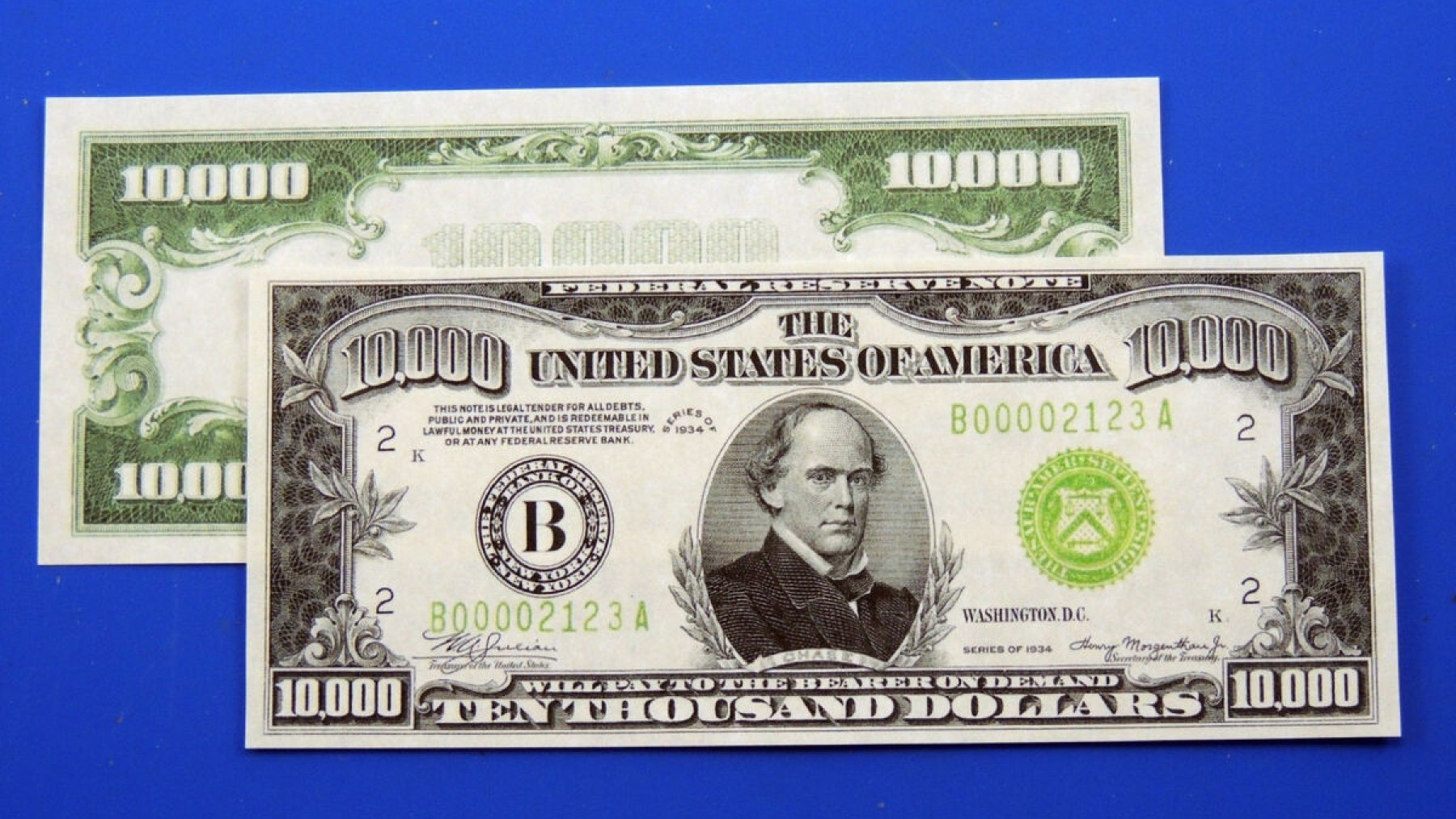
A 1934 $10,000 bill set a record when it sold for $480,000 at a Texas auction. The auction was governed by Heritage Auctions who sell a wide range of collectibles, including coins, currency, art, sports memorabilia, wine and historical items. While the staggering large amount may seem jaw-dropping to some, vice president of currency at Heritage Auctions Dustin Johnston said that the amount was a “huge surprise” due to “large-denomination notes always have drawn the interest of collectors of all levels.”
The $10,000 bill which sold at auction is an uncirculated note which contributed to the high price it fetched. The auction saw other old currencies sold at auction for sky-high prices such as an 1879 “Flowing Hair Stella” $4 coin fetched $216,000, while an 1870 Double Eagle $20 coin—one of only five or six remaining from an original mintage of just 35—sold for $456,000.
The sale of a rare 1899 Liberty Head double eagle US$20 coin beat out the $100,000 bill where the coin was sold for a staggering $468,000. “It takes an extraordinary coin to rise to the top of an auction with such consistent high quality, and this 1899 double eagle is that kind of coin,” Todd Imhof, executive vice president of Heritage Auctions, said. “It is such an exceptional rarity. Of the survivors, this example carries the highest grade, and that includes the one that is in the Smithsonian Institution. The winning bidder acquired an exceptional trophy-level coin that immediately becomes a collection centerpiece.”
The market for old currency continues to soar
The sale of mint-condition old currency continues to bring in millions each year globally. According to Imhof, the recent COVID-19 pandemic may have actually benefited the niche interest. “The pandemic saw numerous collectors revisit their hobbies, and there has been a rise in both precious metal prices and inflation, which often benefits tangible assets like rare coins,” says Imhof.
As the market for rare and collectible currency continues to thrive, collectors are not only able to enjoy the historical and artistic aspects of their collections but also stand to profit from the growing demand for high-quality, mint-condition items. This niche market remains a strong investment opportunity for those who understand its nuances and trends.
The importance of preserving old currency
While some may think spending thousands of dollars on old currency is a waste, it is important to remember what the currency represents in terms of being a historical artifact. Collectors often view these items as pieces of history that go beyond their face value, appreciating the significance they hold in understanding cultural shifts, government policies, and even the artistic design of money. In this sense, the value of old currency isn’t just monetary—it’s a way of preserving and appreciating the rich history it represents.
Preserving historical artifacts is crucial for understanding and maintaining our cultural heritage. Currency is not just a means of exchange- it also reflects the values, events, and technological advancements of the time in which it was created. In a world of rapidly changing technologies and fleeting digital records, physical artifacts like currency serve as irreplaceable relics that help us understand who we were and how far we’ve come, making their preservation vital for both historical scholarship and cultural identity.