
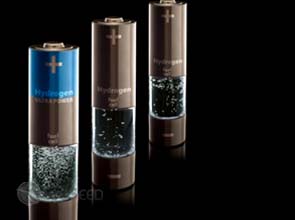
Purdue University researchers have developed hydrogen pellets for fuel cells that can run portable electronic devices. The marble-sized fuel pellets contain a solid compound that gives off hydrogen when heated. The pellets can be incorporated into cartridges that can snap into existing hydrogen fuel cells to create electric power from hydrogen gas.
The technology, developed by Purdue and San Diego-based defense contractor General Atomics, was commissioned by the military to replace heavy battery packs used by soldiers.
“Soldiers can carry as much as 20 pounds of batteries, and this new fuel cell system reduces the weight necessary for the same power by more than half,” said Paul Clark, manager of advanced power systems for General Atomics.
According to Mr. Clark, the new technology will also be cheaper then chemical battery packs and has the potential to save the United States military $27 million per year.
The fuel pellets were developed by a team led by P.V. Ramachandran, a professor of chemistry at Purdue.
The chemical compound that is key to the pellets’ ability to store and release hydrogen is a derivative of the hydrogen-dense ammonia borane. The compound can contain hydrogen molecules in a way that is safe, compact, and highly portable.
According to Professor Ramachandran, the pellets contain four times more hydrogen atoms by volume than hydrogen gas.
Ammonia borane, said to contain around 19 percent hydrogen, has long been considered a promising storage material for hydrogen. A previous Purdue research team developed a process called hydrothermolysis which uses powdered ammonia borane to generate and store hydrogen.
Hydrothermolysis combines two hydrogen-generating methods to generate hydrogen without the use of chemical catalysts. The process produced hydrogen amounting to about 14 percent of the weight of ammonia borane used.
Currently the new compound is made in Professor Ramachandran’s laboratory in small quantities and then sent to General Atomics where it is pressed into pellets and put into cartridges. The production process will need to be scaled up for widespread adaption.
According to Mr. Clark they are looking into several locations in Indiana for the development of a manufacturing facility for the hydrogen fuel pellets.
The manufacturing method for this compound reduces its cost from around $2 per gram to 10 cents per gram. The pellets can also be recharged for reuse.
Professor Ramachandran intends to continue research into the new compound for other uses such as fuel for hydrogen-powered cars as well as energy sources for personal gadgets such as laptops or cell phones.
“Many of the technologies we take for granted in our everyday lives were originally created for military or space exploration purposes,» noted Professor Ramachandran.