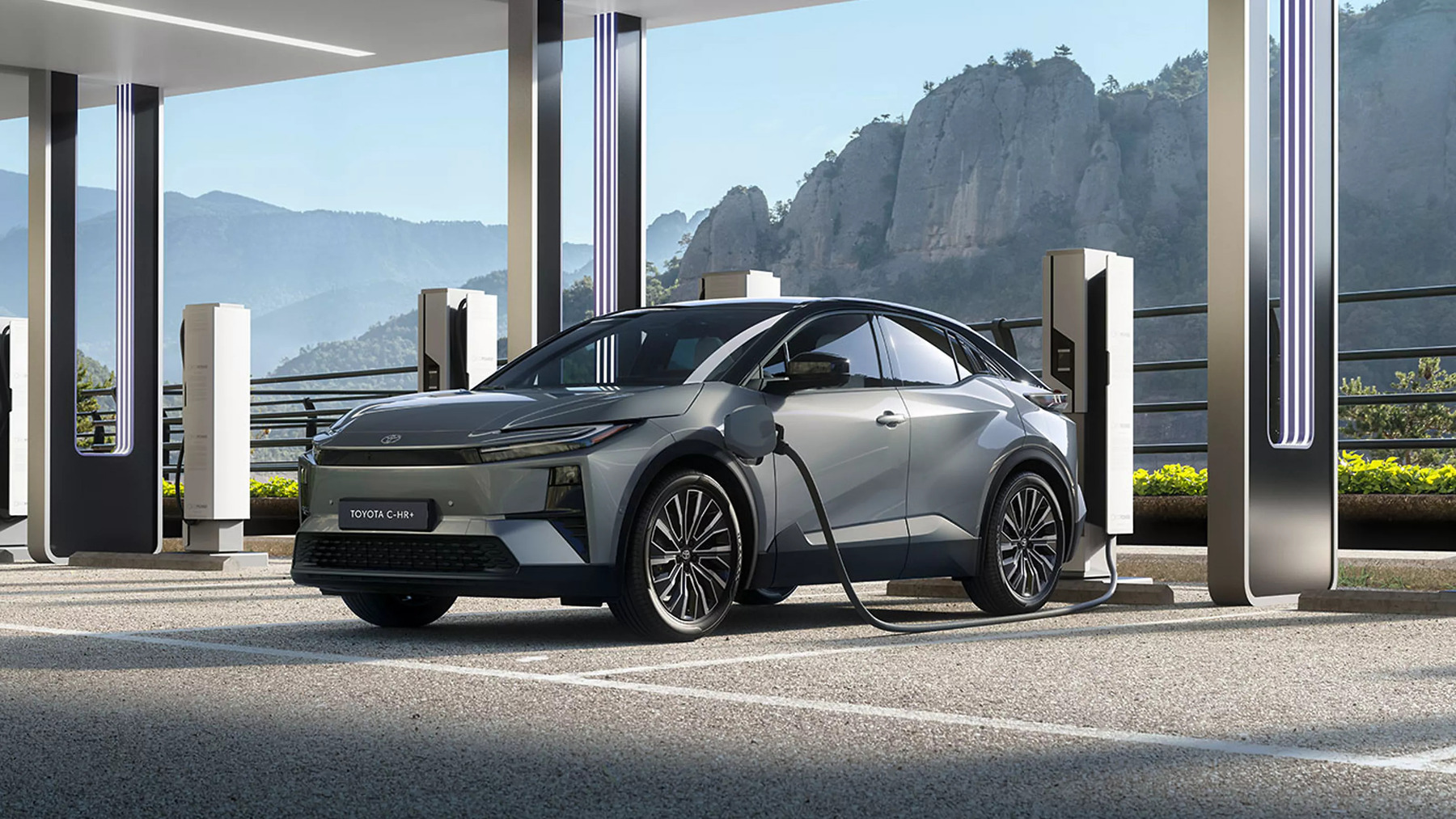

Japan’s Toyota Motors, the world’s biggest car maker, has teamed up with Massachusetts-based start-up WiTricity Corporation to raise capital and develop special chargers for electric vehicles without the need for plugs.
The two firms will develop chargers where electric cars and plug-in hybrids can recharge simply by parking at a designed charging space that can transfer electricity wirelessly through a receiver installed in the car’s chassis.
WiTricity uses magnetic resonance for its chargers instead of electromagnetic-induction, another wireless charging technology primarily used for consumer electronics. In its press release, Toyota said that resonance is “more efficient than electromagnetic-induction”, since the latter can only work over short distances.
Both technologies use a magnetic field to transfer electricity wirelessly. However, magnetic resonance makes electricity transfer more efficient by ensuring that the power source’s and the receiver’s magnetic field frequencies match, making it easier for electricity to run through the air.
Aside from efficiency, power can also travel longer distances and be transmitted to multiple devices at once, compared to magnetic induction chargers that need cars to be precisely aligned before it can charge.
The Wireless Power Consortium, an industry group formed to create standards around wireless power, said careful design can achieve at least 70 percent transfer efficiency. But WiTricity said its resonance-based chargers can reach efficiencies of more than 90 percent. That means it only loses 10 percent of the electricity it transmits to the car battery pack.
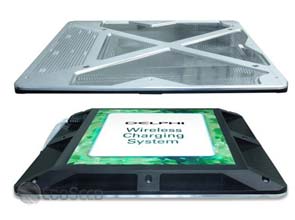
Toyota isn’t the only automotive partner for WiTricity. The company concluded an agreement with Delphi Automotive, which already makes wired electric car chargers, in September last year.
Randy Sumner, director of global hybrid vehicle development at Delphi, said Witricity’s chargers can deliver up to 3.3 kilowatts of power, the same rate as most residential plug-in chargers.
Toyota said that resonance wireless charging is suitable for automobiles and is planning for its «early practical use”, the company said in a press release .The automaker hopes that charging without the use of cumbersome wires will spur wider use of electric vehicles and plug-in hybrids.
Witricity has raised $15.5 million in total since its 2007 founding, according to boston.com. According to the company’s website, it received its initial venture capital funding in November of that year from Stata Ventures and Argonaut Private Equity.
A team of physicists, led by Professor Marin Soljačić, from the Massachusetts Institute of Technology developed magnetic resonance for wireless electric power transfer in 2005, and validated their findings experimentally in 2007.
Up for completion
Witricity is not alone in the dream of cordless car charging, Virginia-based startup Evatran L.L.C. promises a wireless charging system with 80 percent efficiency. It had its first public trial last March, installing the device in Google Inc’s headquarters in California.
Evatran’s wireless electric vehicle charger, dubbed Plugless Power, uses magnetic induction , a competing technology Toyota snubbed in a press release. However, pictures of its charging systems on their websites look strikingly similar with Witricity’s.