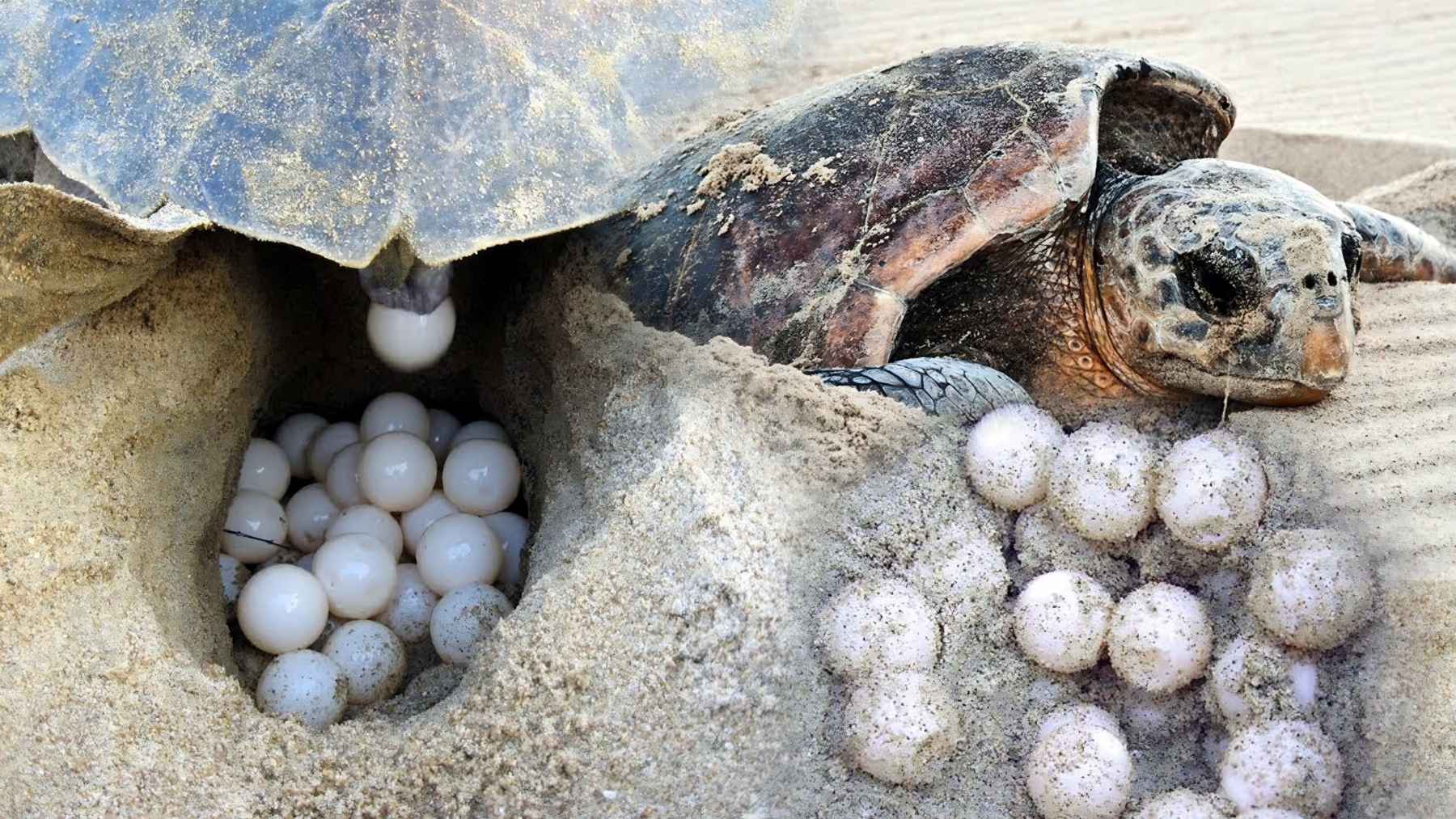
On the beaches of Cabo Verde, more turtle tracks in the sand can look like a victory, but a new long-term study suggests that the real story is more complicated because loggerhead sea turtles are nesting earlier while producing fewer eggs overall.
Researchers tracked one of the world’s most important loggerhead nesting populations over 17 years, from 2008 to 2024. They recorded 178,566 nests and tagged 14,162 females on Sal Island, about 370 miles off the West African coast, finding that warmer seas are changing timing while poorer feeding conditions appear to be draining reproductive energy.
A crowded beach can hide trouble
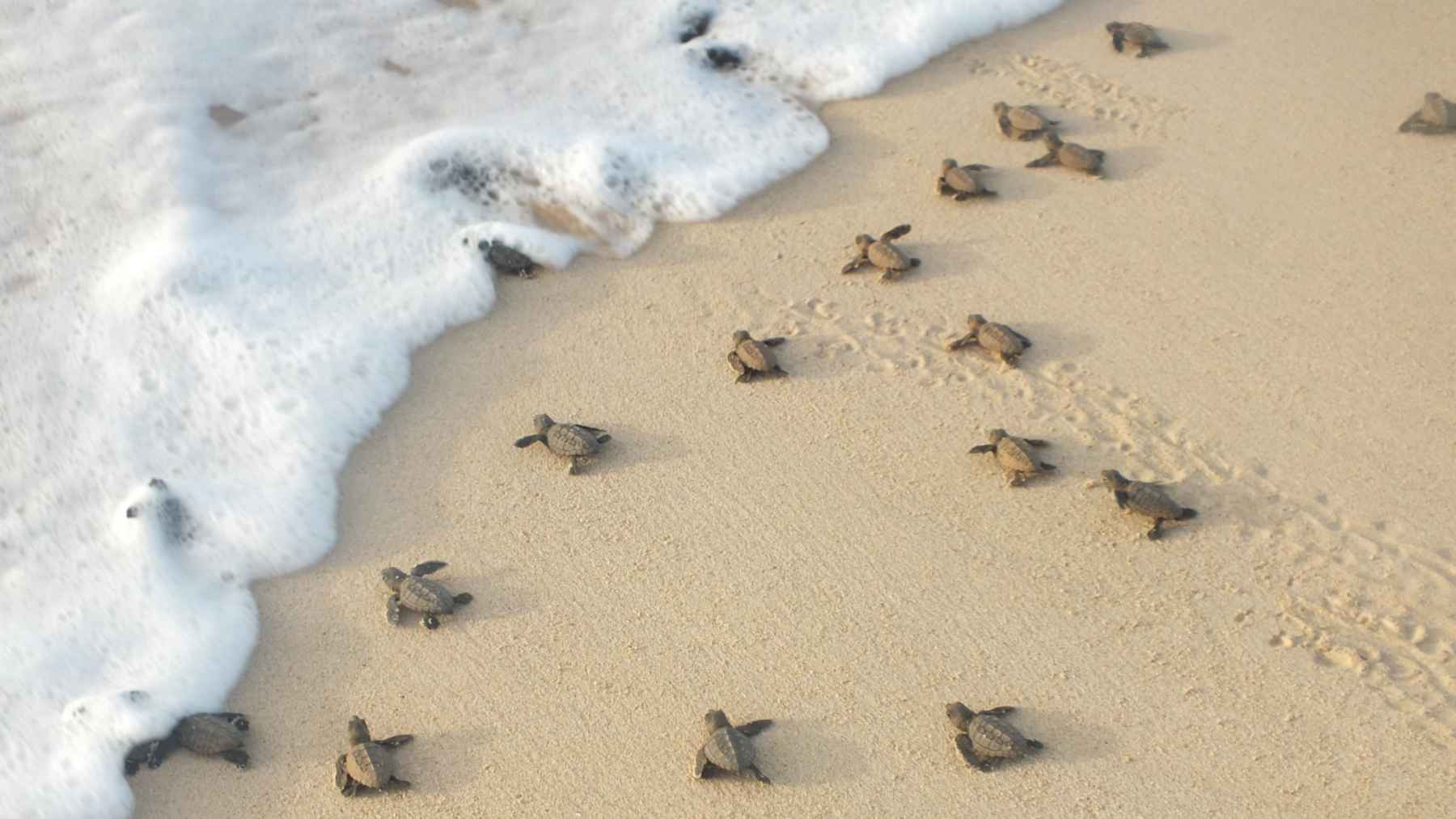
At first glance, the situation might sound encouraging. More nests, earlier arrivals, and plenty of nighttime activity can make a nesting beach look like a conservation success.
The trouble is that a beach count captures only one part of the story. When scientists followed individual turtles year after year, they saw that females were returning less often and producing fewer eggs when they did come back.
Over the study period, the gap between breeding seasons roughly doubled, moving from about 2years to about 4 years. That means a female may still appear on the beach, but she is contributing to the next generation less often than before.
Why food at sea matters
Loggerhead turtles are known as “capital breeders.” Essentially, they build up energy while feeding at sea and then spend that stored energy when they migrate, crawl onto beaches, dig nests, and lay eggs.
Think of it like saving money for a major expense. If the savings account is low, the turtle has less energy available for reproduction, even if the beach itself is protected and quiet.
To understand that hidden side of the problem, the team used satellite estimates of chlorophyll in feeding areas off West Africa. Chlorophyll is the green pigment in tiny ocean plants, and higher levels often point to a more productive food web that can support more prey for turtles.
Warmer water changes the schedule
The study found that warmer sea surface temperatures were linked to earlier nesting. In warmer years, turtles tended to start, peak, and finish their nesting season earlier than usual.
That kind of shift shows real flexibility. Fitra Arya Dwi Nugraha, lead author at Queen Mary University of London, described it as a “remarkable capacity for flexibility,” but flexibility is not the same as safety.
Warmer water may also shorten the time between nests during a single season. Yet once the turtles leave the sand and return to their feeding grounds, the weaker food supply appears to push them into longer waits before breeding again.
Fewer eggs mean a weaker future
The finding that should concern biologists is not just that turtles are changing their calendar. It is that the reproductive payoff is shrinking.
The research found declines in both clutch frequency and clutch size. In plain English, females were making fewer nests in a season and laying fewer eggs in each nest.
Body size may add another layer of pressure. The paper reports that smaller females tend to produce smaller clutches, which means lower food availability could affect reproduction in more than one way over time.
Beach protection is not enough
Protecting nesting beaches still matters. Without safe sand, fewer hatchlings would make it to the water, and threats such as coastal development, artificial light, and direct disturbance would become even more damaging.
This study, however, shows why conservation cannot stop at the shoreline. Kirsten Fairweather, co-lead author and scientific coordinator at Associação Projeto Biodiversidade, summed up the hidden cost by saying the turtles are “working harder for less return.”
This means conservation plans need to look far beyond the beach. A turtle may nest on one island, but the conditions that decide how many eggs she can produce may be unfolding hundreds or thousands of miles away at sea.
A vulnerable species under pressure
Loggerhead turtles are listed as Vulnerable by the IUCN Red List, and their long migrations expose them to many risks across ocean basins. These include habitat loss, accidental capture in fishing gear, pollution, and climate-driven changes to food sources.
That status gives the new findings extra weight. If a population looks busy on land but individual females are slowly producing fewer eggs, managers could miss a decline until it becomes much harder to reverse.
That is the uncomfortable lesson here. Counting nests is useful, but it may not be enough to measure whether a population is truly healthy.
What the study changes
The research does not say that loggerhead turtles have stopped adapting. In fact, their earlier nesting shows that these animals can respond to environmental change, at least to some extent.
Adaptation has limits, however. If warming seas and weaker food webs keep reducing the energy available for reproduction, even a large nesting population could lose resilience over time.
At the end of the day, the message is fairly simple. Saving sea turtles means protecting the beaches where they lay eggs and the ocean feeding grounds that give them the strength to lay those eggs in the first place.
The main study has been published in Animals.