Few sights worry a parent faster than a toddler facing a dental drill, a numbing shot, or even general anesthesia. A large U.S. clinical trial now suggests that a liquid painted onto a cavity for about 10 seconds can arrest decay in many baby teeth without any of those steps.
Researchers found that 38% silver diamine fluoride, known as SDF, halted 54% of treated cavities after six months, compared with 22.5% after placebo. It is not a cure-all, and the decayed area turns permanently dark. But for a child who cannot sit through a filling, that visible mark may be a reasonable trade for delaying or avoiding a far more complicated procedure.
A major U.S. trial puts numbers behind the treatment
The Phase III trial enrolled 830 generally healthy children younger than 6 who had severe early childhood caries, the clinical term for extensive decay in baby teeth. Children were recruited through dental and medical offices, Head Start programs, and subsidized preschools in Michigan, New York, and Iowa.
Participants received either 38% SDF or a placebo, with the liquid applied at the start of the study and again six months later. The NIH’s dental research institute funded the trial, while Elevate Oral Care supplied the active product and placebo.
SDF arrested 57.5% of lesions at three months and 54% at six months. After the second application, 50.2% were arrested at eight months, compared with 17.4% in the placebo group. The researchers found no significant difference in lesion pain, while treatment-related adverse events were similar at 22.9% with SDF and 22.2% with placebo.
How a tiny brush can stop some decay from spreading
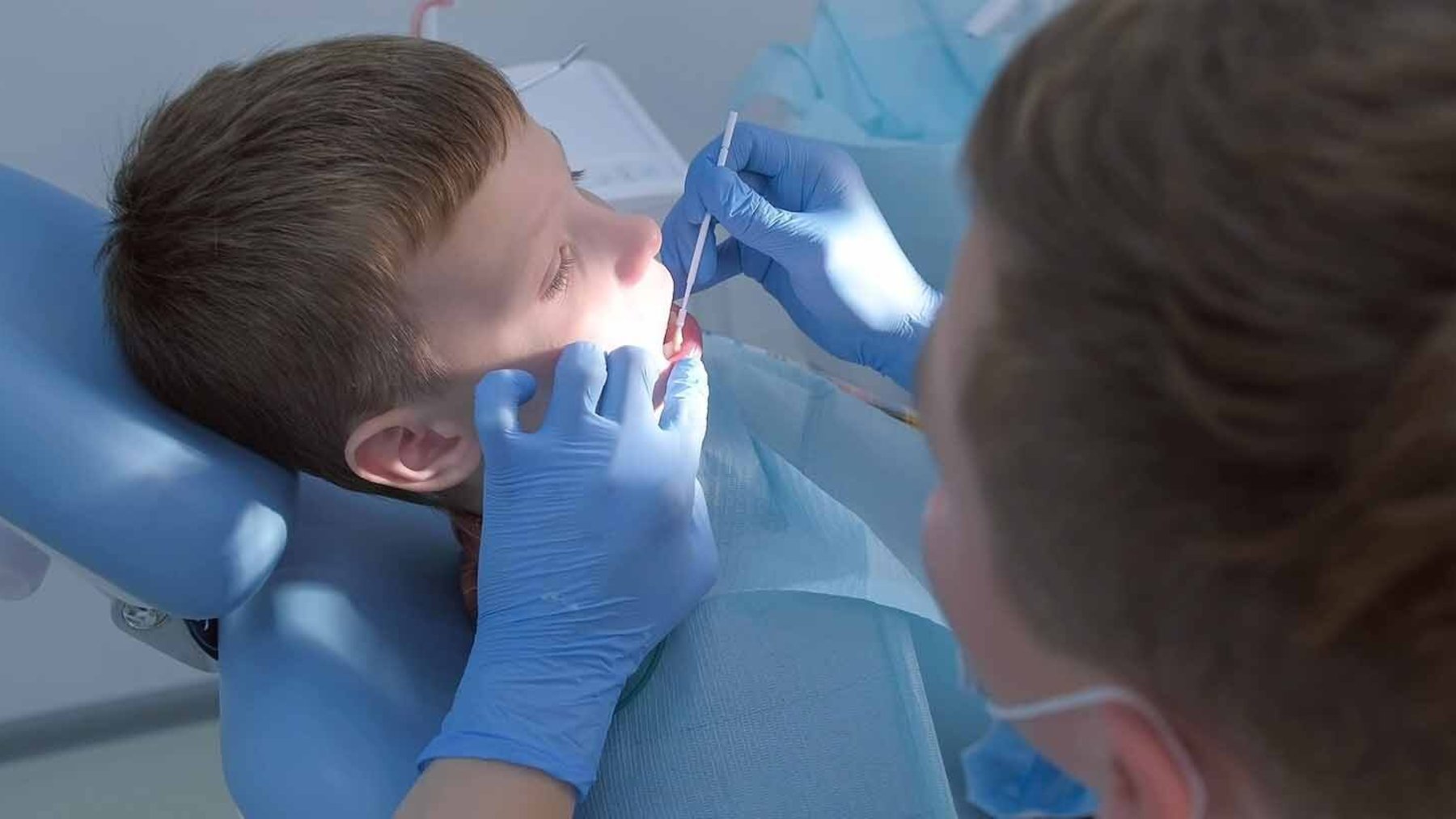
The process is strikingly simple. A clinician cleans and dries the cavity, paints on a small amount of liquid for roughly 10 seconds, and then blots the area dry without removing decayed tooth structure.
There is no drill, numbing injection, or sedation during the application. In practical terms, that can turn a stressful dental appointment into something closer to a brief checkup, especially for a squirming toddler who has little patience for the chair.
Silver and fluoride do different jobs. Silver helps suppress cavity-causing microbes and disrupt their biofilm, while fluoride supports remineralization and helps harden damaged dentin. SDF is not an at-home remedy, and the American Dental Association says its use for cavities requires a dentist’s diagnosis and monitoring.
Why this could matter for young children
Tooth decay affects more than 40% of U.S. children and can interfere with eating, sleeping, school attendance, and everyday family life. Once a cavity causes an abscess or reaches the tooth’s pulp, a quick painted treatment may no longer be appropriate, and some small children can end up needing hospital care under general anesthesia.
Margherita Fontana, a University of Michigan dentistry professor and the study’s lead investigator, called it “a very effective and safe treatment,” adding that the trial included children as young as one. That matters because many young children see pediatricians for years before they ever reach a dentist.
SDF could act as a bridge while a family secures a dental appointment, while a child becomes better able to tolerate treatment, or until a damaged baby tooth falls out naturally. Still, it does not replace brushing, limiting frequent sugary snacks and drinks, preventive fluoride, or regular dental care. Teeth with pain, pulp exposure, swelling, or signs of infection were excluded from the trial and referred for treatment.
The black stain is the biggest trade-off
There is one side effect families will notice immediately. When SDF arrests a cavity, the decayed tissue turns dark brown or black and stays that way, although nearby gums or lips may only stain temporarily if the liquid touches them.
Would a parent accept a black spot to avoid a drill or sedation? For a back baby tooth, the choice may feel straightforward, but a front tooth can make the cosmetic decision harder. Dentists therefore need to explain the appearance clearly before treatment.
The results also deserve some restraint. About 46% of SDF-treated lesions were not arrested at the six-month mark, the study lasted only eight months, and 30% of participants did not complete follow-up, partly because of the COVID-19 pandemic. The authors said SDF should be combined with other preventive strategies rather than treated as a stand-alone answer.
FDA approval could widen access
In the United States, SDF has been FDA-cleared for tooth sensitivity since 2014, but its use to arrest cavities remains off-label. This trial was designed to provide the kind of U.S. pediatric evidence needed to support a formal drug application for cavity treatment.
Researchers argue that approval could encourage more clinicians to use SDF, improve insurance coverage, and make product standards more consistent. It could also make the treatment easier to offer in medical and community settings, reaching children before decay turns into pain, infection, missed school, or an operating-room visit.
At the end of the day, SDF is not a replacement for fillings or comprehensive dental care. It is better understood as a fast, low-cost pause button for decay when conventional treatment is difficult, frightening, or temporarily out of reach.
The full study was published in JAMA Pediatrics.