Texas ranchers challenged a proposed 46-turbine wind farm near the Devils River in a 2023 lawsuit focused on access to the state’s power grid. Conservationists raised a different concern, the bats and other wildlife using the surrounding landscape.
The ecological question is bigger than who owns the turbines. How can renewable power expand without putting wildlife at unnecessary risk, particularly near a large bat colony? A separate 2025 court ruling did not settle that question or cancel the project.
Why Fern Cave matters
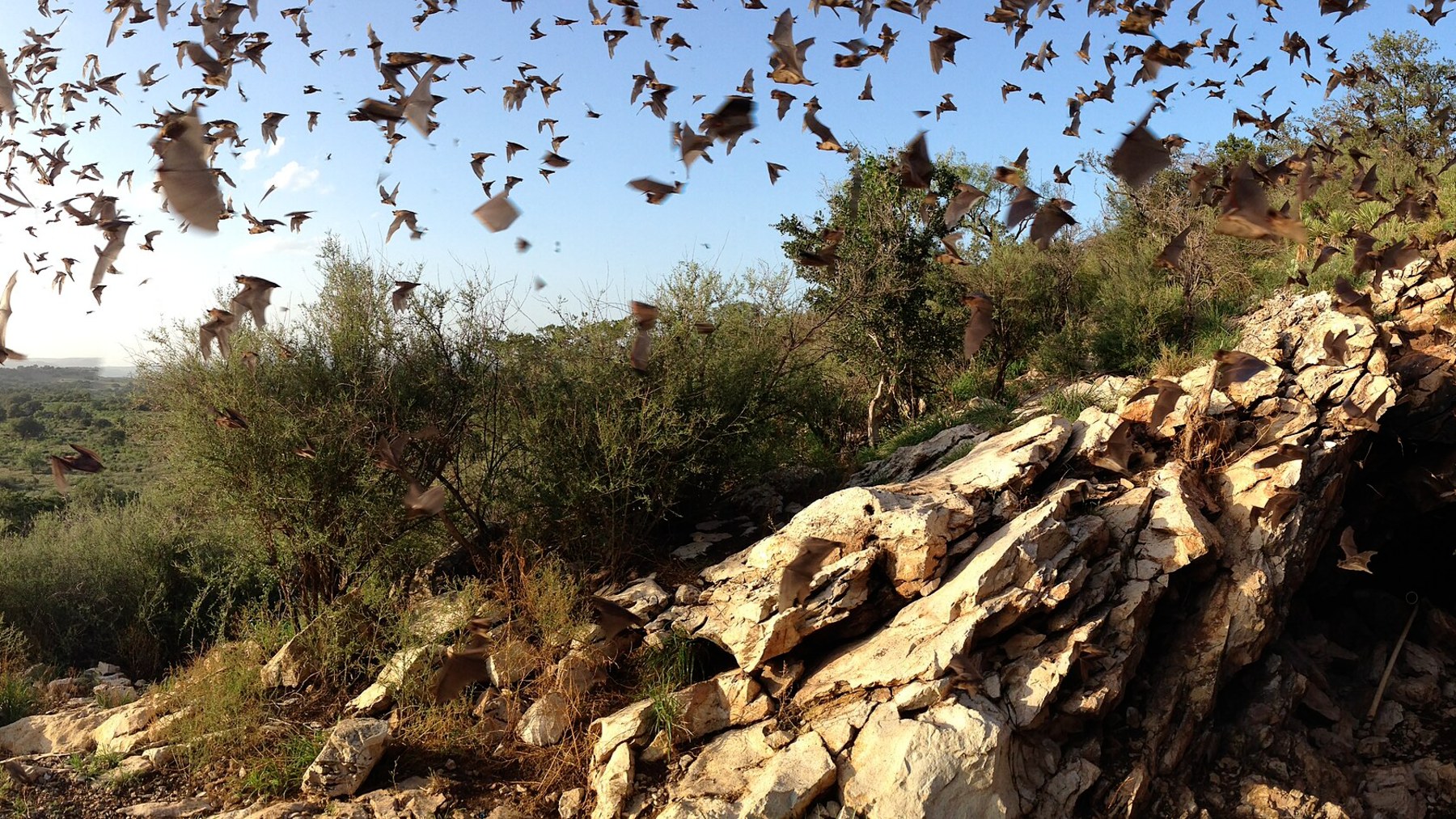
Fern Cave, in Val Verde County, is known for its colony of Mexican free-tailed bats. Texas Parks and Wildlife magazine reported approximately 250,000 there in March 2021, a historical estimate rather than a current census.
These animals are more than an evening spectacle. By eating insects, bats help protect crops, and the U.S. Geological Survey cites research valuing their pest-control services to American agriculture at more than $3.7 billion annually. That national estimate is not a dollar value assigned to Fern Cave.
But a large colony does not automatically reveal how many bats a particular wind farm might kill. Researchers recommend surveying roosts, feeding areas and migration routes before choosing sites, highlighting a basic planning issue. Protecting a cave does not automatically protect the places its residents fly to find food.
What the Blue Hills plans included
Spanish renewable-energy developer Greenalia announced plans for 46 turbines in November 2022, describing the Texas site as having substantial wind resources. The company presented Blue Hills as part of its U.S. expansion and its contribution to tackling climate change.
According to the Devils River Conservancy’s April 2025 account, initial plans included some turbines reaching 700 feet tall. The group raised concerns about wildlife, landscape disturbance and the region’s cultural resources, while The Nature Conservancy also opposed the location.
The Nature Conservancy’s February 2023 statement identified protected species and bird and butterfly migration pathways in the wider watersheds. Those concerns extend beyond bats, but they are not proof that every species would face the same danger from turbine blades.
Two lawsuits with different questions
Blue Hills began under GH America Energy, a Chinese-owned company. Texas’ 2021 Lone Star Infrastructure Protection Act restricted agreements granting certain foreign-owned businesses direct or remote access to critical infrastructure, including the electricity grid. Project rights were sold in January 2022 to a company that Greenalia later acquired and renamed.
The ranchers’ lawsuit, announced on May 4, 2023, named grid operator ERCOT and companies connected to the project. Ward-Walker Seven Oaks Ranch and Cole Ranch alleged violations of the infrastructure law and ERCOT’s duties toward them. Those were allegations, not findings established by the announcement.
A separate contract lawsuit later pitted GH America against Greenalia’s Blue Hills company over efforts to secure a grid-connection agreement. On March 26, 2025, U.S. District Judge Andrew L. Carter Jr. dismissed that case because his federal court lacked jurisdiction, also citing contract terms requiring disputes to be heard in Texas. The ruling did not order the wind farm canceled.
A practical way to reduce bat deaths
Can operators reduce wildlife risks without abandoning wind energy? One option is “curtailment,” which keeps turbine blades from spinning during selected low-wind periods. A 2024 analysis of six North American wind facilities estimated that a startup threshold of about 11 miles per hour reduced bat fatalities by 62% on average.
That result is not a forecast for Blue Hills or Fern Cave’s bats. The study’s species-specific analysis concerned three tree-roosting bat species, and results varied between years. Operational changes can help, but they do not replace examining the proposed location.
Better siting comes before spinning blades
The Nature Conservancy says it supports expanding low-impact renewable energy, while urging Greenalia to reconsider Blue Hills. Its “Site Renewables Right” tool helps developers identify locations that avoid conflicts with wildlife and natural areas.
Newer research offers another step, setting bat-fatality thresholds during project planning and using monitoring to adjust turbine operations. The January 2026 framework is a general conservation approach, not a wildlife assessment of Blue Hills.
“As wind energy scales globally, the question is no longer whether impacts occur, but whether they are managed responsibly,” Teague O’Mara said in the accompanying statement.
The press release was published on the Bat Conservation International website on January 27, 2026.