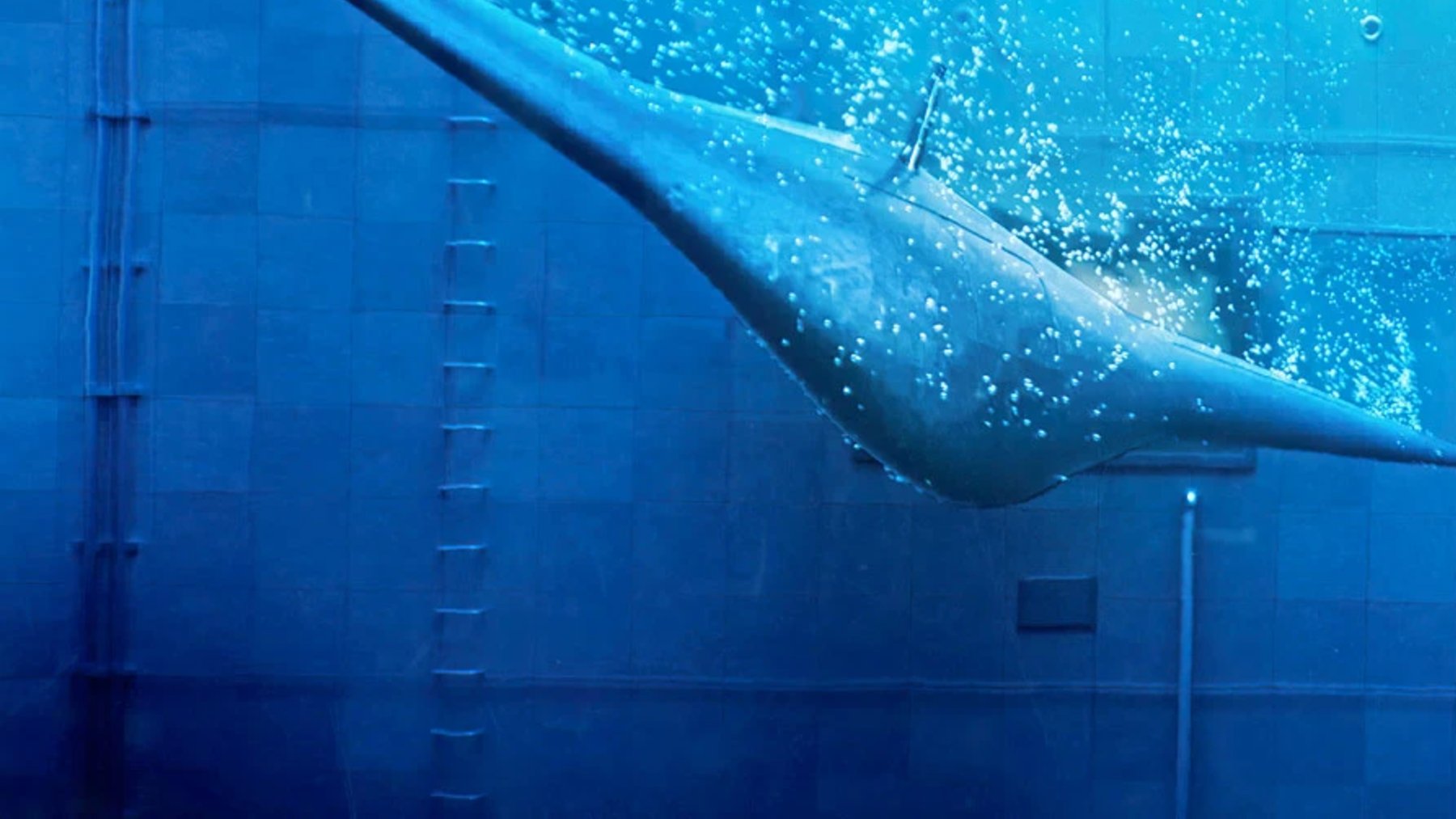
What if an underwater drone could extend its missions by spending more time standing still? Northrop Grumman’s Manta Ray, built for the Defense Advanced Research Projects Agency (DARPA), is designed to conserve energy by gliding through the water and anchoring on the ocean floor in a low-power “hibernation” state.
The prototype completed full-scale ocean tests off Southern California in February and March 2024, but the announcement did not establish a maximum mission duration. Its most interesting feature is an approach to a familiar problem (how to make stored energy last longer when recharging is difficult).
How Manta Ray glides underwater
“When Manta Ray needs to go up or down, it changes buoyancy by pumping sea water to change the weight of the vehicle,” explained Brian Theobald, Northrop Grumman’s chief engineer for Manta Ray. Its wings convert that rising and sinking into forward motion, much as an airborne glider turns a descent into distance.
Northrop says these buoyancy adjustments take only a few minutes at the top or bottom of a gliding path. Between adjustments, the vehicle moves with minimal energy use, although that does not mean its sensors, computers, or other systems need no power.
Does that make it a propeller-free drone? It does not. DARPA’s tests explicitly included buoyancy-driven movement, propellers, and control surfaces, so this is a mixed approach rather than a machine that relies on gliding alone.
Five containers save onboard energy before launch
Northrop designed Manta Ray to separate into modules that fit inside five standard shipping containers. The prototype traveled from Maryland to California in sections before being reassembled, avoiding the need to make that journey under its own underwater power.
That is more than a packing trick. Shipping it close to its operating area preserves onboard energy for the actual mission and can reduce pressure on crowded naval piers, DARPA says. It saves the vehicle’s stored power, not the energy needed to transport the containers.
Why the seafloor becomes a parking spot
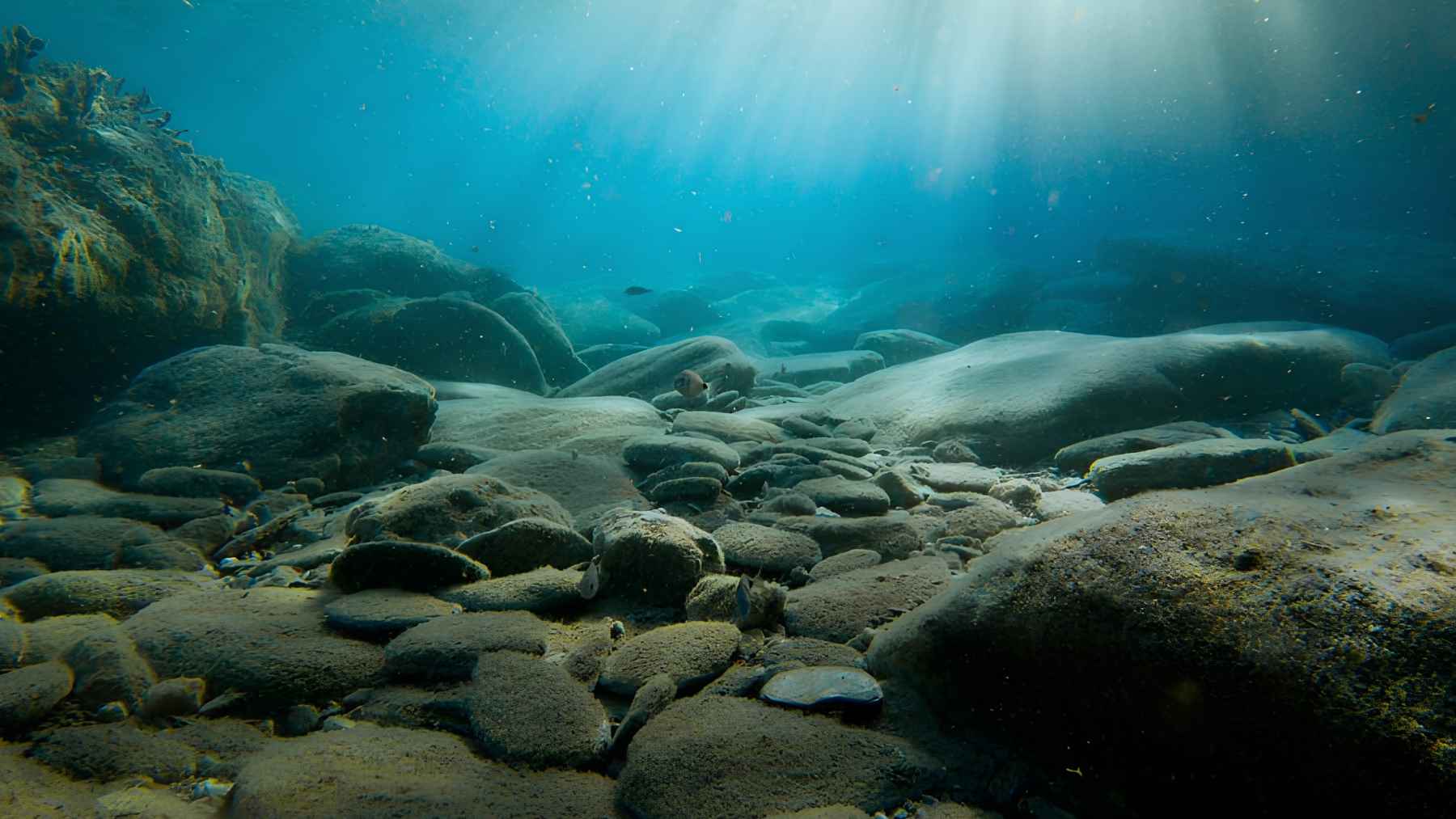
The other major energy-saving feature is hibernation. Northrop says Manta Ray can anchor to the seafloor and enter a low-power state, an idea closer to a laptop’s sleep mode than an engine running at idle.
But staying underwater creates maintenance problems that a bigger battery cannot solve. DARPA lists corrosion, biofouling (the buildup of marine organisms on submerged surfaces), and other material damage among the challenges the program is intended to address.
These are not minor details for a machine expected to operate without nearby support crews. A practical long-duration vehicle has to keep its hull, moving parts, and instruments working, not simply conserve enough electricity to switch back on.
Could ocean heat help recharge underwater vehicles?
Renewable energy is another part of the wider story, although it should not be confused with a proven Manta Ray capability. Northrop and Seatrec developed the “Mission Unlimited UUV Station” concept, pairing underwater charging technology with Seatrec’s work on harvesting energy from ocean temperature differences.
Seatrec’s systems turn naturally occurring temperature differences into electricity, offering a potential way to recharge ocean instruments without repeated battery replacements. DARPA also includes underwater energy harvesting among Manta Ray’s research objectives, but an objective is not confirmation that the prototype can power itself indefinitely.
What the ocean tests actually proved
Northrop reports that the prototype demonstrated gliding, ascending, descending, turning, hovering, and anchoring during its tests. It also says some of those actions were performed autonomously, which is more specific than assuming every stage of a complete mission has already been automated.
DARPA’s public program page describes long-range, long-duration operations as the target of a technology demonstration effort. It does not provide a verified maximum mission length, so neither “years underwater” nor unlimited endurance should be treated as an established performance figure.
What this means for ocean science
Manta Ray is a defense project, not an announced environmental monitoring mission. Still, the engineering problem it tackles is familiar to ocean scientists, who already use smaller gliders to measure temperature, salinity, and other conditions over weeks or months.
The National Oceanic and Atmospheric Administration (NOAA) has used underwater gliders to support hurricane research and forecasts since 2014. Their measurements help scientists describe the warm ocean layers that can fuel storm intensification, information that matters far beyond a laboratory when coastal residents are checking the forecast.
That makes efficient underwater operation worth watching, without labeling Manta Ray itself a proven environmental solution.
The official overview of its design and testing was published on Northrop Grumman.