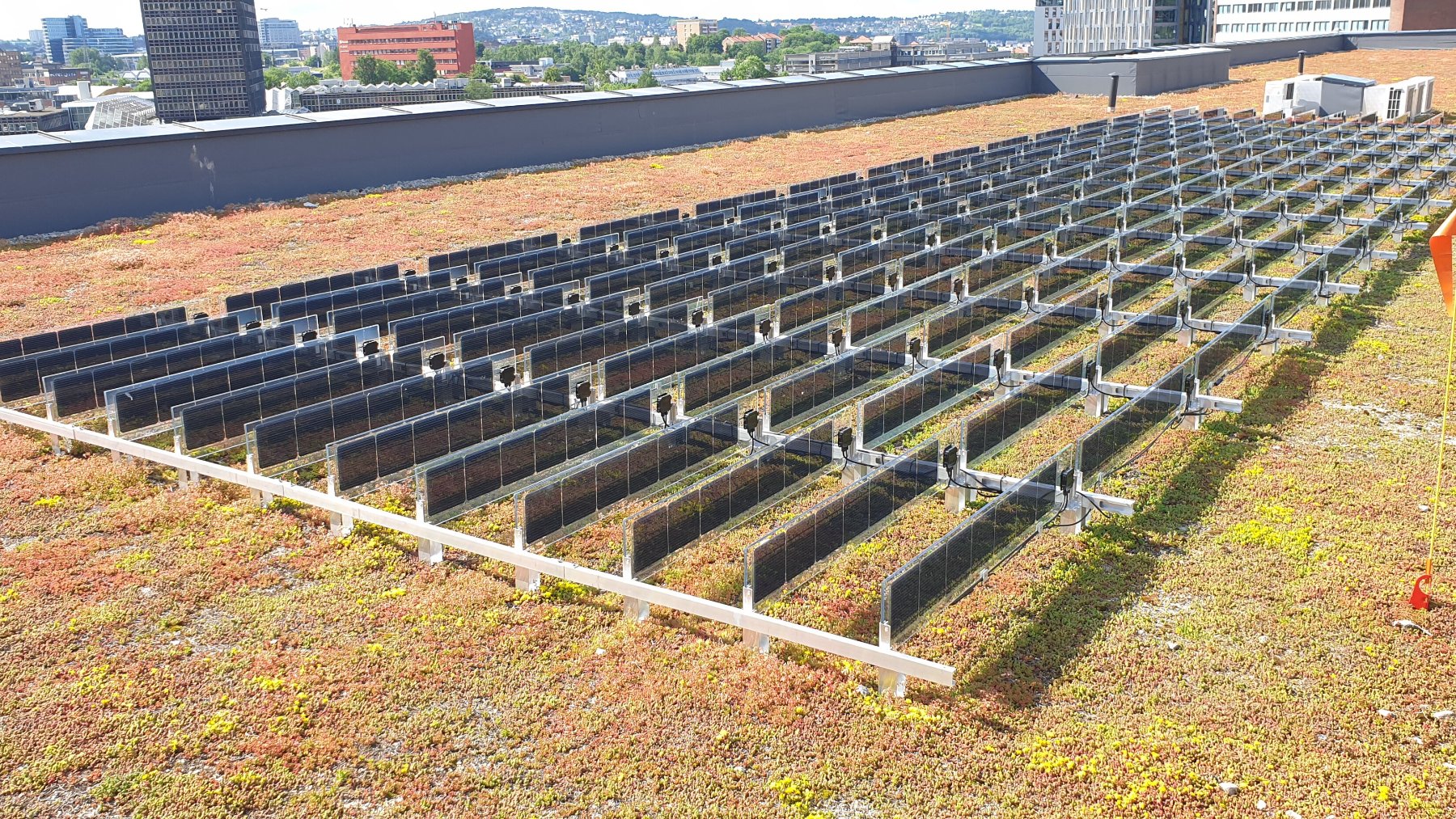
An industrial roof in Queens now looks less like a conventional solar farm and more like a shelf of dark books. Roughly 100 kW of bifacial panels stand upright over a living green roof, with expected annual production near 120,000 kilowatt-hours.
That number gets attention, but it is not the most important part of the story. Over Easy estimates that a comparable tilted east-west array could produce about 116,000 kWh, leaving the vertical system only 3.4 percent ahead at the headline estimate. The real breakthrough is one roof doing three jobs, while the panel geometry can also shift production toward morning and afternoon.
Why the panels are standing like books
Norwegian company Over Easy Solar supplied the system for an unidentified building in the Willets Point industrial area, while Sempergreen USA delivered the installation. It is Over Easy’s first vertical rooftop solar project in the United States, according to pv magazine.
The prefabricated xM3 units each carry four 256-watt heterojunction modules with active surfaces on both sides. The mounting needs no ballast and does not pierce the roof membrane, while its reported load is about 2.4 pounds per square foot. Sempergreen executive Dick Bernauer called it “a great solution” for flat roofs with limited load-bearing capacity.
New York’s roof law created a difficult puzzle
New York City’s Local Laws 92 and 94 require a “sustainable roofing zone” across the usable roof area of many new buildings and projects replacing an entire roof deck or assembly. The code defines that zone as solar photovoltaics, a green roof, or a combination, with exceptions for access, equipment, and unsuitable sections.
Putting both systems in the same place is harder than it sounds. A standard tilted array can shade the sedum, complicate plant care, and direct rain toward narrow strips instead of across the planted surface. Standing the modules upright leaves open lanes for sunlight, rainfall, and maintenance.
The 120,000 kWh figure needs a closer look
The Queens output is an estimate, not a year of measured production. Over Easy told pv magazine that a 100 kW rated vertical system in New York could generate 100,000 to 140,000 kWh annually, depending on orientation, nearby shadows, and albedo, which is the light reflected by the roof.
A later company model, informed by measurements from 13 research and pilot sites, put New York’s range at 1,045 kWh per installed kW on a dark surface and 1,372 kWh on a highly reflective one. For a 100 kW system, that means about 104,500 to 137,200 kWh. Over Easy is clear that the figures are modeled estimates and “not production guarantees or actual data.”
The conventional comparison also comes from the company selling the vertical hardware. Its estimate of 116,000 kWh for a ten-degree tilted east-west array makes the systems look much closer than the dramatic photos suggest. The project report included no measured output from Queens, so the honest verdict is promising, not proven.
Why afternoon solar can matter more than a noon record
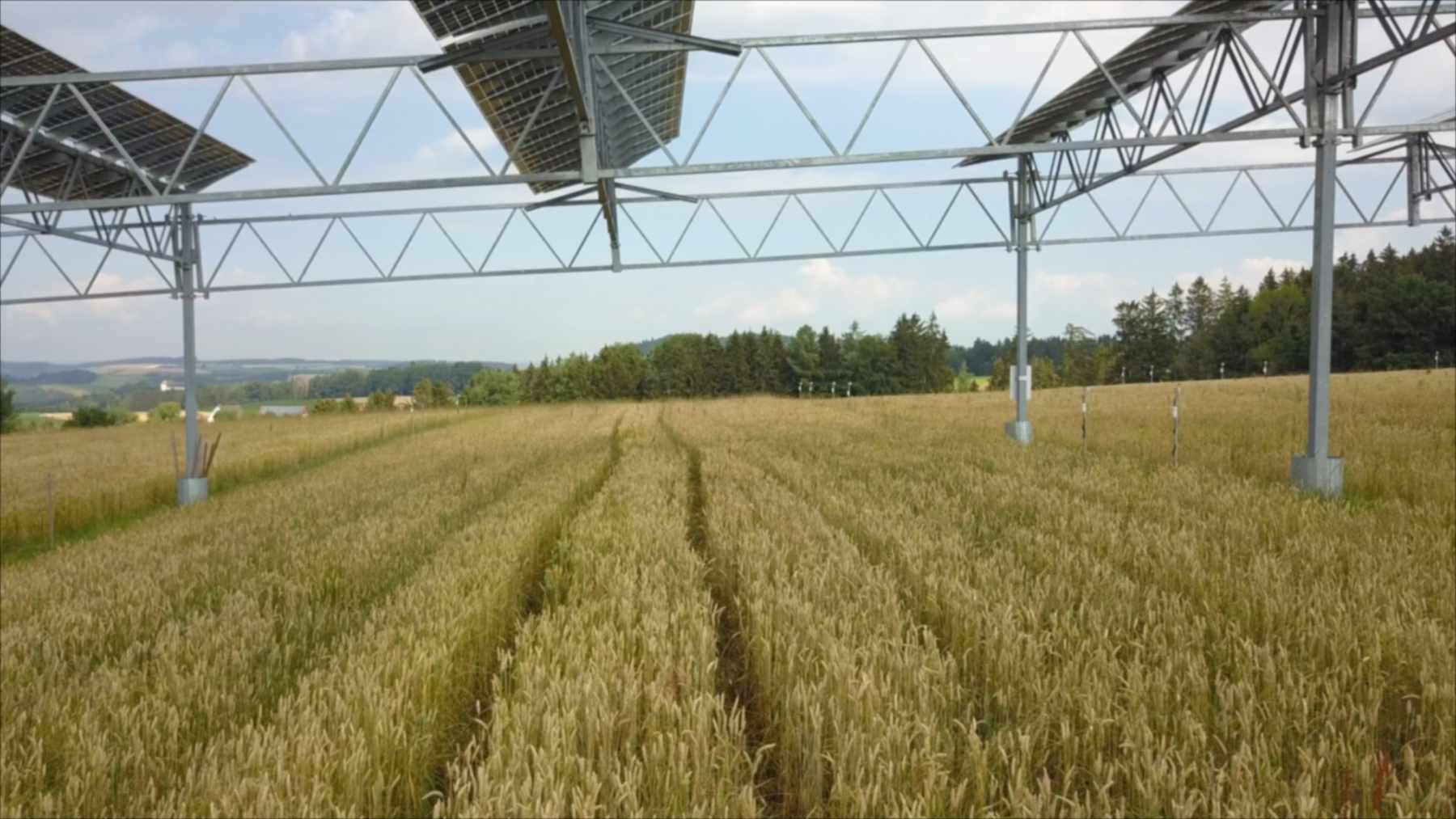
Vertical bifacial panels facing east and west behave differently during the day. One face works harder in the morning, the other catches afternoon sun, and the output curve develops two humps instead of one sharp midday peak. In practical terms, that can mean more solar power while offices are still busy, air conditioners are fighting that sticky summer heat, and the electric bill is climbing.
A peer-reviewed University of York study, supported partly by Over Easy Solar and the Norwegian Research Council, gives that timing argument some evidence. The tested vertical bifacial system produced 26.91 percent more output than a tilted monofacial system during early morning hours and 22.88 percent more in late afternoon. Its seasonal advantage reached 24.52 percent in winter.
Still, the British test used white gravel, a different climate, and a 45-degree monofacial comparison rather than the ten-degree east-west benchmark used for Queens. It does not verify the New York estimate directly. What it shows is that vertical bifacial solar can shift generation toward the edges of the day, which may matter as much as a few more annual kilowatt-hours.
Where vertical rooftop solar makes the most sense
Is this the new default for every flat roof? Probably not. A strong, open roof in a sunny climate may still get better value from familiar tilted panels, especially where snow, weight limits, plant health, and roof penetrations are not concerns.
The clearer market is made up of roofs that conventional solar struggles to use. That includes existing green roofs, lightweight structures unable to accept heavy ballast, and snowy locations where low-mounted panels can disappear under accumulation. Vertical modules also leave wider access paths for inspecting drains or repairing the membrane years later.
Sometimes the smartest solar panel is not the one pointed most directly at noon. Rooftops can manage rainwater, support vegetation, and produce clean electricity, but the equipment must respect all three jobs.
The official performance update was published on Over Easy Solar.