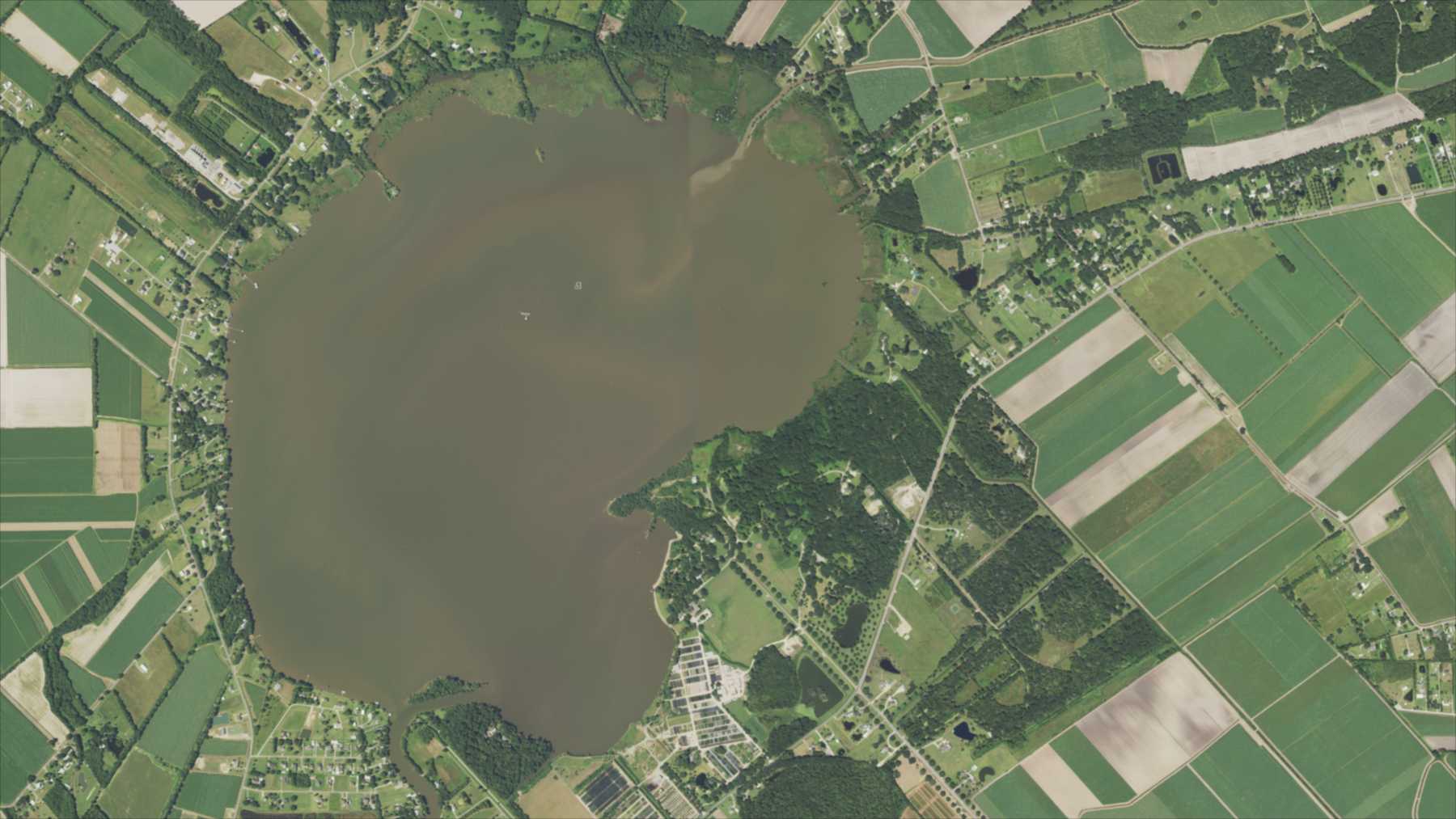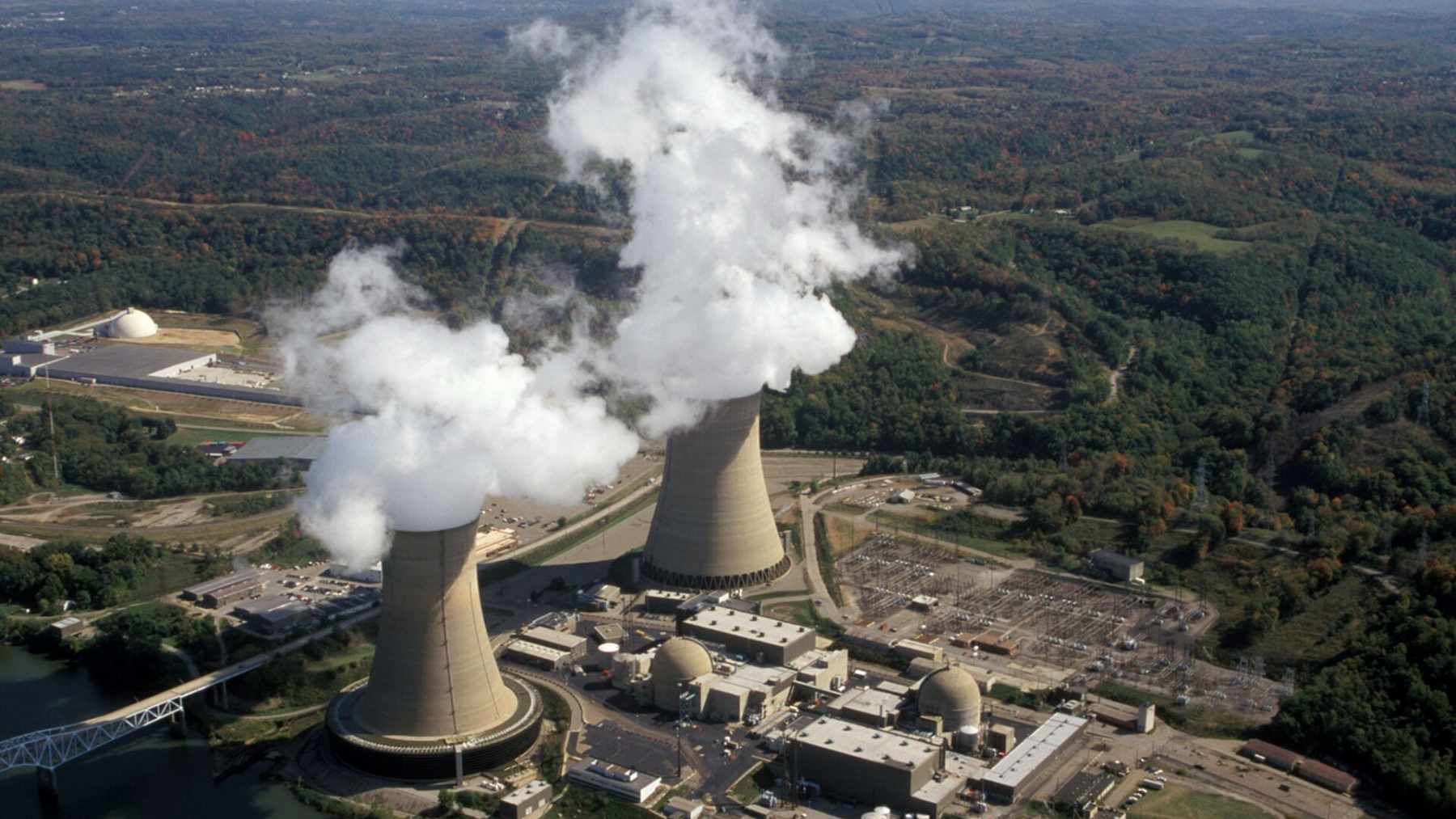
Energy Secretary Chris Wright went to the Perry Nuclear Power Plant, on Lake Erie east of Cleveland, on Monday, October 5, to announce up to $4.2 billion in federal loans for nuclear uprates at three plants in Ohio and Pennsylvania owned by Vistra, a power company based in Irving, Texas.
Uprates are upgrades that let reactors already in service put out more power, and Wright pitched them as a shortcut. “By getting more power out of the nuclear plants we already have, we can deliver more affordable, reliable, around the-clock energy for American families and businesses,” Wright said in a statement.
What Vistra would get from Washington
The Department of Energy says the projects at Beaver Valley in Pennsylvania and at Davis-Besse and Perry in Ohio “will preserve nearly 4 gigawatts (GW) of reliable baseload power,” which it calls enough for more than 3 million homes, and “add 433 megawatts (MW) of new nuclear capacity.”
It also says Vistra’s plans will produce more electricity “without requiring new transmission corridors or equivalent new generation resources, while supporting the plants’ operation for an additional 20 years beyond their existing licenses.”
The offer is a conditional loan commitment from the Office of Energy Dominance Financing, which used to be called the Loan Programs Office. It also leaves the door open to finance future uprates at Vistra’s Comanche Peak plant in Texas.
“President Trump and Secretary Wright have set a clear direction for America’s nuclear future, and EDF is financing the projects that advance that mission,” said Gregory A. Beard, the office’s director.
Standing at Perry, Beard told reporters that “expanding and extending existing capacity is a remarkably efficient use of governmental resources,” News5 Cleveland reported.
Vistra’s case for old plants
Vistra CEO Jim Burke spoke at the same news conference. “This loan commitment recognizes something that we’ve long believed and that is the fastest, most-practical way to add reliable power is to do it in the plants that are already operating,” he said.
Burke also told reporters the upgrades could bring 500 to 600 jobs to each site while the work goes on, News5 Cleveland reported. The government’s own estimate is about 3,000 project-related jobs “in engineering, construction, and planned outage work.”
Perry gets the largest share of the new power. According to News5, the plan calls for its generating capacity to rise by more than 200 megawatts and its operating life to run to 2066. “Two hundred megawatts is about 150,000 homes’ average consumption of electricity, so it’s a lot,” Wright said.
This is the same plant whose safety buffer turned into an 850-acre refuge for rare spotted turtles, and its current license already runs to 2046.
The Meta deal pays for the work
Back in January, Vistra signed 20-year power purchase agreements with Meta for 2,176 megawatts from Perry and Davis-Besse plus the 433 megawatts from uprates at all three plants. The company said Meta’s purchases begin in late 2026 and the full 2,609 megawatts will be online in 2034.
“At Meta, we are investing in nuclear energy because it provides clean, reliable power that is essential for advancing our AI ambitions and strengthening American leadership in energy innovation,” Urvi Parekh, Meta’s head of global energy, said then.
On Monday, Burke said the upgrades are not tied to plans for a data center. He described the contract as what lets Vistra pay back the loan.
“The Meta agreement ensures that there’s sufficient revenue for us to pay all of the capital expenditures to do this work,” Burke said. “Pay for the jobs and have a long-term contract that we can take the revenues, pay back the loan over time and make sure their power is on the grid which lowers prices for all customers.”
These plants were once headed for closure
“As recently as 2020, before Vistra owned Perry, Davis-Besse, and Beaver Valley, these plants were on a path to retirement,” Stacey Doré, Vistra’s chief strategy and sustainability officer, said in January.
“When we signed a deal to acquire these plants in 2023, Vistra saw their tremendous contribution,” she said, listing the grid, the region, the local communities “and to the people who work there.”
Beaver Valley, a two-unit plant about 30 miles northwest of Pittsburgh, has 1,872 megawatts of capacity. In January, Pennsylvania State Rep. Josh Kail called it “a trusted source of affordable, reliable power since 1976.”
“Beaver Valley has delivered clean, reliable energy and stable employment for generations,” State Rep. Rob Matzie, a Democrat from Beaver County who co-chairs the Pennsylvania Legislative Nuclear Energy Caucus, said at the time.
In Ohio, Perry is rated at 1,268 megawatts and Davis-Besse, about 35 miles east of Toledo, at 908 megawatts, according to Vistra. “Bringing new nuclear generation online is key to Ohio and our nation’s growth and security, and Vistra’s significant investment is a huge win for Ohio,” U.S. Senator Bernie Moreno said in January.
Federal loans have helped older reactors before, including the restart of the Palisades plant in Michigan, which the same office backed with a loan in 2024.
Perry goes first, Davis-Besse last
Writing in POWER magazine, Sonal C. Patel reported that Vistra plans to file for Perry’s uprate in the second half of 2029 and expects to reach the higher power in the second quarter of 2031. The two Beaver Valley units would follow in 2032 and 2033, and Davis-Besse in 2034.
The kind of uprate Vistra wants at each unit, an extended power uprate, “can add up to 20% but is the most capital-intensive of the three, and often requires significant modifications to turbines, condensate pumps, main generators, and transformers,” Patel wrote.
At Perry the first steps may come soon, since a September 15 letter from the financing office to Ohio’s State Historic Preservation Office mentions a new cooling tower, two support buildings and possibly a new main turbine, and it says construction “is anticipated to begin in October 2026.”
When the Meta agreements were signed in January, Burke said the commitment “provides Vistra the certainty needed to invest in these plants and communities and bring new nuclear generation online for the grid.”
What could still slow the uprates
“While this conditional commitment indicates DOE’s intent to provide a loan, Vistra must satisfy certain technical, legal, environmental, and financial conditions before the Department enters into definitive financing documents and funds the loan,” the department said in its announcement.
The uprates also have to clear the Nuclear Regulatory Commission, the same U.S. licensing offices where Westinghouse sees its own bottleneck. The agency’s own estimates for these filings, Patel wrote, “amount to roughly 390 MWe,” which is short of the 433 megawatts that Meta is buying.
“Without subsequent renewals, notably, the uprated output at Beaver Valley 1 and Davis-Besse would have less than three years of service before the current licenses expire,” Patel added, since those licenses end in 2036 and 2037.
According to POWER, Vistra intends to file for those renewals in 2027 for Perry, 2028 for Beaver Valley and 2029 for Davis-Besse, and each one would carry a unit to 80 years of operation.
The full announcement was published by the U.S. Department of Energy on October 5, 2026.
Photo: U.S. Nuclear Regulatory Commission (public domain)