Could the shells left after a seafood dinner help make batteries less wasteful? A study published in September 2022 showed that a material derived from crustacean shells could support repeated charging in zinc batteries while offering a different ending for one of their components.
Researchers developed a gel that helped zinc electrodes operate through more than 1,000 laboratory cycles. In a separate soil test, the gel broke down within five months, suggesting a way to pair durable energy storage with materials that leave less persistent waste.
From seafood shells to battery gel
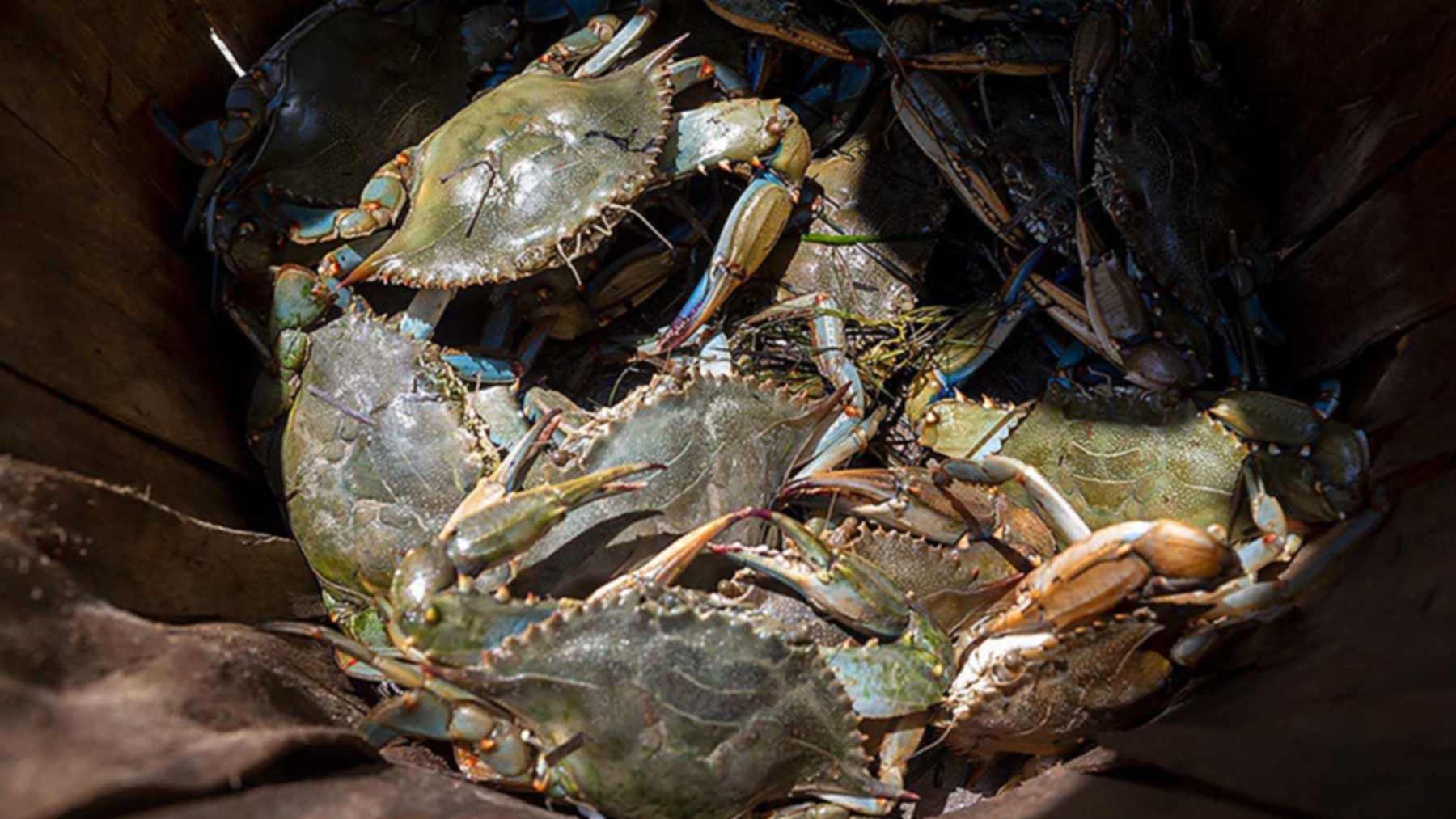
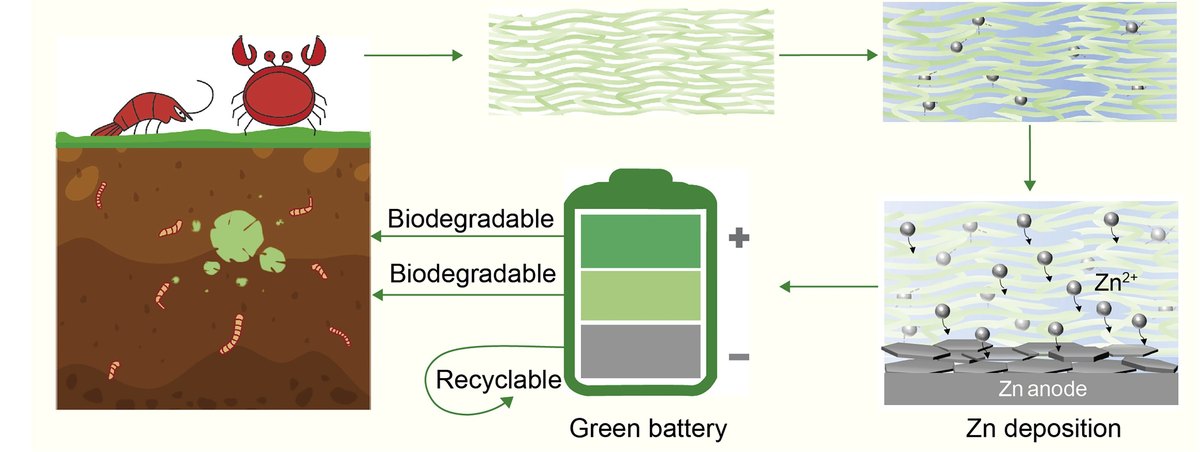
The connection starts with chitin, a tough natural material found in crab, shrimp, and lobster shells. Chemical processing turns it into chitosan, which can be shaped into gels and films. That makes seafood waste a potential source of useful battery ingredients.
“You can find it on your table,” said study leader Liangbing Hu, then director of the University of Maryland’s Center for Materials Innovation. The team included Meiling Wu and Ye Zhang, with collaborators at the University of Houston.
There is an important detail behind that dinner-table image. The experiment used commercially purchased chitosan powder, so it demonstrated what the processed material could do inside a battery. Turning mixed seafood waste into a consistent industrial ingredient would be a separate manufacturing task.
What the gel does
A battery needs an electrolyte, a material that allows electrically charged particles called ions to move between its electrodes. Those electrodes are the parts where the reactions that store and release energy occur. Here, the electrolyte was a gel containing chitosan and zinc ions.
Rechargeable zinc batteries face a stubborn problem at their metal surface. As zinc is deposited during charging, it can form uneven, needlelike growths called dendrites. These can eventually create an unwanted electrical connection inside the cell and cause a short circuit.
The gel encouraged zinc to form flatter, more orderly deposits, helping stabilize the electrode during repeated use. Think of the difference between laying down a smooth surface and allowing sharp bumps to build up. Controlling that growth is one route toward a longer-lasting battery.
What 99.7 percent means
The researchers reported a zinc-electrode Coulombic efficiency of 99.7 percent, along with operation beyond 1,000 cycles under rapid laboratory cycling conditions. The term describes how much electrical charge is recovered compared with what was supplied during the tested process.
In everyday terms, very little charge was lost to unwanted reactions during each cycle. But that number does not mean the complete battery returned 99.7 percent of the energy used to charge it. Energy efficiency also depends on voltage, so the two measurements answer different questions.
The paper separately reported more than 400 cycles for complete battery cells under another set of test conditions. Keeping these results separate matters when judging performance. An electrode test can reveal a useful improvement without proving how long a finished storage system will last.
A different ending for battery waste
The disposal experiment addressed another question. Could a battery material function during use and later break down through biological activity? In the soil test, microbes decomposed the chitosan electrolyte completely within five months.
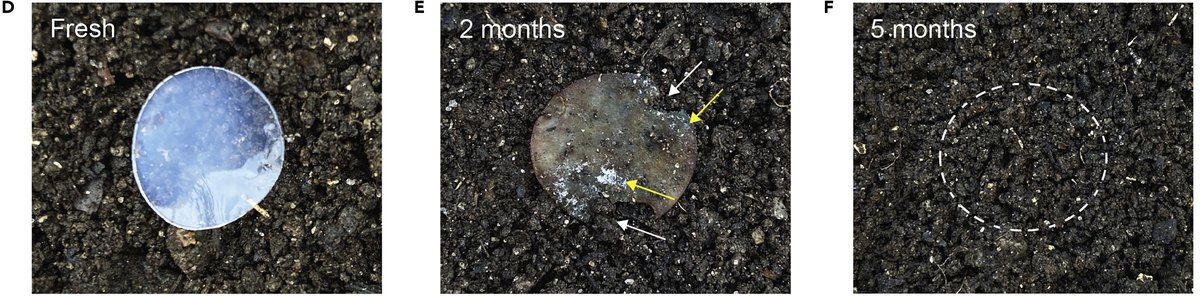
The official university announcement said about two-thirds of the proposed battery could be broken down by microbes. The zinc component would remain and could be recycled. That is a partial biodegradability claim, not evidence that an entire battery disappears.
The five-month result also belongs to the conditions of that experiment. It does not establish the same timetable for every landfill, climate, or disposal method. Recovering the remaining metal would still require collection and processing.
Why zinc interests energy researchers
Zinc’s appeal goes beyond its compatibility with shell-derived materials. It is more abundant in Earth’s crust than lithium, and the researchers pointed to potential cost and safety advantages for well-developed zinc batteries. The study also described its gel electrolyte as nonflammable.
One possible use is storing electricity generated by wind turbines and solar panels for later delivery to the power grid. For a household, that could mean using stored solar power after sunset, when lights and kitchen appliances are still running. Making that storage affordable requires more than an inexpensive raw ingredient.
A commercial system would also need dependable manufacturing, a useful working life, and a practical recycling route. The laboratory findings offer reasons to investigate those possibilities. They do not establish a price tag or predict savings on an electric bill.
The gap between testing and daily use
A separate 2022 perspective on aqueous zinc-ion batteries, which use water-based electrolytes, highlighted the limits of rapid cycling tests. Coauthor Linda Nazar of the University of Waterloo said, “Superfast cycling of zinc batteries won’t help in large-scale grid storage.”
That warning concerned broader testing practices and battery chemistry, rather than an evaluation of this chitosan gel. It underlines why researchers need tests that reflect the slower charging, storage periods, and repeated use expected outside a laboratory. A large cycle count alone cannot settle those questions.
For the shell-derived gel, the next practical questions concern scale, manufacturing costs, and performance under realistic operating conditions. Its distinctive contribution is bringing a battery’s useful life and its eventual disposal into the same design discussion. Seafood waste could become part of that approach, if the remaining engineering work supports it.
The original study was published in the journal Matter.
Photo: John T. Consoli / University of Maryland