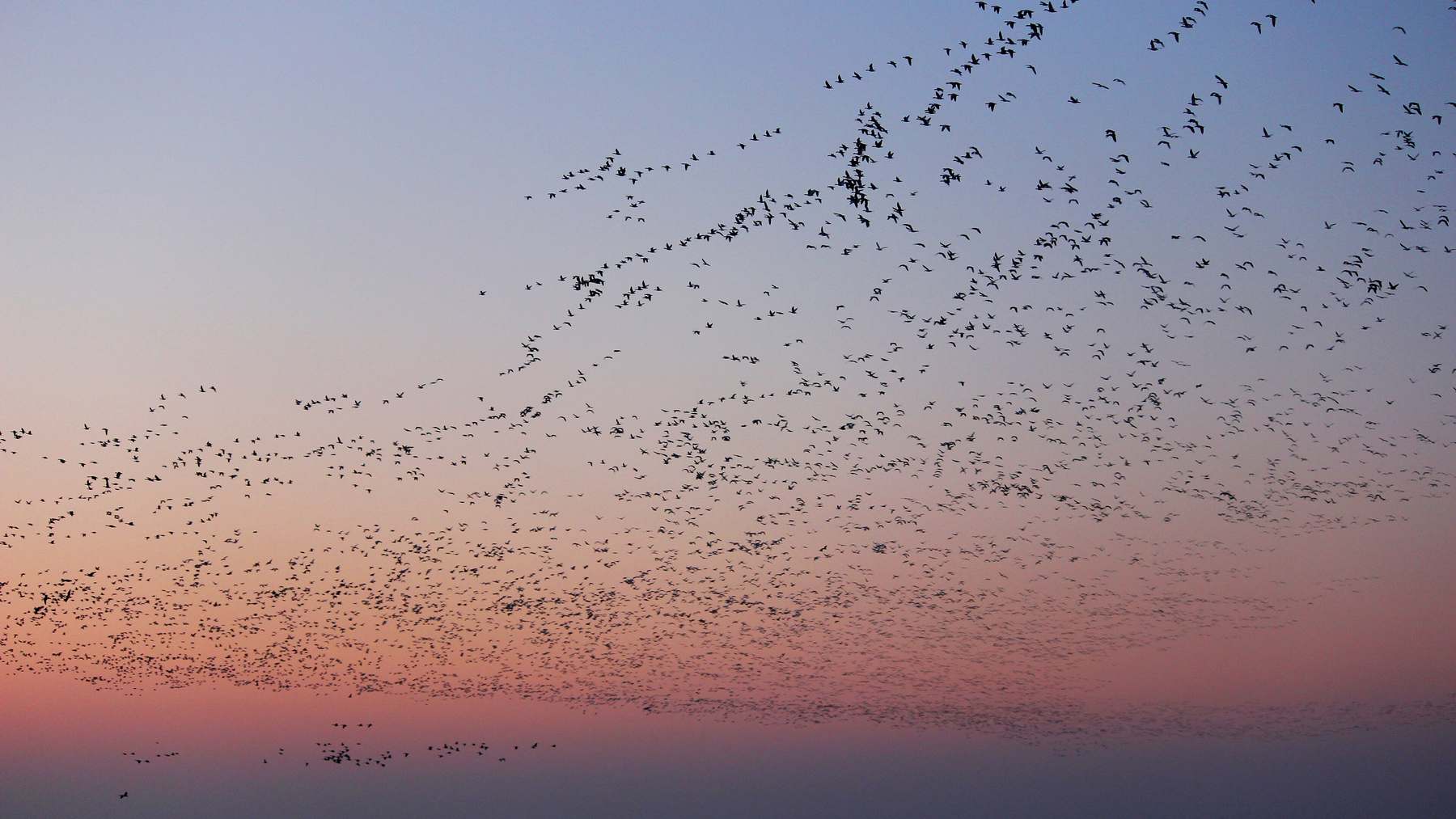
BirdCast, a radar project of the Cornell Lab of Ornithology, estimated that 1.25 billion birds were in the air over the United States on October 8, 2025. BirdCast called it “the biggest night of migration yet recorded by BirdCast.” Bird migration on that scale happened in darkness, while most people slept.
That night was the third time BirdCast has measured more than a billion migrants aloft at once. The first came on October 6, 2023. The second arrived on September 25, 2025, when Cornell reported more than 1.2 billion birds moving after sunset.
Three billion-bird nights since 2023
Cornell described the September 2025 count as the largest single-night total on record at the time. The previous high, about 1 billion birds, dated from October 2023. Two weeks later, the October 8 flight pushed the mark higher again.
BirdCast has published live migration maps since 2018. Its counts come from the national network of NOAA weather radars, the same WSR-88D stations that track rain and storms. In its spring 2026 recap, the project drew on 143 of those radars.
Spring flights run smaller than the fall peaks. BirdCast logged nearly 858 million birds in flight on the night of May 3 to 4, 2026, a spring record, and more than 75 million of them crossed Missouri.
Why songbirds fly at night
“Most bird migration occurs at night,” the BirdCast FAQ states. The project lists several advantages of the dark hours, including fewer predators, a calmer atmosphere without daytime turbulence and cooler air for long flights.
Many night migrants also orient by the stars and by Earth’s magnetic field, according to the same page. BirdCast forecasts focus on the first hours after sunset, when the nightly flights build.
Across the contiguous United States, migrants fly on average more than 350 meters (about 1,150 ft) above the ground, BirdCast reports. At that height, a passing flock stays out of sight of anyone on the ground at night.
Fall migration ends November 30
BirdCast tracks fall migration from August 15 to November 30. Its forecasts and county dashboards stay active until November 15, so the maps still show nightly flights into mid-November.
The forecast maps show where birds are likely to fly about three hours after local sunset. Users can check expected numbers for the next three nights and look up how many birds crossed their own county the night before on the BirdCast dashboard.
599 million birds and glass
Artificial light at night can draw migrating birds toward buildings and confuse them. BirdCast warns that birds can gather in large numbers under bright lights and become trapped in an urban area.
Collisions with glass rank among the largest human-caused threats to birds in the United States. The US Fish and Wildlife Service puts the yearly toll from building glass at 365 million to 988 million birds. Its median estimate, based on a 2014 study by Scott Loss and colleagues, is 599 million.
Switching lights off reduces the danger without ending it. The BirdCast FAQ says that “collisions cannot be prevented by turning lights out alone,” and adds that glass also needs to be made visible to birds.
What Lights Out asks
BirdCast runs Lights Out alerts for cities when its forecast reaches the “high” level. The alerts rest on 23 years of weather and radar data, according to the project’s Lights Out page.
Its advice for homes and offices starts with switching off nonessential lights, especially in lobbies, atriums and gardens. Outdoor fixtures that must stay on should point down and be shielded, and blinds or curtains can block indoor light.
Timers and motion sensors help keep lights off when no one needs them. For bulbs that stay on, BirdCast recommends warm light of about 2,100 to 2,200 kelvin, and no more than 3,000 kelvin for commercial buildings.
Other countries have tried similar dark-sky measures for wildlife. In Switzerland, 29 towns switched off their streetlights for one night, and researchers have tied coastal lighting to the risk to puffin colonies. Wind farms are also testing ways to cut bird strikes, such as painting red stripes on turbine blades.
Radar sees flocks, not individuals
The billion-bird figures describe birds in flight at the peak of a single night. They are radar estimates, and BirdCast does not present them as a head count of individual animals.
Season totals need the same care. BirdCast’s spring 2026 recap counted about 18 billion detections, and because the same bird shows up on radar on several nights, it estimated 4 to 5 billion individual birds. No verified total for fall 2026 is available yet, since the season runs until November 30.
The collision estimate also covers glass strikes by day and by night across the year. It does not isolate deaths caused only by lights during migration, and the underlying study dates from 2014.
The figures come from BirdCast and its record-night report, and from the US Fish and Wildlife Service page on threats to birds, both consulted on October 30, 2026.
Photo: USFWS Mountain-Prairie / Wikimedia Commons (CC BY 2.0)