Poland’s national road agency is boring a 1.4-mile Carpathian road tunnel beneath Grochowiczna hill, south of Rzeszów. On November 1, 2026, its machine still had 2,942 feet (896.64 meters) of rock ahead in the second tube. The latest log from the S19 expressway project puts the length already dug at 4,264 feet (1,299.76 meters).
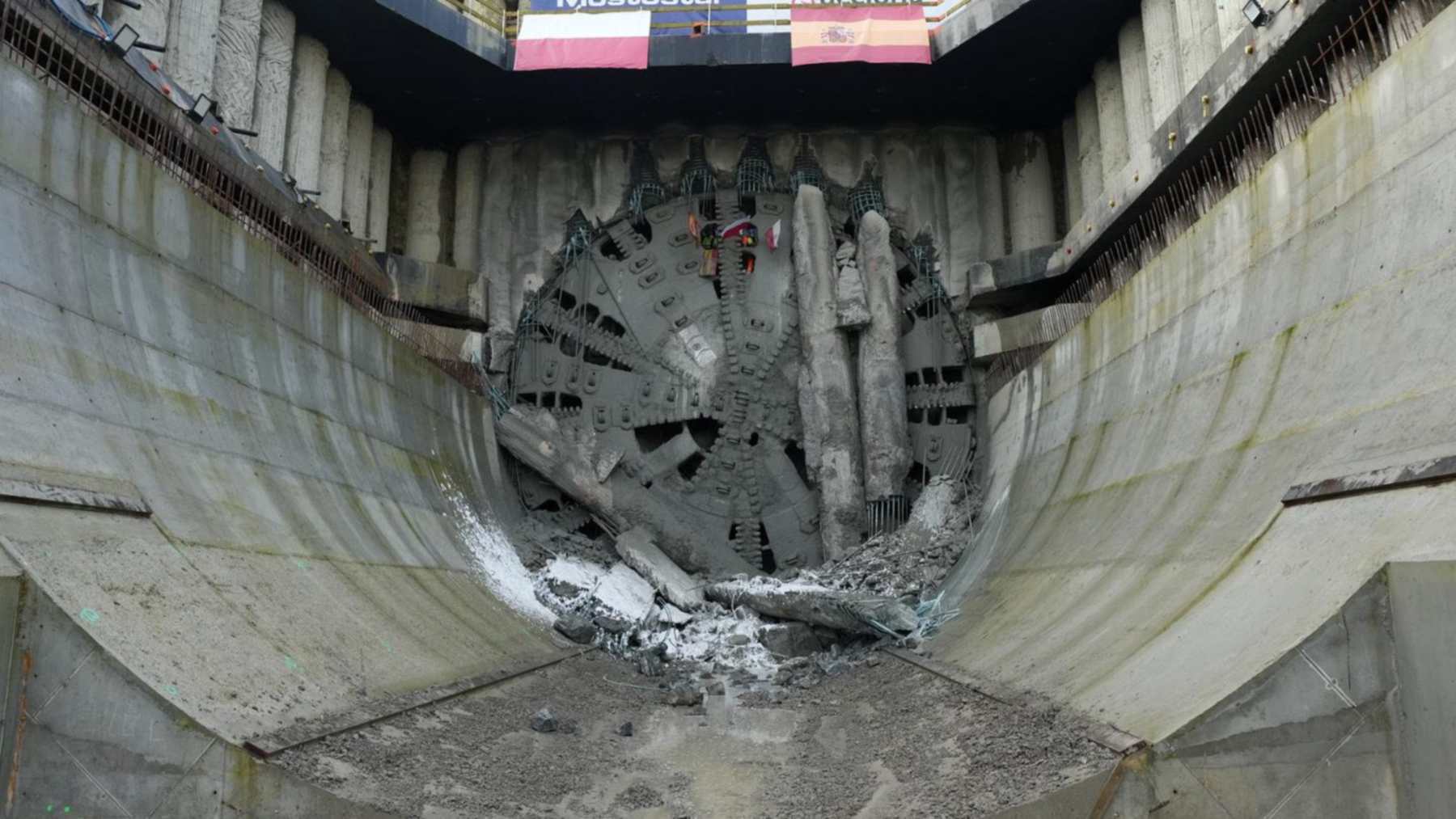
That machine, nicknamed Karpatka, weighs about 4,400 metric tons. It finished the first tube on December 10, 2025. Methane, slow boring and a far larger archaeological dig have pushed the contract deadline from June 14, 2026, to January 7, 2028.
Gas in two of 44 wells
Contractors were lowering the groundwater in July 2023 when gas began escaping from two of 44 wells. The account comes from GDDKiA, Poland’s national roads directorate. Laboratory tests confirmed methane, and the contractor stopped pumping and drilling the remaining wells.
Karpatka then needed a refit before it could start. The EU’s ATEX directive sets the rules for equipment in potentially explosive air. Engineers added methane sensors and a stronger ventilation system, and they swapped parts that could not work safely in those conditions.
Specialists from the AGH mining university in Kraków joined the effort alongside Polish mining regulators. The district mining office in Krosno approved the paperwork in April 2024. Cutting began on July 11 of that year.
Karpatka’s rings of concrete
At 374 feet (114 meters) long, Karpatka spans 49.7 feet (15.16 meters) across. Its 12 motors are rated at 1 megawatt each, roughly 16,100 horsepower combined. The cutting head turns at up to two revolutions per minute and carries 471 tools.
Behind the cutting head, the machine also lines the tunnel. Ten reinforced concrete segments form each ring. A plant at Lutoryż casts them with four overhead cranes, on land set aside for a future service area.
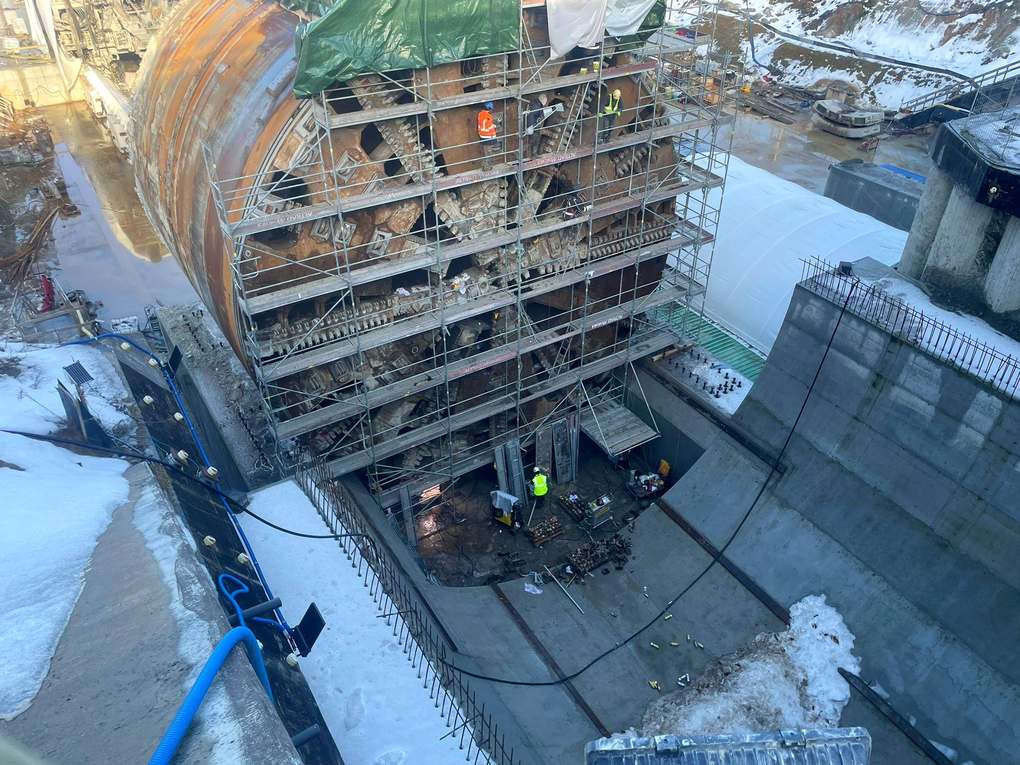
GDDKiA says each tube takes about 1,100 rings. The deepest stretch runs more than 328 feet (100 meters) below the hilltop. Boring the first tube produced about 950,000 metric tons of spoil and used about 23,000 megawatt-hours of electricity.
Moved on cushions of air
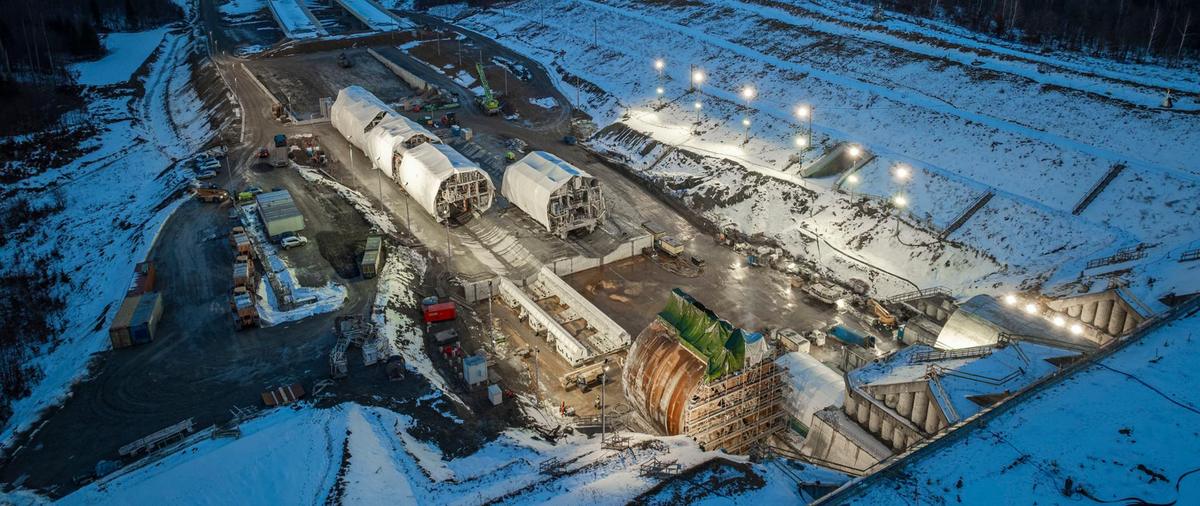
Instead of taking the machine apart into hundreds of pieces, crews divided it into four main sections. An Air Mover then carried them, using pneumatic cushions that lift heavy loads on a thin layer of air.
GDDKiA announced the end of that turnaround on February 13, 2026. Maintenance, inspections and new cutting tools came before the second drive. Crews are already preparing for its end, and the October log records work on a receiving cradle and a dismantling cradle.
From June 2026 to 2028
The third annex to the contract, signed on May 9, 2025, moved the deadline by about 19 months. The plan assumed roughly 10 months per tube. The first drive lasted about 17 months, from July 2024 to December 2025.
GDDKiA addressed the delay in a statement on May 6, 2026. It wrote that the “extension of the completion time stems mainly from the presence of methane on the site” (translated from Polish). The agency also cited slower boring than the contractor had planned.
Its December 2025 report added machine breakdowns and difficult geology and water conditions. Archaeology brought another burden, much as on the highway survey near Hradec Králové. The regional conservator expanded the dig at the south portal to more than 7 hectares (about 17 acres).
By May, the section stood at 58 percent physical progress. Some 77 percent of the contract time had gone.
Six viaducts and two helipads
The 2.23 billion zloty contract covers 6.4 miles (10.3 kilometers) of expressway. EU funding through the FEnIKS program comes to nearly 1.5 billion zlotys. Each tube will carry two lanes plus an emergency lane, and 15 cross passages will link them.
Outside the tunnel, the job includes the Babica interchange, six viaducts, two overpasses and a railway crossing. Podkarpackie will also get its first tunnel management center. Two landing sites will serve air ambulance helicopters.
All of this feeds Via Carpatia, which GDDKiA describes as about 435 miles (700 kilometers) long in Poland. The route follows the S61, S16 and S19 between the Lithuanian and Slovak borders. Other mountain crossings have moved far more slowly, including the stalled Agua Negra tunnel under the Andes.
Bats, amphibians and felled greenery
Three crossings on the section are reserved for animals, sized for small and medium species. Guide fencing will steer amphibians toward safe routes. Roads remain deadly for wildlife elsewhere, as vehicle deaths among Iberian lynx show.
GDDKiA also lists noise and glare barriers, retention basins and devices to clean road runoff. The EU funding record adds safeguards for bats. It also acknowledges removing existing greenery, with new planting to follow.
A carbon total nobody published
That funding record names lower greenhouse gas emissions as a goal, but it gives no tonnage or percentage. The contract page expects heavy traffic to leave built-up areas. It also promises shorter trips and less noise, and none of that can be measured before drivers use the road.
No published log gives a date for the second breakthrough. January 7, 2028, remains a contractual target, and the tunnel’s roadway and operating systems must follow the boring.
The latest figures come from the project’s monthly progress log, with tunneling data current to November 1, 2026.
Photo: GDDKiA