Laurent Simons earns a PhD in quantum physics at 15 in Antwerp and starts a second doctorate in medicine and AI in Munich
· 2 min read
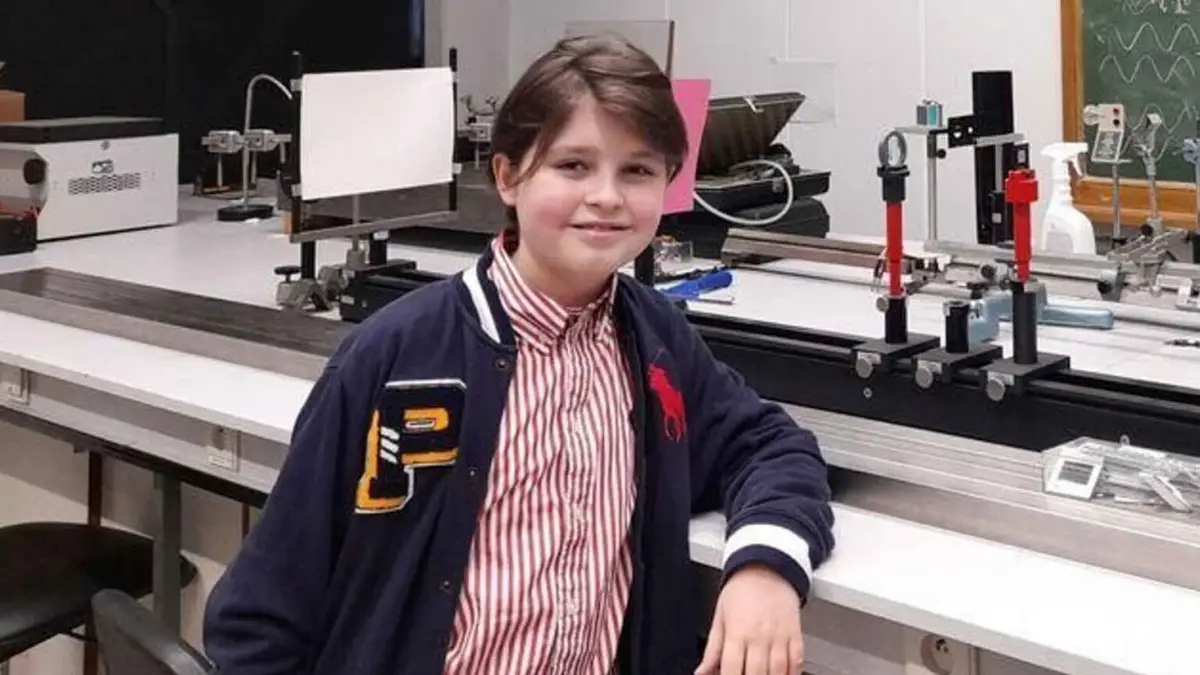
At 15, most teenagers are thinking about school tests, hobbies, or what to do on the weekend. Laurent Simons just defended a doctoral thesis in quantum physics at the University of Antwerp. That headline is remarkable on its own. But the more interesting angle is not just his age. It is the path he is building between frontier physics, artificial intelligence, and medicine.
What his thesis actually studied
Simons’ doctoral work is listed by the University of Antwerp as “Bose polarons in superfluids and supersolids.” What does that mean in everyday terms? He was studying how a tiny impurity behaves inside exotic ultracold matter — the kind of system physicists use to probe strange quantum behavior that is hard to test anywhere else.
This is highly specialized work, but it is also the sort of research that pushes the edges of how matter behaves at its most fundamental level.
The road to Antwerp moved at a speed most schools never have to plan for. Simons finished high school unusually early, briefly studied electrical engineering in Eindhoven, and then completed a physics bachelor’s at Antwerp in 2021 with 85%, the highest distinction.
By 2022, he had also completed a master’s in quantum physics. That is an eye-popping timeline. Still, it helps explain why his PhD is less a bolt from the blue and more the next step in a very fast moving academic story.
His master’s work already showed the same pattern. In that thesis, Simons used Bose-Einstein condensates as quantum simulators to explore difficult effects such as Hawking radiation and the Casimir effect.
In practical terms, even before this latest doctorate, he was using one unusual physical system to help model another. That is part of what makes his academic path so striking. It has been broad, not just fast.
From quantum physics to medicine
And that bridge may be leading somewhere very practical. During an internship at Ludwig Maximilian University and the Max Planck Institute of Quantum Optics, Simons said he was especially drawn to medicine-oriented research and spoke about wanting to grow artificial organs one day.
Now, Helmholtz Munich lists him as a PhD candidate in the Theis Lab, a group focused on machine learning, single-cell genomics, and computational health. So when he talks about pushing human limits, there is already a visible scientific route under his feet.
Yes, the age will keep drawing the headlines. It should. But for the most part, the real story is that Simons seems less interested in being a curiosity than in building a toolkit. Physics first. Then AI. Then health. After the defense, he reportedly told VTM Nieuws that he wants to create “superhumans”.
That line sounds like science fiction. But the official trail around his work points to something more grounded — the merging of advanced physics, machine learning, and biomedical research in ways that could matter far beyond one remarkable teenager.
The official publication record is available on the University of Antwerp’s website.
Adrián Villellas
Writer at ECOnewsAdrián Villellas is a computer engineer and entrepreneur in the fields of digital marketing and advertising technology. He has led projects in data analysis, sustainable advertising, and solutions for new audiences. He also contributes to scientific initiatives related to astronomy and space observation. He writes for science, technology, and environmental media outlets, where he makes complex topics and innovative advances accessible to a broad audience.
More from Adrián VillellasComments · 0
Rules ›No comments yet. Be the first to share your view.