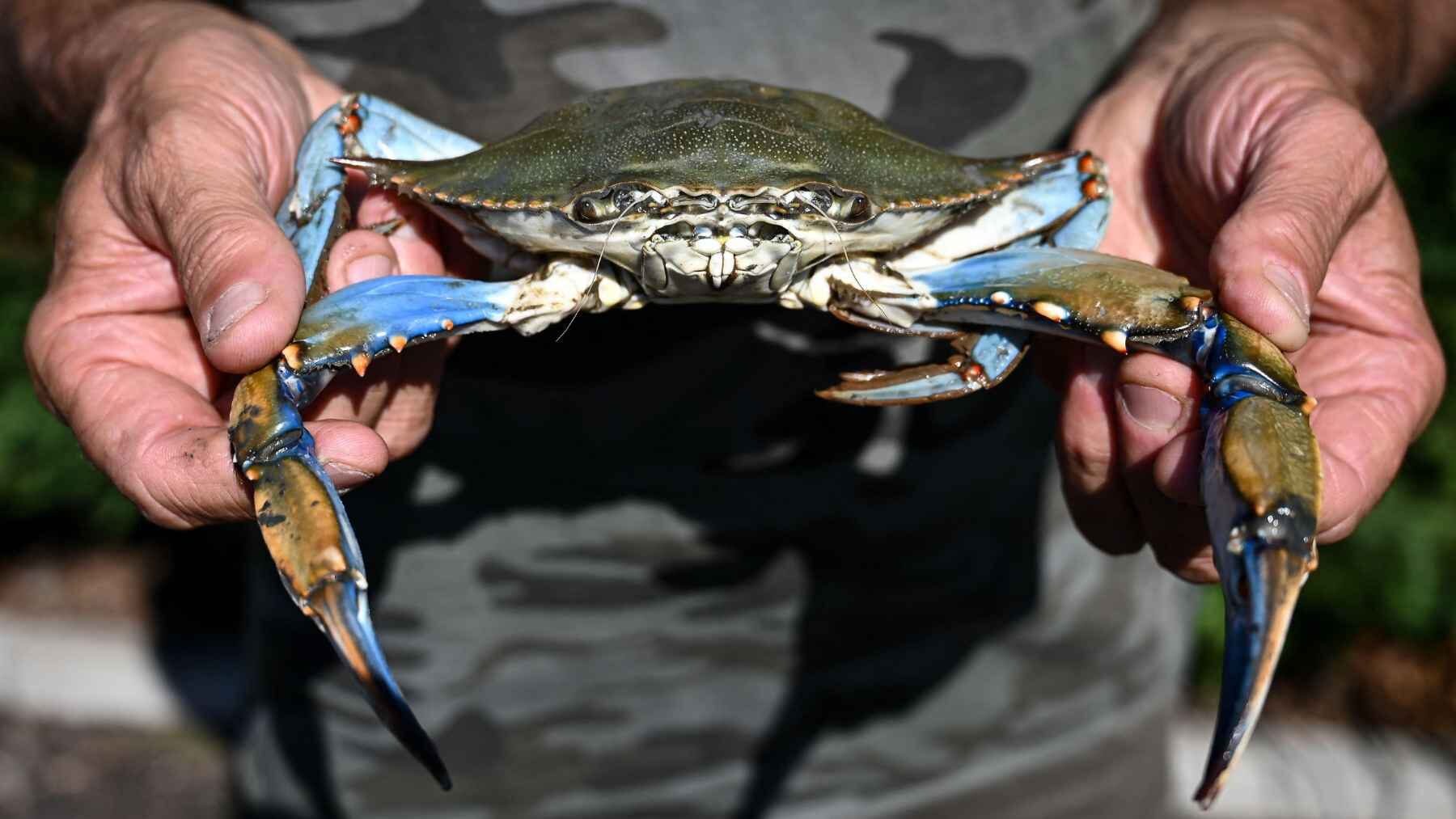
At sunrise in northeastern Italy, Oscarina Soncin and Giovanna Pizzo once pulled more than 4 lb. of Manila clams from the Scardovari lagoon each morning. Then, in 2023, their rakes began bringing up broken shells with nothing inside.
The culprit was a seafood favorite from Maryland and the U.S. Gulf Coast. Atlantic blue crabs have spread through the Po River Delta, helping drive a 93% fall in Scardovari’s annual clam harvest and pushing more than 600 local fishers out of the trade. The region is now trying to turn an ecological crisis into a new way to earn a living.
Why the Po Delta became crab country
An invasive species is a nonnative plant or animal that spreads and causes harm. Blue crabs had lived around the delta for decades, possibly arriving as eggs or larvae carried by ships, but their population did not explode until environmental conditions shifted.
Massimiliano Costa, director of Po Delta Park, and field technician Viviana Carli described ideal crab habitat. The Po delivers nutrients, Adriatic tides bring oxygen and salt water, and the muddy bottom offers shelter from predators and winter cold.
Weather then tipped the balance. Northern Italy’s worst drought in two centuries allowed salt water to move farther upstream in 2022, while heavy rain and flooding spread larvae across the delta in 2023. Warmer Mediterranean water and milder winters have also extended breeding and reduced deaths from cold.
Clam production falls off a cliff
Manila clams are central to Italian cooking, whether mixed into pasta or served steamed. Italy is the world’s second-largest producer after China, with the Po Delta at the heart of the business.
In Goro, average clam production fell to about 4,400 U.S. tons in 2024, a 70% decline from the previous decade. In Scardovari, annual output plunged from roughly 5,300 U.S. tons to about 375 U.S. tons after 2023.
“They completely destroy the clam farms,” said University of Ferrara ecologist Mattias Gaglio. Blue crab catches rose 900% between 2022 and 2024, from about 220 U.S. tons to roughly 2,200 U.S. tons, according to the Aquaculture Advisory Council.
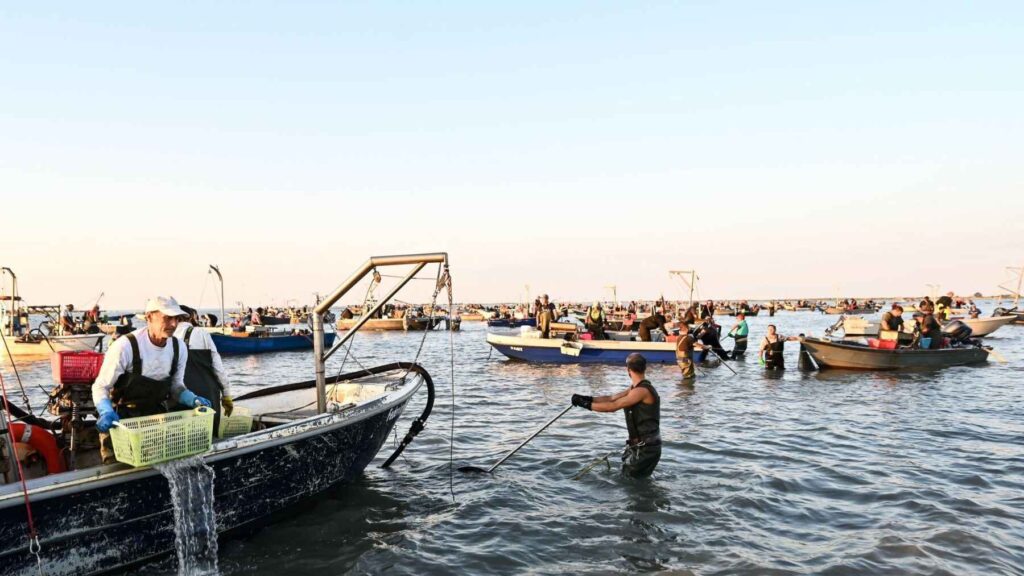
Fishing families are leaving the water
The collapse is not only visible in production charts. The local consortium says more than 600 fishers, around 40% of its membership, have quit, surrendered their licenses, or moved into other work.
The Scardovari cooperative has fallen from 1,470 members before the blue crab surge to 860. That means fewer boats leaving at dawn and generations of practical knowledge at risk of disappearing.
“My experience has taught me that anything can happen in nature,” Soncin said. “The sea can give a lot, yet it can also take everything away, and that is exactly what happened to me.”
Italy’s costly fight falls short
Italy has invested at least $11.4 million, using the European Central Bank’s July 24, 2026 reference rate, to catch and dispose of the crabs. The money also supports stronger fences and nets around clam farms.
Authorities have also encouraged people to eat the invader. Many Italians, however, connect blue crab with local economic damage, and cleaning it takes more work than cooking clams. Much of the catch goes into pet food, while smaller amounts reach restaurants.
Low prices make the problem harder. Catching abundant crabs often produces little profit, while scientists say complete removal may be impossible. “We still do not know what to do with the crab,” ecology professor Giuseppe Castaldelli said.
A new export business emerges
One possible answer is selling the crabs where demand already exists. Sri Lankan company Taprobane Seafoods has partnered with Italian fishers to build an export supply chain that includes the United States.
Italian crews catch the animals, while residents also find work at the processing plant. Paolo Mancin, president of Consorzio Cooperative Pescatori del Polesine, said the partnership seeks to turn the invader into “a new economic opportunity for local fishermen and workers.”
Still, selling crabs is adaptation, not a cure. Trapping, barriers, disposal programs, and new food markets have not contained the population. A female can produce millions of eggs, allowing numbers to rebound quickly.
A much longer day on the lagoon
For 28-year-old Angela Franceschetti, adapting means planning life around the tides. After clam fishing stopped being profitable in October 2023, she and her partner, Marco Finotti, added blue crabs to their catch.
Franceschetti checks tide times before setting her alarm, then spends three to four hours inspecting 80 crab traps. After lunch, the pair may work another four or five hours clearing algae, repairing nets, strengthening poles, and gathering bait.
“Climate change is not only something that affects the environment, it also directly affects my livelihood,” Franceschetti said. In practical terms, a routine that sometimes took less than an hour has become a full day of uncertain work.
Some fishers left the sea behind
Soncin retired from clam fishing in 2024 and began cleaning houses. The pay is similar, though she said it cannot replace the meaning of decades spent outdoors and reading the water each day.
Pizzo also gave up clam harvesting after 34 years and now works in a seafood processing plant. “What I miss most is working closely with nature and enjoying the freedom that came with our work on the water,” Soncin said.
The invasion shows how climate shifts can move from an ecosystem into household income with startling speed. The Po Delta’s next chapter may include crab exports and tougher clam farms, but for many workers, the life they knew has already changed.