What if one of the biggest discoveries in a space mission is still sitting in an online archive, waiting for the right idea to unlock it?
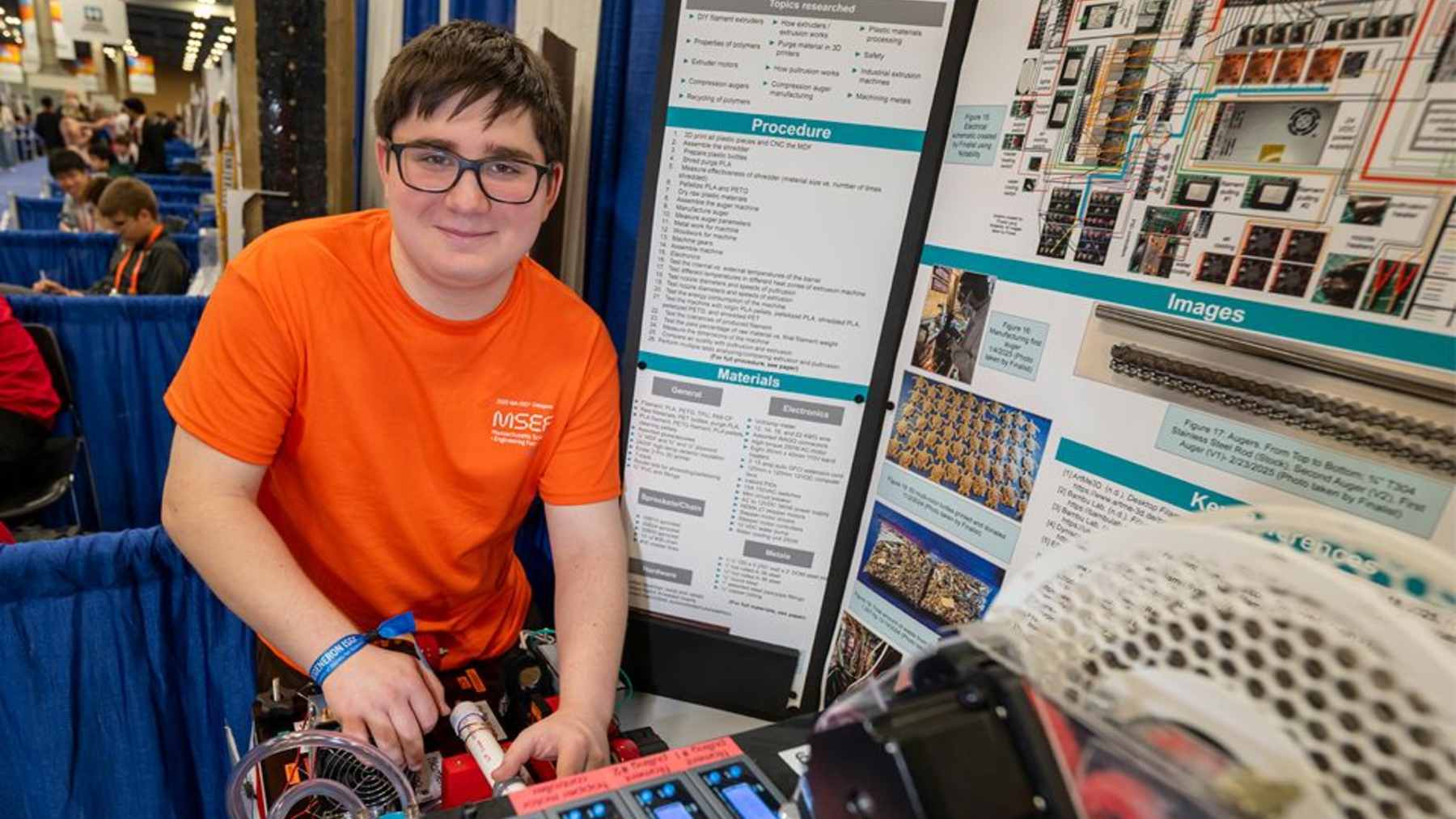
That is essentially what happened when Pasadena High School student Matteo (Matthew) Paz built an artificial intelligence system to reanalyze NASA’s NEOWISE infrared data and flag about 1.5 million previously unrecognized variable objects.
The big number grabs attention, but the bigger takeaway is quieter and more useful. Old datasets are starting to behave like unopened time capsules, and modern machine learning is the key that can finally turn the lid. Paz’s peer-reviewed study describing his approach was published in December 2024 in The Astronomical Journal.
A summer project that outgrew the summer
Paz’s work began with Caltech’s Planet Finder Academy in the summer of 2022, then continued through a six-week Caltech research program pairing local students with mentors. His mentor was astronomer Davy Kirkpatrick at Caltech’s Infrared Processing and Analysis Center (IPAC).
The effort did not stay small for long. It eventually helped Paz win the $250,000 first-place prize in the Regeneron Science Talent Search, a national competition run by the Society for Science.
Instead of reading the sky line by line, Paz wrote a system to spot patterns automatically, then kept refining it with expert feedback. He later described those mentor check-ins in a very human way, saying each meeting was “10% work and 90% us just chatting.”
Why NEOWISE still had secrets
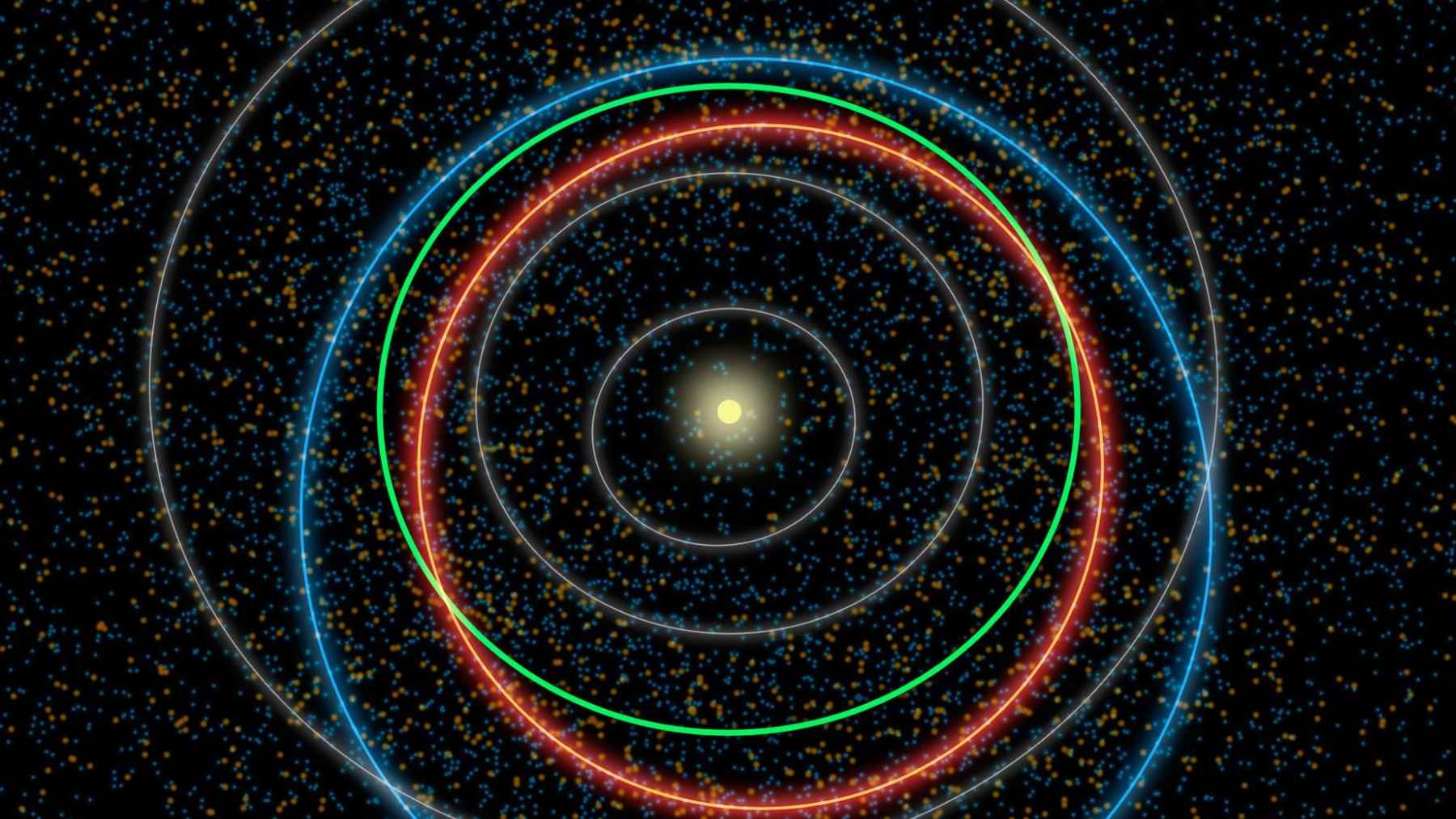
NEOWISE was built to hunt asteroids and other near-Earth objects, yet it also captured the changing infrared signatures of distant targets that brighten, dim, pulse, or flicker. While it was busy tracking asteroids, it was also picking up variable objects such as quasars, exploding stars, and eclipsing star pairs.
The catch was scale, and it is hard to overstate. The NEOWISE single-exposure database holds nearly 200 billion detections spanning about 10.5 years, while a related prize summary notes the full dataset comes to nearly 200 terabytes of information (around 200,000 gigabytes).
Kirkpatrick summed up the challenge with a line that feels familiar to anyone who has stared at a spreadsheet that never ends. The team was “creeping up towards 200 billion rows” of measurements, so even testing a small patch of sky by hand was a slow crawl.
How VARnet spotted the faint flickers
In his paper, Paz describes a system called VARnet that blends signal processing with deep learning. In practical terms, it takes a light curve (a brightness record over time), breaks it into patterns at different time scales, and then learns which patterns look like real variability rather than random noise.
The method uses wavelet decomposition and a Fourier-based feature extraction approach, then runs those features through a neural network. The study reports per-source processing times under 53 microseconds on a modern graphics processor, which is one reason the approach can scale to sky-sized datasets.
Speed is not the only metric that matters, of course. In the same study, VARnet reached an F1 score of 0.91 in a four-class test on real infrared variables, suggesting it can separate several kinds of “change over time” reliably in the cases it was trained for.
From 1.5 million “new” objects to a usable catalog
So what does “new” mean here? It does not mean these stars or galaxies suddenly appeared, but that their variability was not previously identified in a way that made them easy to study at scale.
The Society for Science describes Paz’s project as producing a census of about 1.9 million infrared variable objects, with roughly 1.5 million counted as new discoveries in that cataloging sense. The same description notes that the objects were classified into 10 categories, helping researchers quickly target the kinds of systems they care about.
There is also a practical advantage for anyone who has ever tried to see through haze. An IPAC event listing for the VarWISE catalog notes that the survey finds variability in regions “extincted by dust,” where infrared observations can reveal signals that optical surveys may miss.
The Earth connection that makes this eco news
At first glance, a catalog of variable stars sounds far from everyday environmental concerns. But the core idea is time-series analysis, and Earth is a planet of cycles, from morning rush-hour pollution spikes to seasonal shifts that show up in almost any long record.
Paz drew that line himself, saying his model could “study atmospheric effects such as pollution” because seasons and day-night cycles shape the data. It is a reminder that the math used to catch a dimming star can also be used to detect subtle, periodic patterns in environmental measurements, if the right sensors are watching.
One more nuance belongs in the conversation. As AI becomes a standard tool across science, the energy cost of computing becomes part of the environmental picture, right alongside the benefits of better monitoring, including the very real electric bill.
The study was published in The Astronomical Journal.