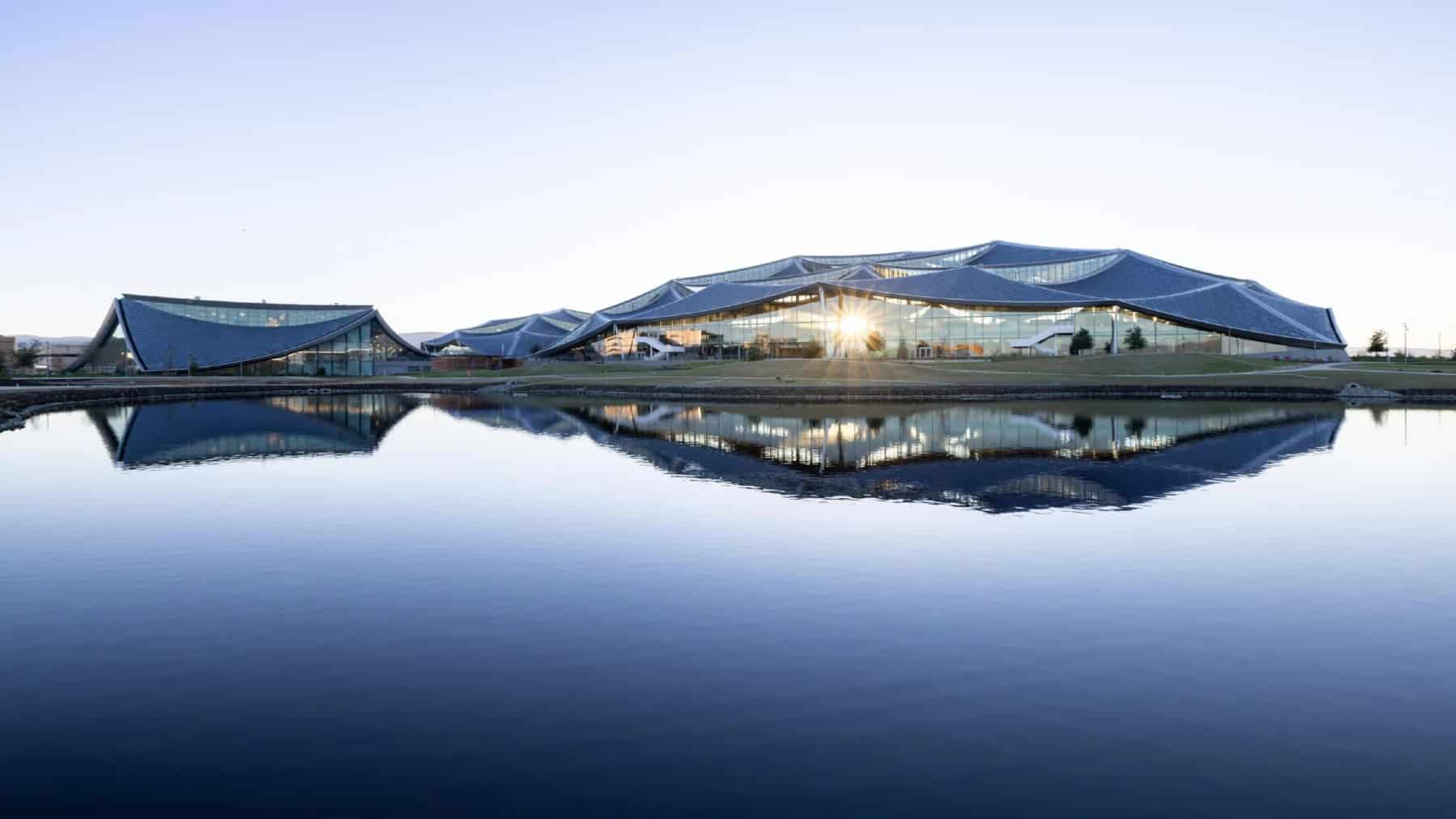
The Google Bay View campus is a sustainable masterpiece that BIG-Bjarke Ingels Group and Heatherwick Studio designed. Its most distinctive characteristic is its “dragonscale” solar skin, which uses 50,000 solar panels for energy generation and delivers a building appearance for the future. The article investigates the technical aspects and design techniques combined with this ground-breaking solar skin system’s functional behavior and operational results.
This futuristic solar roof system represents a transforming method to collect renewable energy.
Designer principle innovation from BIG and Heatherwick Studio materialized in the dragon-scale solar skin design. A dragon-scale effect emerges from panels that stack vertically over each other to create this distinctive roof design. The architectural design achieves aesthetic beauty for the structure while making energy efficiency levels at maximum potential.
Tempered glass makes up the roof panels because they have strong durability and ease-of-walkability properties for routine inspections. The designated space for the extensive thermal expansion of the region consumes 35 square-inch segments. The glass surface reduces reflection because it is essential for a campus near a small airport. The solar alternative system distributes all incoming light photons through clerestory windows and power generation mechanisms.
Google’s ambitious plan is to produce 100% carbon-free energy by 2030.
The Google Bay View campus operates under its 2030 objective to achieve full carbon-free energy status by using its dragon-scale solar skin. The building draws 40% of its energy requirements from seven-megawatt energy production by solar panels. Google has established this initiative as a component of its sustainability pledge, which targets reducing its total carbon emissions.
The campus operates the largest North American geothermal pile system for building heat and cooling needs that lowers cooling water consumption by 90%. Each separate building element in this development contributes toward its full sustainability goals through a comprehensive approach. Using geothermal technology and solar power, Google has created an innovative example of environmentally sustainable office parks.
The futuristic roof combines efficient performance with aesthetic beauty while being smart.
The dragon scale solar skin functions beyond looks since its design provides benefits to boost building operational efficiency. The roof structure enables maximum daylight entry, reducing indoor lighting requirements and producing favorable illumination conditions for employees. The architectural feature of clerestory windows in the canopy roof design balances natural illumination with reduced exposure to sunlight.
Through rainwater collection, the roof enables the entire campus to reach water positivity standards by meeting complete non-potable water needs and processing wastewater from surrounding facilities. The establishment of this system would position Bay View as the biggest facility ever to attain Water Petal certification from the International Living Future Institute’s Living Building Challenge. The clever combination of energy-saving techniques and water-saving protocols transforms this campus into a cutting-edge sustainable development.
The discovery of solar technology shows the potential to transform architectural standards worldwide.
The design of the Google Bay View campus serves as a sustainable model that future projects will follow. Drakenscale solar skin is a prime case of how creative engineering enhances product appearance while enhancing operational efficiency. The campus integrates cutting-edge technology alongside sustainability measures to prove the construction of visually attractive buildings that protect ecosystems.
The dragonscale solar skin system brings valuable implications to the construction market. The solution demonstrates how building-integrated photovoltaics (BIPV) work and motivates additional developers to implement comparable approaches. The building requires architect-engineer-sustainability expert partnerships while creating innovative structural designs.
Google Bay View campus demonstrates remarkable success with its dragon-scale solar skin implementation. The design application of modern technology emerges through visionary concepts to produce an operationally useful architectural structure that maintains visual appeal. This sustainable project demonstrates to the world what future development possibilities can achieve as we work towards environmental sustainability.