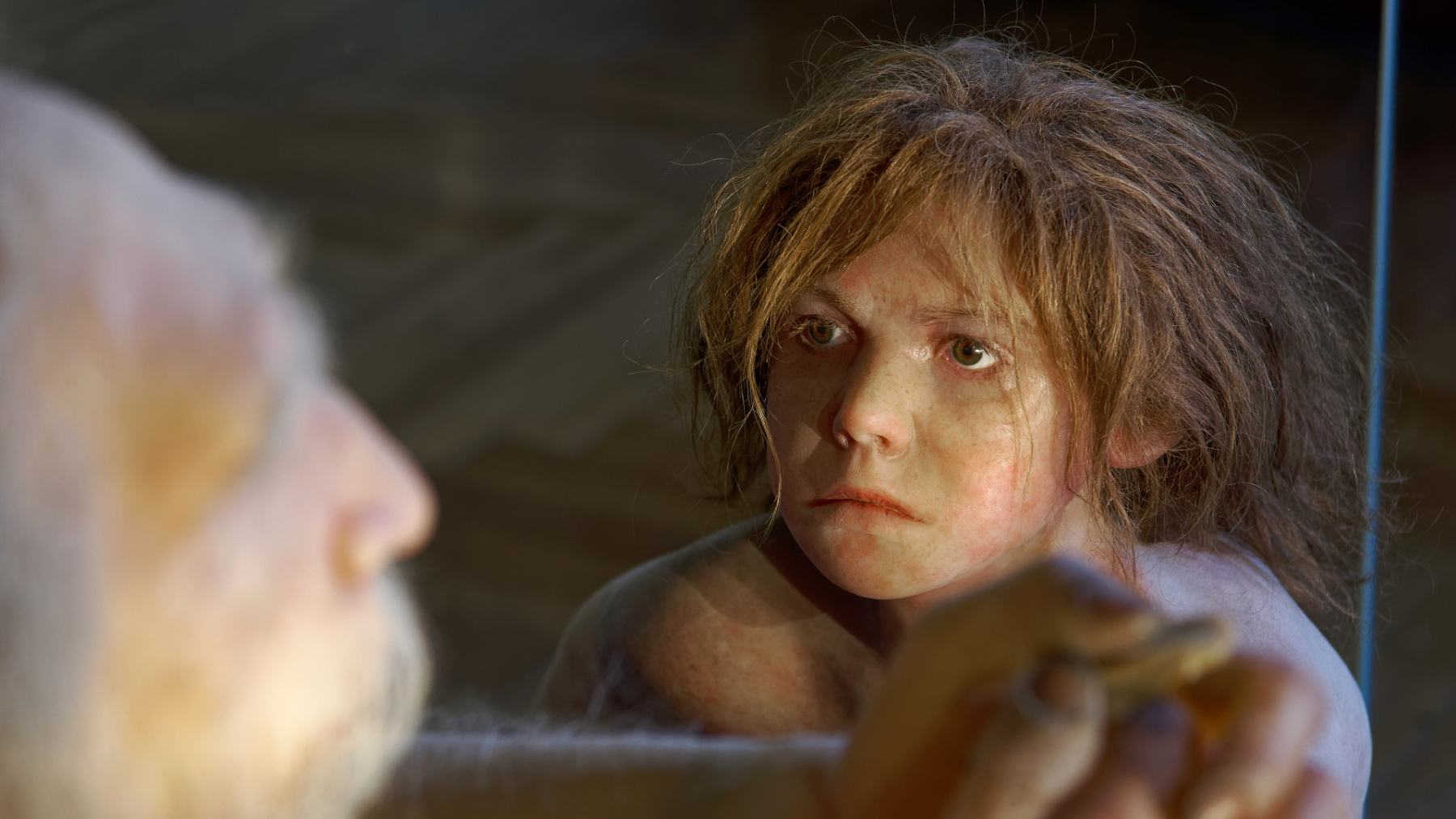
Neanderthal bones from ten sites in Belgium and France, with a focus on caves in Belgium’s Meuse Basin that were mostly excavated in the 19th century, have now yielded DNA from 27 individuals, and the genomes show no evidence of recent gene flow from Homo sapiens, although both groups were living in Europe at the same time.
The work was led by Alba Bossoms Mesa, a doctoral researcher at the Max Planck Institute for Evolutionary Anthropology in Leipzig, Germany, with Benjamin M. Peter and Mateja Hajdinjak as senior authors. In the words of the study, the team “generated genetic data from 27 Neanderthals who lived less than approximately 52,500 years ago from ten archaeological sites in Belgium and France.”
A rare high-quality genome from Goyet Cave
Most of the bones held very little usable DNA, with a median of less than 1 percent of sequences matching the human genome, but a fragment from Goyet Cave labeled Q56-1 reached 37 percent. That allowed the team to read its genome 22.4 times over on average, “yielding the fifth high-coverage Neanderthal genome sequenced to date,” the authors write.
The Goyet individual was a female who lived about 45,000 years ago. “Until now, we only had four high-quality Neandertal genomes and a limited number of lower-quality ones, so most questions about the regional diversity of Neandertals have been difficult to address,” Bossoms Mesa said in the Max Planck Society’s announcement.
“The Neanderthal remains at Goyet are highly fragmented, with anthropogenic modifications suggesting that the individuals were cannibalized,” the paper notes, and sulfur isotope values suggest “non-local origins at Goyet.” Genetic tests found no close relatives among them, and the authors conclude that this group of unrelated females and two juveniles was “not a family group.”
Meuse Basin Neanderthals belonged to a connected population
Most of the Belgian and French individuals turned out to be “more closely related to one another than to other contemporaneous late Neanderthals in Europe,” according to the paper. Their closest well-sequenced relative was a Neanderthal known as Vindija 33.19 from Croatia, whose population split from theirs around 54,000 years ago.
The team also looked for long stretches of DNA that are identical on both copies of a chromosome, a sign that a person’s parents were closely related. Neanderthals from the Altai Mountains of Siberia carry many of these stretches, while the Goyet genome “shows no excess of such long tracts, providing no evidence for recent inbreeding.”
“Our results show that the picture emerging from one region cannot simply be applied to all Neandertals,” Peter, a group leader at the institute, said in the announcement. “The late Neandertals from North-Western Europe appear to have been part of a connected regional population, rather than small, isolated groups with frequent mating between close relatives.”
Genes flowed from Neanderthals into our ancestors
According to the paper, these Neanderthals “overlapped temporally with early modern humans in northwestern Europe from around 47,000 years ago.” The authors explain that because they “lived at most 500 generations after the first possible interactions with early modern humans, we would expect multiple introgressed modern human DNA tracts longer than 1 cM in their genomes if introgression took place.”
A centimorgan, or cM, measures a stretch of chromosome, and introgression is the term for genes entering one population through interbreeding with another. The check covered ten of the 27 individuals. “We identified potential tracts of modern human DNA in four of the ten Neanderthals, but the longest tract we found was only 0.41 cM long, inconsistent with recent introgression,” they write.
“Our results add to a striking asymmetry,” Bossoms Mesa said. “We repeatedly find Neandertal ancestry in early modern humans, but so far, we have not found clear evidence of recent modern human ancestry in late Neandertals.”
All 13 genomes of early modern humans in Eurasia older than 40,000 years carry Neanderthal ancestry, “and four of them have Neanderthal ancestors only 4–10 generations before they lived.”
The authors write that the pattern “may reflect the dynamics of introgression, with Neanderthal gene flow into modern humans occurring early during the expansion of modern humans into Eurasia and all later modern humans being descended from the admixed population.” It could also reflect “demographic imbalances, biases in mate choice, the incorporation of the offspring of Neanderthal–modern human couples in primarily modern human groups or differential fitness of offspring,” they add.
Chris Stringer, research leader in human evolution at the Natural History Museum in London, flagged the same puzzle in 2022. “We don’t know if the apparent one-way gene flow is because it simply wasn’t happening, that the breeding was taking place but was unsuccessful, or if the Neanderthal genomes we have are unrepresentative,” he said in a museum article.
“As more Neanderthal genomes are sequenced, we should be able to see whether any nuclear DNA from Homo sapiens was passed on to Neanderthals,” Stringer added. Other research has suggested that our ancestors interbred with Neanderthals more often than once thought, and in the same piece Stringer went further: “We propose that this behaviour could have led to the Neanderthals’ extinction if they were regularly breeding with Homo sapiens, which could have eroded their population until they disappeared.”
The new genome also helps narrow down where most of that mixing happened. Neanderthal DNA in people living today tends to be closer to Vindija 33.19 than to the Goyet genome, which the authors read as a sign that gene flow “probably occurred predominantly outside northwestern Europe.”
No sign of genetic decline before the end
One popular explanation for the Neanderthals’ disappearance holds that small, inbred groups piled up harmful mutations, a burden geneticists call genetic load. Comparing early and late Neanderthals, the team found that “genetic load did not accumulate over time, arguing against progressive genetic deterioration as a driver of Neanderthal extinction.”
“These results do not rule out the possibility of demographic vulnerability, however, they challenge the idea that Neandertals disappeared mainly because their genomes steadily deteriorated,” the Max Planck announcement says. In September, we reported that Europe’s last Neanderthals were not isolated, inbred groups.
Several kinds of humans once shared the planet
Everyone alive today belongs to Homo sapiens, which the Natural History Museum traces to at least 300,000 years ago in Africa. For most of that time, our ancestors lived alongside other humans, among them Denisovans in Asia and the tiny Homo floresiensis on the island of Flores.
“We already knew that Eurasia contained diverse human lineages about 300,000 years ago,” Stringer said in 2020, after the Broken Hill skull from Zambia was dated to about 299,000 years. “Now, the same applies to Africa.”
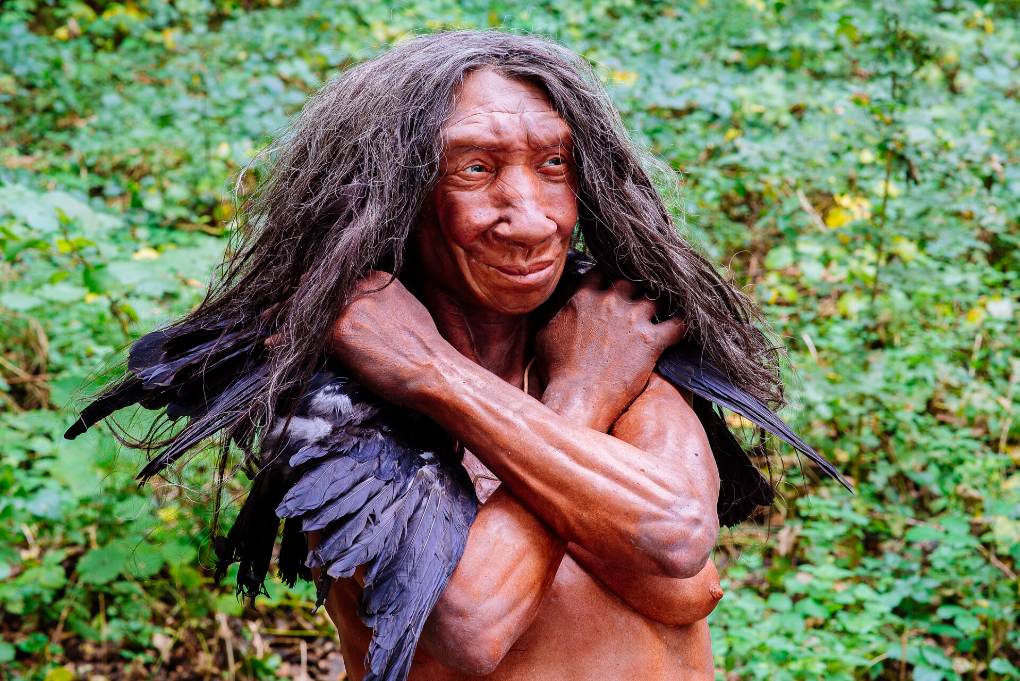
Neanderthals themselves lived in Europe and western Asia from at least around 430,000 years ago “until around 40,000 years before present,” the authors write, and some of their last refuges, like a cave sealed in Gibraltar for 40,000 years, are still being studied.
Our species learned to live almost anywhere
How Homo sapiens spread out of Africa is its own line of research. “We assembled a dataset of archaeological sites and environmental information covering the last 120 thousand years in Africa,” said Emily Hallett of Loyola University Chicago, an author of a 2025 study in Nature, in the Max Planck Institute of Geoanthropology announcement.
“Our results showed that the human niche began to expand significantly from 70 thousand years ago, and that this expansion was driven by humans increasing their use of diverse habitat types, from forests to arid deserts,” said her colleague Michela Leonardi of the Natural History Museum.
Eleanor Scerri, a research group leader at that institute, said the groups “moving into Eurasia after ~60-50 thousand years ago were equipped with a distinctive ecological flexibility as a result of coping with climatically challenging habitats.” Andrea Manica of the University of Cambridge added that “around 70,000-50,000 years ago, the easiest route out of Africa would have been more challenging than during previous periods, and yet this expansion was sizeable and ultimately successful.”
Other teams are still working out where Homo sapiens first emerged, and that flexibility helps explain how our ancestors spread, although it says much less about why the Neanderthals and other humans vanished.
What the study cannot tell us
“The genetic data show both connection and complexity,” said Hajdinjak, a group leader at the institute. “Most late Neandertals from North-Western Europe are closely related at the population level, but some lineages point to much deeper and more diverse Neandertal history.”
A tooth from Couvin, in Belgium, carries mitochondrial DNA, which passes only from mother to child, from the same deeply divergent lineage as the “Thorin” Neanderthal from Grotte Mandrin in France’s Rhône Valley. A female from Arcy-sur-Cure, in France, belongs to a population that split off roughly 131,000 years ago, and the authors write that both “hint at a more complex population structure of late Neanderthals, but higher-quality data will be needed to corroborate this.”
Even the local overlap is uncertain, since radiocarbon dates of bone tools from Belgian sites “suggest that there was no overlap between modern humans and Neanderthals in this region.” The authors add that “future studies from different time periods or from other parts of Eurasia will be key to determining whether the patterns observed here represent a local anomaly or a broader feature of Neanderthal social organization.”
“Rather than viewing late Neandertals as a single declining population, we are beginning to recognise a more complex picture of regional diversity, connectivity, and population history,” said Janet Kelso, a co-author and group leader at the institute.
The full study was published in Nature.