The Korean scientific community has recently revealed the world’s initial invisible solar cell. The revolutionary solar innovation brings a new possibility to solar energy collection through invisible integration within human environments. The power-generating features of these transparent solar cells could function through the household glass to establish the path toward power infinity.
Technological development has transformed glass into a powerful clean energy solution.
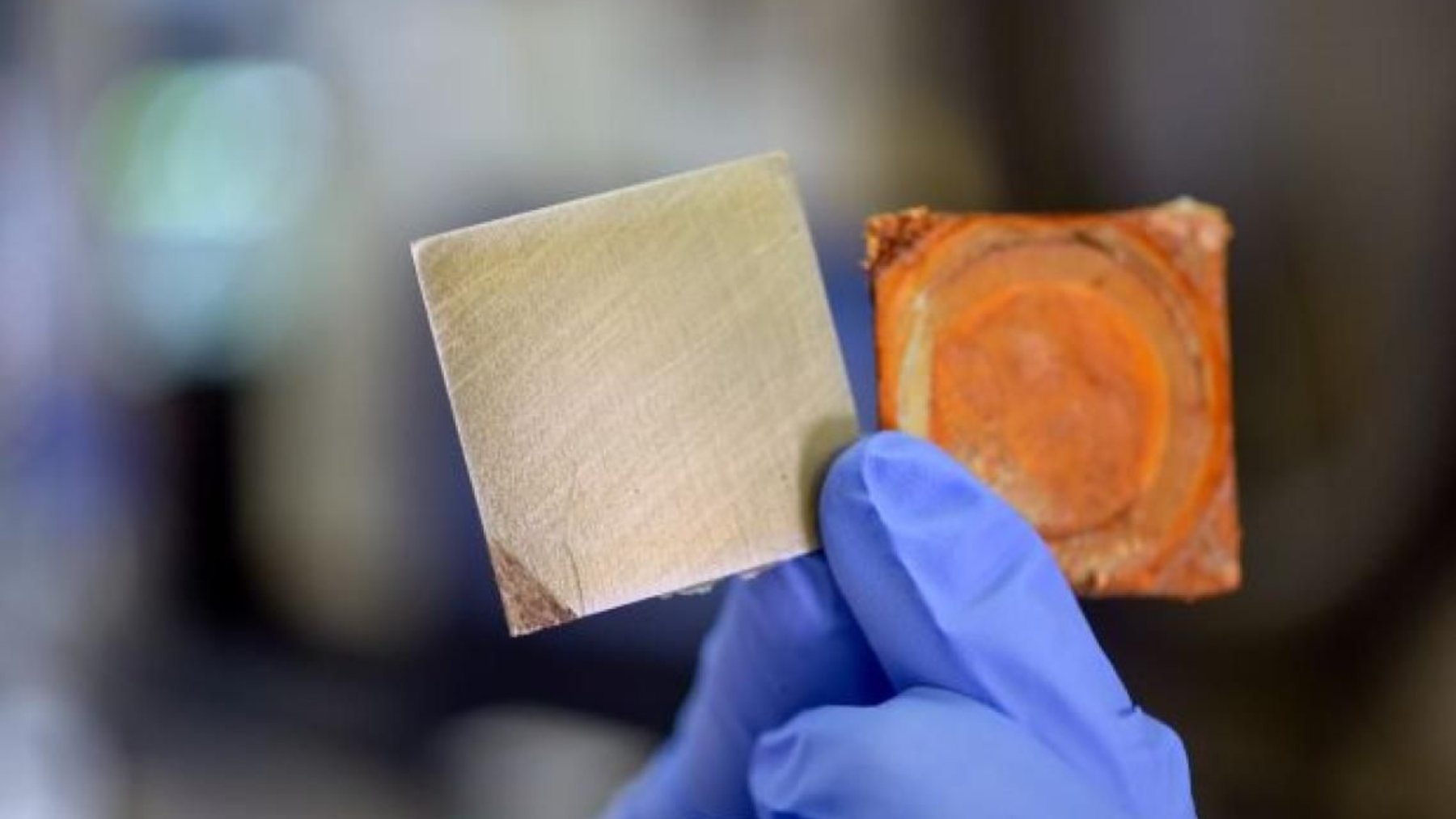
The Ulsan National Institute of Science & Technology (UNIST) in South Korea developed an all-back-contact (ABC) configured transparent solar cell at their research site. The electrical contact placement on the rear side through this design makes the crystalline silicon (c-Si) cell resemble glass. The ABC-transparent c-Si solar cell attained a power conversion efficiency of 15.8% through its average visible transmittance, keeping at 20%.
The Seamless Modularization solution from the team removes device gaps so they work without any wire connections. A solar module without metal wires shows high PCE and total transparency, making it possible to see through transparent solar modules. With its 16 cm 2 size, the solar module achieved 14.7% power conversion efficiency when powering up a smartphone with sunlight.
Most buildings can turn into energy-generating facilities by installing invisible solar panels.
The distinctive feature of transparent solar panels provides an approach to resolving space restrictions in regular solar power systems. The panels enable power generation through transparent surfaces applied to windows and skyscrapers along with phone screens, thus integrating renewable energy into cities without any impact on appearance. Solar technology absorbs ultraviolet and near-infrared light waves yet maintains a clear structure that allows visible light to pass through.
The transparency of solar panels creates infinite opportunities for various applications. Transparent solar cells are appropriate for use in architectural features, consumer electronic products, and urban infrastructure. Skyscrapers, homes, and offices can install transparent solar panels inside windows and facades, which form structures that work effectively while using energy efficiently. Buildings that function as power generation facilities can be found at bus stops and train stations through transparent glass frameworks with dual-energy capabilities. Transparent panels help renewable power management by enabling longer battery operation without requiring bulky casing in technological devices ranging from smartphones to wearable gadgets.
This solar technology provides potential solutions for modern urban developments regarding smart city growth and environmental sustainability.
Transparent solar panels separate themselves through their environmentally benign operations. These modern solar panels transform regular glass surfaces into SELECT power-generation zones regardless of where the glass exists. The technology minimizes the requirement for extra land resources while safeguarding natural environmental areas. Both nickel oxide and titanium dioxide demonstrate an eco-friendly and commercially available composition for transparent solar panels.
Despite current progress, barriers still exist in this domain. Transparent solar panel technology currently has lower energy conversion rates than opaque solar cells because creating clear instead of dark panels reduces available light for absorption. Experts work on material development alongside innovative design strategies to build more powerful transparent solar products. Their development will lead to improved performance and reduced costs, making large-scale implementation possible.
Invisible solar panels will reach the market shortly
A major breakthrough in the eternal power quest happened with the launch of the first solar cell that remains unseen to the human eye. đọcogi can fundamentally change urban landscapes by merging renewable energy systems into everyday city living spaces. Integrating transparent solar panels into windows, façades, and vehicle windows makes renewable energy readily available as urban buildings require no extra land and maintain architectural appeal.
Forecasting shows that the future development of transparent solar panels will go far beyond technological boundaries. Sustainability is essential to weave through our daily activities to create self-powered buildings, mobile devices, and sustainable clean energy communities. Further research and financial support will ensure transparent solar technology becomes central to achieving worldwide carbon neutrality while preserving the glass-like clarity of its power source.
Korean scientists introduced groundbreaking invisible solar cells, representing a major development that can lead to sustainable energy developments in the future. This technology supplies renewable energy through glass surfaces while providing an attractive solution that resolves traditional solar system issues. Research and development activities will lead transparent solar panels toward becoming vital components of the upcoming eco-friendly future energy industry.