Jellyfish don’t produce electricity, but Aequorea victoria glows green thanks to a protein that Swedish researchers were turning into a lab solar device in 2010, while the electric eel can hit 800 volts

· · 4 min read
Updated November 13, 2026, with a direct, sourced answer on whether jellyfish produce electricity, NOAA’s explanation of bioluminescence, how Aequorea victoria glows, the 2010 Chalmers lab device built from jellyfish protein and the electric eel’s 800 volts.
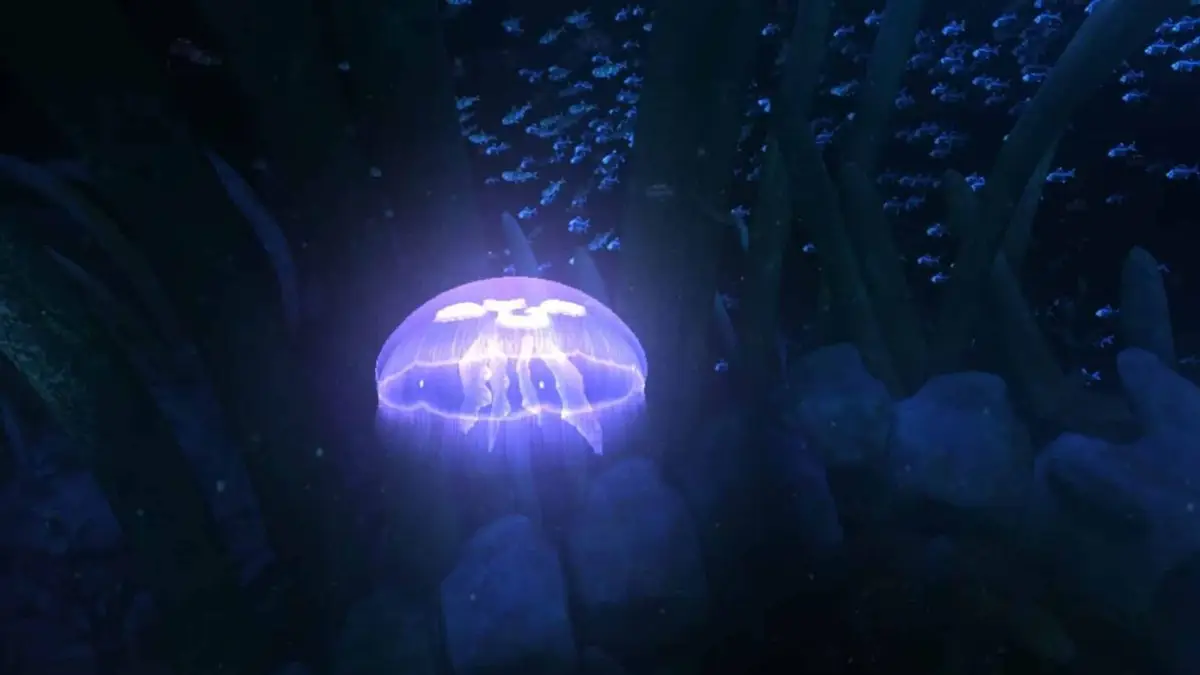
No, jellyfish don’t produce electricity: what some species make is light, and in Aequorea victoria, a jellyfish common in Washington’s Puget Sound in summer, that light comes from a protein called aequorin, according to Claudia Mills of the University of Washington’s Friday Harbor Laboratories.
That glow is chemistry, not current, and it’s hard to catch. Mills writes that it shows up only along the rim of the bell and is rarely seen in animals that haven’t been disturbed.
The rest of the animal is surprisingly simple. NOAA’s National Ocean Service describes jellyfish as invertebrates in the phylum Cnidaria, the same group as sea anemones and corals. They have no brain, and their bodies are about 95 percent water.
What they do have is a basic nerve net that lets them pick up light and odors and respond to what’s around them. That’s about as close as a jellyfish gets to a control center. The agency’s jellyfish page doesn’t mention electricity at all.
A run-in at the beach isn’t a shock, either. Jellyfish sting with their tentacles, and for people, most of those stings cause mild discomfort, NOAA says.

Why some jellyfish glow
Jellyfish that light up aren’t generating electricity. They’re running bioluminescence, which NOAA defines as the production and emission of light by a living organism. The energy comes from chemical reactions that happen inside the animal, or in material the animal releases into the water.
Glowing species live everywhere from the ocean surface down to the seafloor. According to NOAA, they use the light to warn off or slip away from predators and to lure or spot prey, and some use it to communicate.
Aequorea victoria does it in two steps: aequorin produces light, and a second protein coupled to it, green fluorescent protein (GFP), makes that light appear green, Mills writes.
The species ranges from the Bering Sea to Southern California, and adults can be seen at the surface in Puget Sound and the Strait of Georgia during the summer. Individual jellies don’t stick around long, though: Mills says most probably live six months or less in the wild.
Two jellies that West Coast beachgoers can run into, the Pacific sea nettle and the moon jelly, get no mention of bioluminescence on the Monterey Bay Aquarium’s species pages. The sea nettle lives along the coast from Alaska to California. Its bell reaches about 18 inches (45 centimeters), its oral arms trail 12 to 15 feet (3.6 to 4.6 meters) and it’s armed with stinging cells. The moon jelly grows to about 2 feet (60 centimeters) and is common in Monterey Bay and along the California coast, the aquarium says.
ECONEWS has also reported on a jellyfish smaller than a fingernail that can reverse aging (its reset trick isn’t the immortality people imagine) and on the hundreds of pink lion’s mane jellyfish that washed up on a Baltic beach near Germany’s Fehmarn island.
Where “jellyfish energy” comes from
Ask where a jellyfish gets its own energy, and the answer is food: the moon jelly, for one, eats zooplankton, the Monterey Bay Aquarium says.
The lab work on jellyfish as a power source used GFP, not live jellyfish. In 2010, a team led by Zackary Chiragwandi at Sweden’s Chalmers University of Technology in Gothenburg was developing a photovoltaic device (a type of solar cell) from the jellyfish protein, Physics Today reported on September 8, 2010. The idea was to power nanodevices inside living organisms.
That was a laboratory effort, not a product, and the report gave no figures for how much current the device made.
The same report covered a separate project that had nothing to do with jellyfish. Cambridge researchers Adrian Fisher and Paolo Bombelli suggested their cells, built with algae, could float at sea and generate electricity from sunlight and seawater.
The animal that does carry a charge
Jellyfish aren’t electric animals. The electric eel is, and it doesn’t even live in the sea. According to the Smithsonian’s National Zoo, it lives in tropical fresh water in South America, breathes air and grows 6 to 8 feet (2 to 2.5 meters) long, which is longer than most people are tall. The IUCN listed it as a species of least concern in 2009.
Most of that body is wired for power. Three electric organs (the main organ, Hunter’s organ and Sachs’ organ) make up about 80 percent of it, and they can put out as much as 800 volts, the zoo says. That’s more than six times the 120 volts from a standard US wall outlet.
The eel uses its charge to defend itself, and the zoo lists hunting, communication and navigation among its uses, too. Hunting has its own rhythm: the eel fires a doublet, two pulses in quick succession, then lets loose a volley of high-voltage pulses at up to 400 per second.
Glossary for this story
- NOAA
- The National Oceanic and Atmospheric Administration: the U.S. agency that tracks weather, climate, oceans and fisheries.
- Solar power
- Electricity made from sunlight, usually with panels whose cells turn light directly into current.
ECOnews Newsroom
Writer at ECOnewsA team of journalists specializing in socio-environmental news, sustainability, climate change, the environment, responsible consumption, and innovation. At EcoNews, we provide clear, reliable, and relevant coverage of the environmental and social challenges shaping our era.
More from ECOnews NewsroomComments · 0
Rules ›No comments yet. Be the first to share your view.