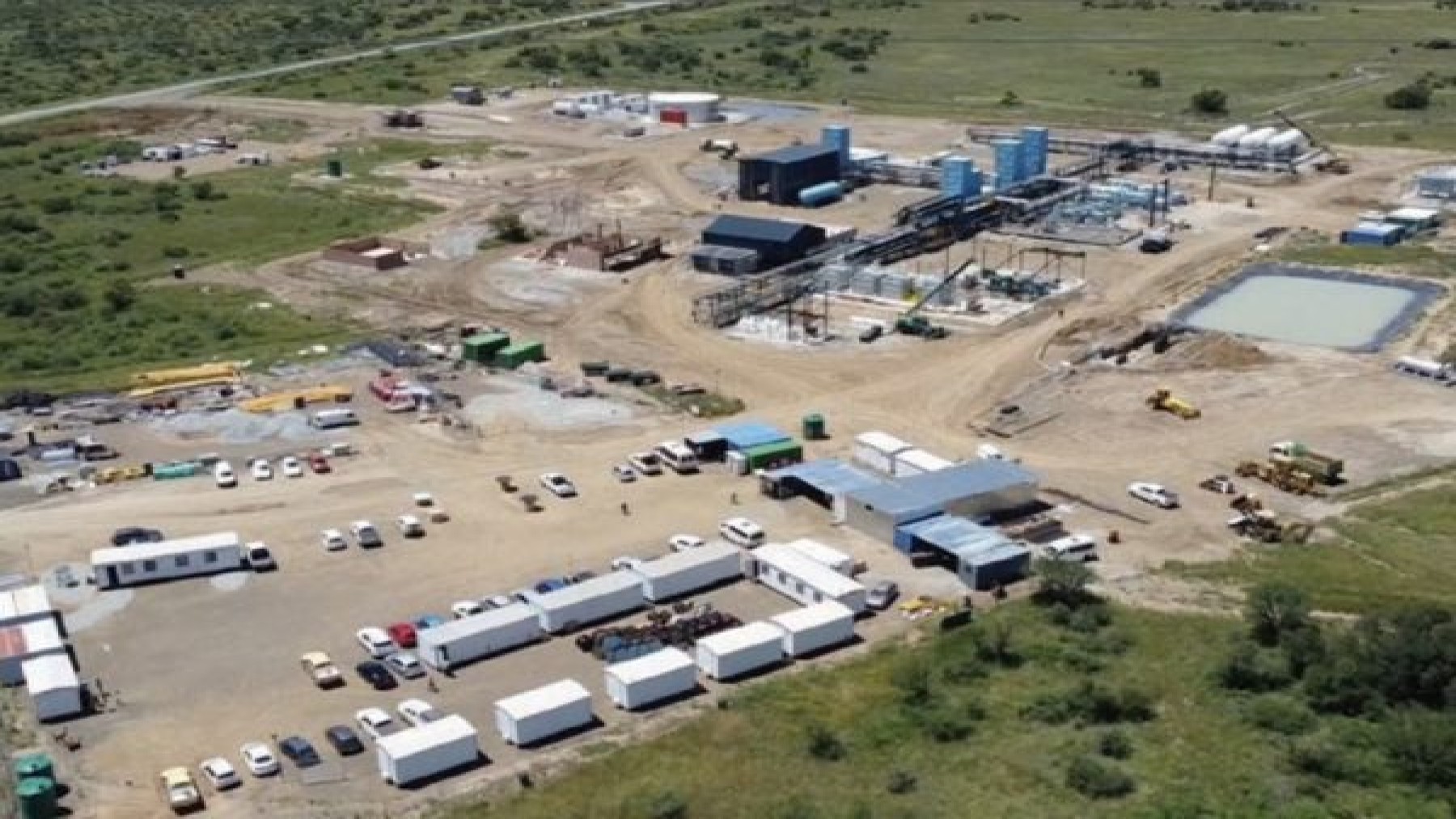
Renergen, a tiny South African firm in 2013, bought the rights to produce and explore for shale in a 2,565 square kilometre area in Virginia, Free State, for $1. Originally, the company sought to identify fairly small natural gas resources for local mining purposes. It is impossible to imagine how some of them guessed that what they discovered underneath gave them the prospect of becoming a trillion-dollar company—an underground helium treasure.
How a modest start-up stumbled upon an underground goldmine of helium
Renergen’s venture into the Virginia Gas Project started with modest aspirations: in order to establish a small natural gas power station. It was just an attempt made by the founders to tap the nearby natural gas resources for local industries.
Therefore, What they found was completely different from what they expected. When they analysed the gas content of two old drill pipes, they got a much higher yield of helium, which is such a crucial element for several hi-tech applications.
So, the noble element used solely for filling party balloons also has an important application in health care, electronics, and space engineering. Helium is valuable in MRI scanners as a coolant and as a component of a semiconductor-generating process.
From $1 to trillions: A discovery that shook the natural gas industry
Since the materialization of the company several years ago, Renergen has identified proven helium deposits exceeding 7 billion cubic feet. The guys who started Renergen expected these reserves to be worth up to $12 billion, the small capital that has been invested today gives astronomical yields.
Besides the size of the deposit, what sets Renergen apart is its very high-quality helium resource. Their gas fields contain an average helium concentration of about 3%, while the concentration ranges from 0.12% in some areas.
It adds that this concentration is better than the natural concentration seen in most major helium producers, such as the US and Qatar, where the natural concentration is well below one per cent. This unique discovery puts Renergen at the top of the global helium producers, which means it is strategically positioned to offer its products to multinationals.
How Renergen is stepping up to solve the global helium crisis
The world helium market stands in a rather critical position, most of the supplies experiencing interruptions caused by political conflicts, and scarcity of helium production centers, as well as the reduction in the number of the fields containing the Helium gas. However, Renergen’s Virginia Gas Project brings a ready solution to this crisis.
Chris Ballentine, geochemistry chair at Oxford University, also points out that Renergen’s helium generation is less carbon-intensive than conventional techniques. This came about because, unlike the extraction method for helium that relies on the extraction of liquefied natural gas (LNG), nitrogen is extracted directly thus making the process both more economically sustainable and environmentally friendly.
What’s next for Renergen? A look at the company’s expanding reach and future prospects
The market of helium alone is expected to be valued at over $6 billion by the end of 2027, which will substantially support Renergen in gaining higher returns with its right positioning. It is currently operational and has received substantial funding. It plans to launch a colossal IPO on Nasdaq and expand its market credibility. However, it cannot be said that Renergen did not encounter resistance from investors or that its shares did not go down in October 2023. Still, the company’s management is rather optimistic.
Given that helium is scarce and many producers are currently unreliable, if Renergen moves up to become one of the leading players in producing the noble gas, then the $1 — investment of a lifetime is surely in the offing. As the company moves into the future, the global audience will be paying particular attention to seeing how much more expensive this hidden gem can get.