A mountain lake in Norway was not always full of brown trout. New archaeological evidence suggests hunter-gatherers carried the fish into Lake Tesse around 5000 BC, creating a dependable food source long before farming appeared in the region.
The finding comes from wooden fish traps preserved beneath the lakebed. Rather than simply following wild resources, these communities appear to have planned ahead, changed an entire aquatic ecosystem, and returned over many generations to harvest what they had started.
Fish in a place they could not reach
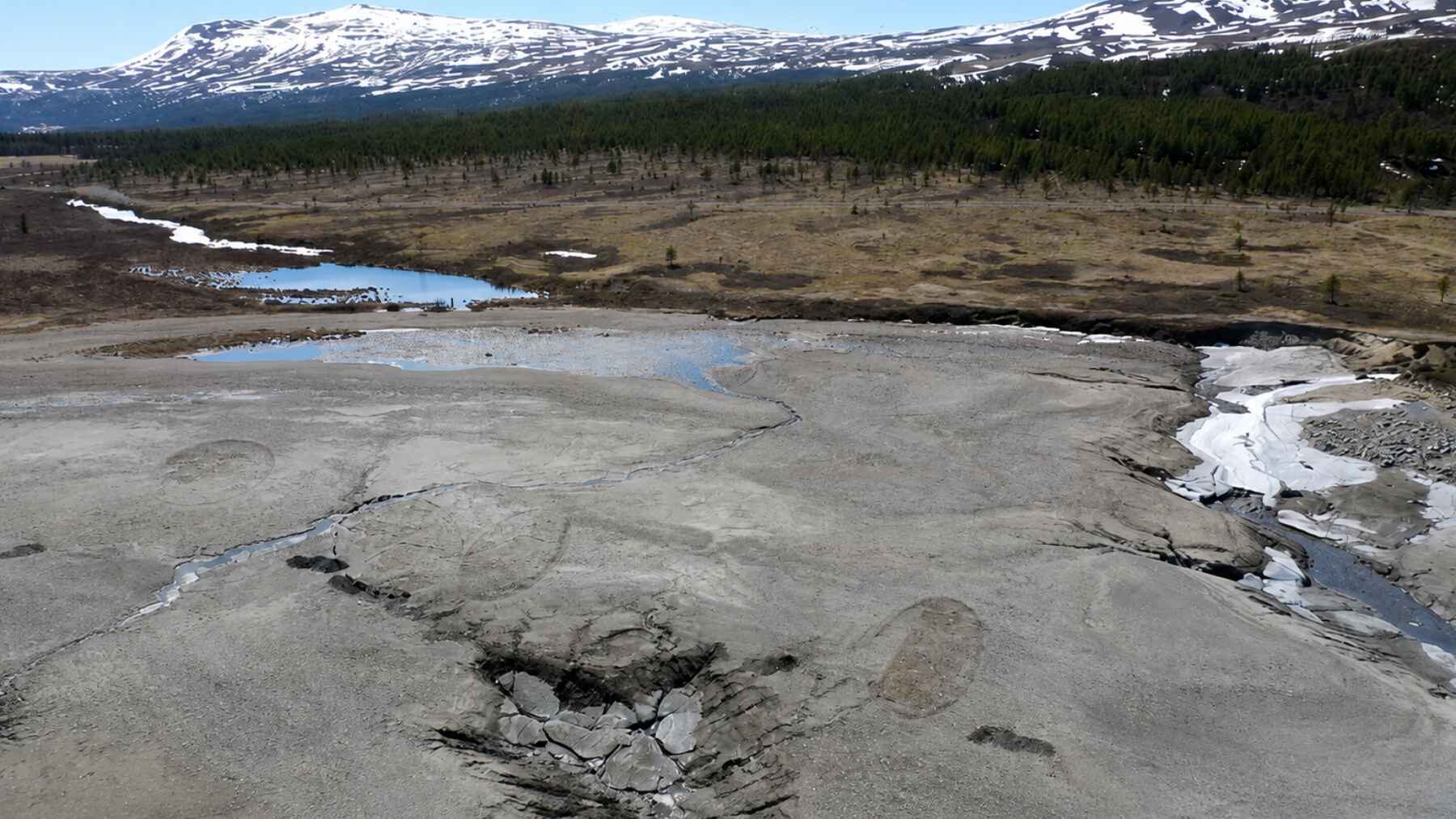
Lake Tesse sits about 2,800 ft. above sea level in Norway’s Jotunheimen mountains. The area emerged from beneath the Fennoscandian Ice Sheet around 8400 BC, leaving lakes and rivers open for life again after thousands of years under ice.
There was one major problem for fish. Steep river sections and waterfalls blocked natural movement from lower waterways, where roughly 25 fish species were historically recorded, into the upper system where only brown trout were found. Birds have sometimes been suggested as carriers of eggs, but that idea does not easily explain why the same single species appeared across so many isolated mountain lakes.
The researchers therefore conclude that people moved live trout upstream. “This implies that fish, and more specifically brown trout, were translocated by hunter-fisher-gatherers during the Scandinavian Mesolithic,” lead author Axel Mjærum of the University of Oslo explained.
Wooden traps exposed by hydropower
Lake Tesse once covered about 4.6 square miles and was known as one of Norway’s most productive trout lakes. Before it became a hydropower reservoir in the 1940s, it reportedly yielded nearly 20,000 lb. of trout a year, or about 10 U.S. tons.
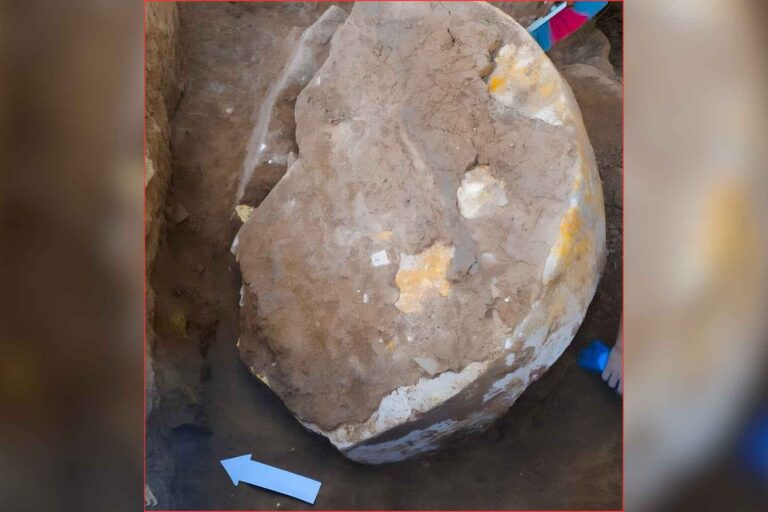
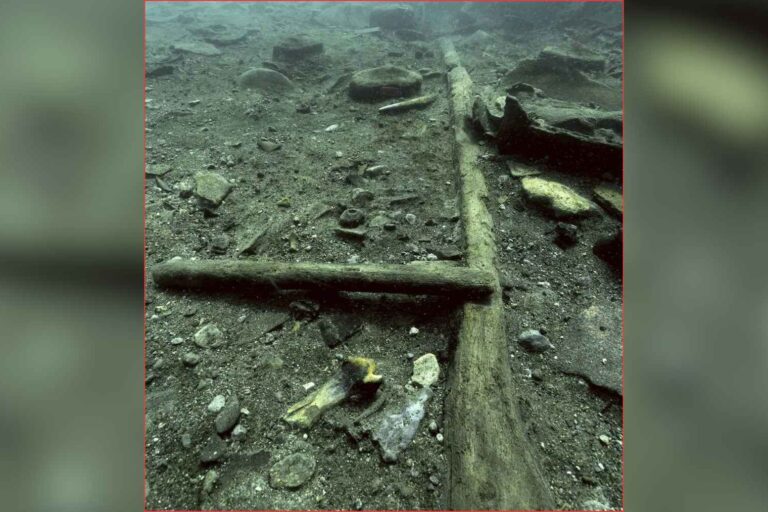
Hydropower operations now lower the water level each spring, exposing wide sections of the old lakebed. In 2022, that temporary dry ground revealed partly buried wooden fish traps in the lake’s southwestern area, prompting a larger excavation.
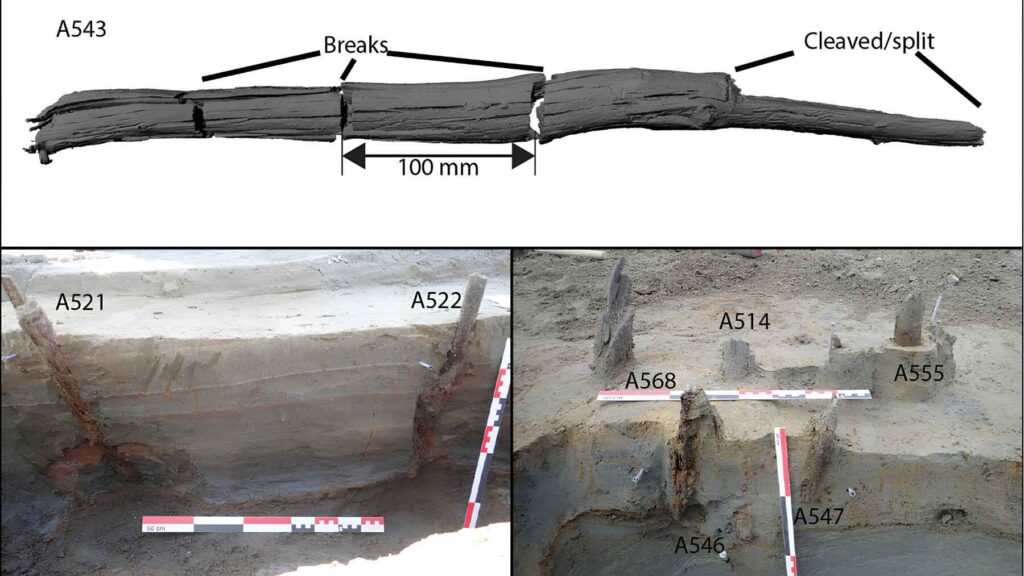
One of the best-preserved structures contained 46 wooden poles. Forty formed a chamber about 11.5 ft. across, while another six appear to have created a guiding fence that directed fish inward. Cut marks, split wood, and possible lashing traces show that this was built equipment, not a random cluster of branches.
Tree rings reveal repeated repairs
The team excavated four traps and collected more than 100 wood samples. Radiocarbon analysis placed the two oldest structures at about 5000 BC and 4950 BC, showing that organized trap fishing was underway roughly 7,000 years ago.
Tree-ring dating added a much sharper view of later work. One post came from a tree felled between spring 2669 BC and the following winter, while another was cut about 12 years later in the winter of 2657 to 2656 BC.
That gap matters. It suggests people did not build a trap once and forget it. They returned, repaired the system and kept it working, possibly over much of the period between 5000 BC and 2650 BC, making this a long-running food project.
How were live trout moved?
The physical journey remains the biggest unanswered question. The evidence does not reveal exactly how the fish crossed the steep landscape, although any successful method would have required water, careful handling and stops along the route.
The researchers suggest waterskins may have been used because hide processing was already common in Mesolithic Norway. Genetic patterns in mountain trout also point toward several upstream introductions carried out in stages rather than one dramatic trip from the lowlands.
Even after the fish reached a new lake, the payoff would not have been immediate. The population may have needed decades to reproduce enough for substantial catches, meaning the people involved were investing in food that future visits and perhaps future generations would enjoy. That takes patience.
A safety net for mountain summers
Why make that effort? The mountains around Lake Tesse offered reindeer, elk, fur and useful stone, but hunting large animals was uncertain. A missed hunt could leave a group with little fresh food far from the milder valleys and coast.
Brown trout changed that calculation. They grow relatively large, provide valuable calories, and can be caught with traps that continue working while people handle other tasks. In practical terms, the lake became a stocked pantry beside the hunting grounds.
A predictable fish supply could have supported longer summer stays and allowed more people to remain in the mountains. The trout did not replace reindeer hunting, but they reduced the risk that every meal depended on finding and killing big game.
Hunter-gatherers also managed nature
The discovery challenges the tidy idea that environmental management began with fields, livestock and permanent farms. At Lake Tesse, people were deliberately moving a species, waiting for it to reproduce, and maintaining equipment to harvest it roughly a millennium before clear farming evidence appeared in central Scandinavia.
That does not make the lake a modern fish farm. It does show a form of food production based on ecological knowledge, planning, and repeated care. Hunter-gatherers were not merely taking whatever nature placed in front of them but, to a large extent, shaping what nature would offer next.
The intervention also had remarkable staying power. New traps were built during the following millennia, and the descendants of those introduced trout remained valuable long after Stone Age communities disappeared. Modern anglers are, in a sense, still harvesting the results of a decision made 7,000 years ago.
The full study was published in Antiquity.
Most read
- US scientists poured 16,500 gallons of lye into the Gulf of Maine and dyed the water bright pink to track it, the first federally approved try at reversing ocean acidity
- Soviet scientists released giant red king crabs into the Barents Sea in the 1960s to build a fishery, but decades later those invaders are still changing the seafloor
- New Orleans is collecting thousands of used Christmas trees and dropping them from helicopters to slow the loss of land, which has already exceeded 5,000 square kilometers
- The U.S. will pay up to $65 million to leave Colorado River water in Lake Mead, and Hoover Dam explains why
- Britain is dropping 20 concrete reef cubes and 44 tons of scallop shells into the sea, and the goal is to bring back oysters down more than 95% since the 1800s