Glaciers
46 stories · since 2025 · latest, November 19, 2026
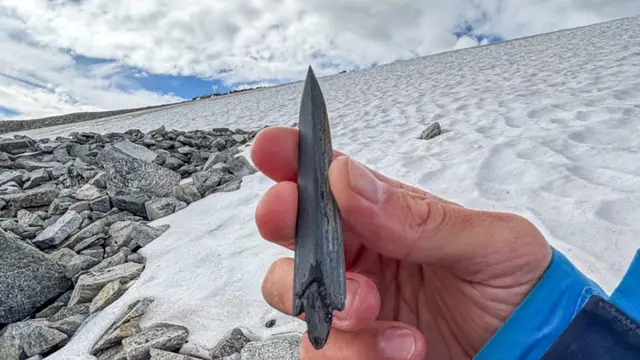
Archaeologists pulled 48 prehistoric arrows from melting ice in Norway’s Jotunheimen mountains this year, and the oldest, tipped with slate, may be up to 6,000 years old as the most ancient ice finally disappears
A slate arrowhead, found with parts of its wooden shaft at the edge of a shrinking ice patch in Norway’s Jotunheimen mountains, is estimated to be between…
ECOnews Newsroom · October 8, 2026
Engineers at UC Riverside simulated 2,000 floating ice floes and found that constant collisions between neighbors explain why Arctic sea ice spreads more slowly than the wind alone would push it
Why does Arctic sea ice spread more slowly than the wind seems to suggest? A study led by researchers at the University of California, Riverside finds…
ECOnews Newsroom · October 4, 2026
The Ross Ice Shelf is roughly the size of Spain and acts as a giant brake on Antarctic glaciers, but scientists monitoring beneath its hundreds of meters of floating ice have found warm summer water can nearly triple melting in vulnerable areas hidden from view
An enormous slab of floating ice in Antarctica is doing a job that matters far beyond the polar seas. The Ross Ice Shelf, roughly the size of Spain, slows…
Adrian Villellas · September 25, 2026
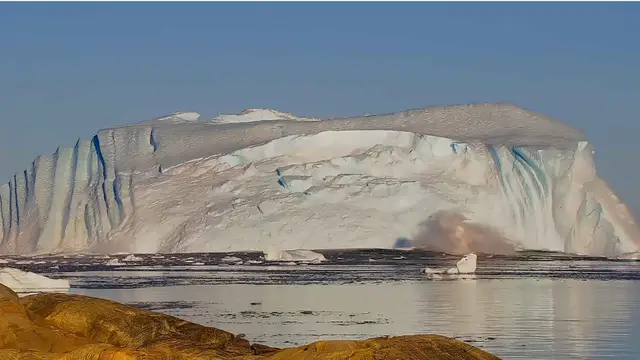
A massive iceberg flipped off Greenland while cameras watched, and the hidden force below the water turned melting ice into waves
Have you ever wondered what would happen if a huge piece of ice lost its balance? On July 25, 2026, a giant iceberg broke apart on the shore near…
ECOnews Newsroom · September 3, 2026
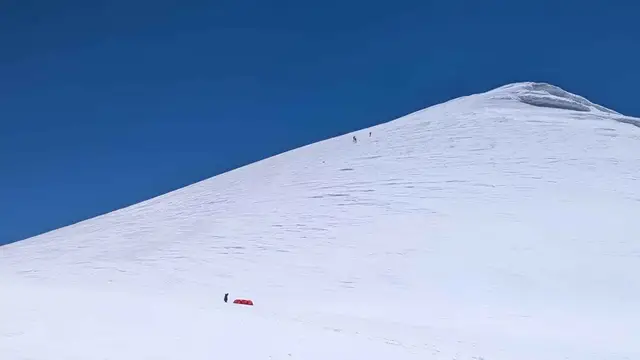
Scientists climbed onto a shrinking mountain glacier to measure what remained beneath their feet, and the survey is revealing just how quickly a frozen landscape that survived for generations can disappear
More than 16,000 feet above sea level an expedition of german-turkish scientists climbed the Mount Ararat in east Turkey to measure what is hidden under…
Adrian Villellas · August 29, 2026
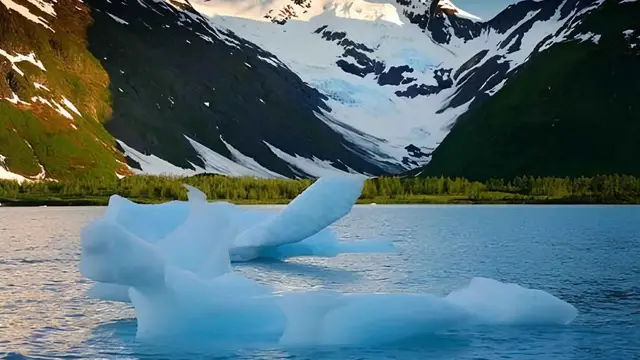
An Alaskan glacier block weighing 2,500 pounds arrived in Iowa in 1977 by helicopter and refrigerated truck, testing whether icebergs could become drinking water for nations desperate for it
Iowa State University, in cooperation with a Saudi prince, wanted to find out if all that floating ice in the arctic could become potable for…
Adrian Villellas · August 23, 2026
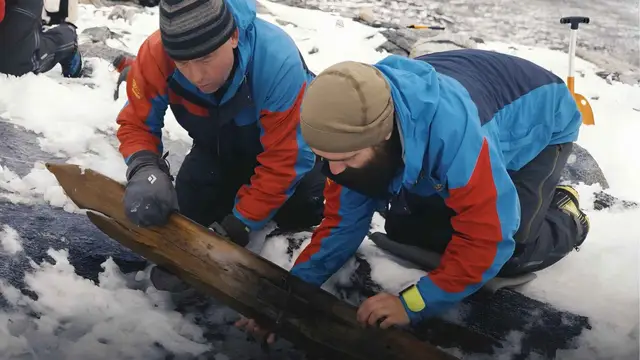
Melting ice in Norway revealed 1,300-year-old skis in remarkable condition, an icy window into how people moved through high mountains centuries ago
Norway’s shrinking mountain ice has revealed a remarkably complete pair of wooden skis, including twisted birch and leather bindings, from about 1,300…
ECOnews Newsroom · July 28, 2026
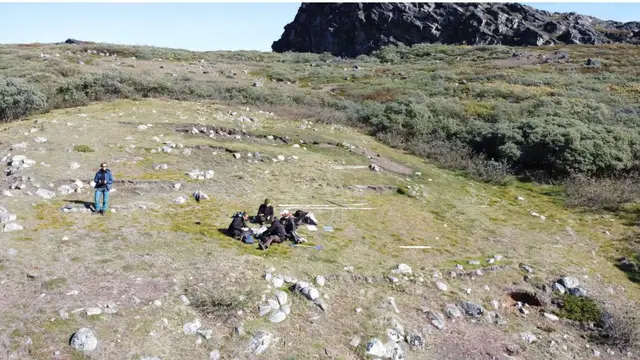
Greenland’s ancient frozen landfills contained microbial traces dating back 4,500 years that provided insights into hunting, agriculture, hygiene, and daily life; now, the melting ice is exposing these remains
Ancient garbage may not sound glamorous, but in Greenland, it has become a frozen archive of human life. A new study shows that old waste mounds preserved…
ECOnews Newsroom · June 30, 2026
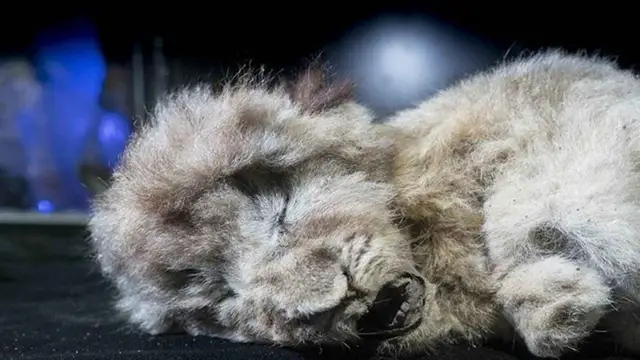
A cub named Sparta, which remained frozen in the permafrost for 32,000 years, provides virtually intact DNA and confirms that cave lions constituted a distinct lineage, with brain, visual, and circulatory traits, that never set foot on the African savanna
For years, scientists often pictured cave lions as oversized versions of the lions that live today — bigger, tougher, and built for ice — but new genome…
ECOnews Newsroom · June 26, 2026
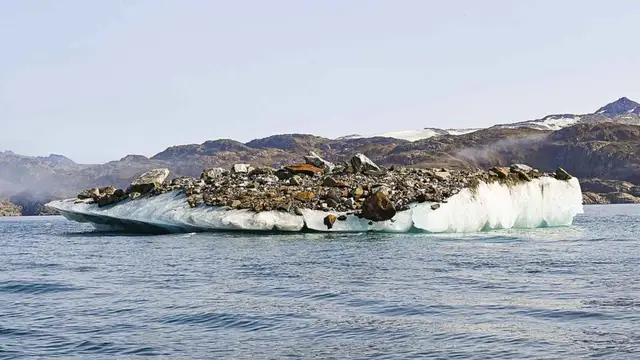
Melting icebergs are raining rocks on the Arctic seafloor, creating surprise condos for deep-sea squatters
The Arctic is changing in a way almost nobody can see from the surface. As glaciers break apart and icebergs drift through polar waters, some of those…
Adrian Villellas · June 25, 2026
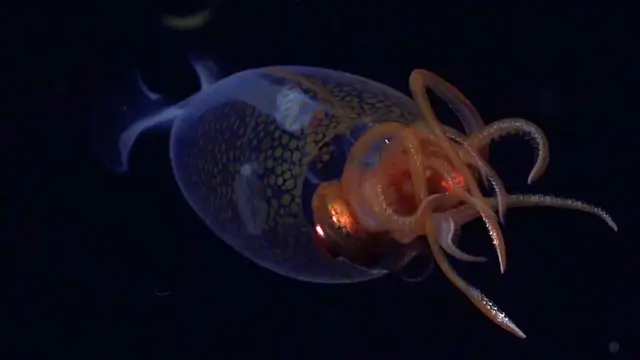
An iceberg snap in Antarctica let cameras catch a glass squid – so clear it is basically a swimming ghost
Sometimes, the ocean gives scientists a door where there used to be a wall of ice. In January 2025, a huge iceberg named A-84 broke away from Antarctica’s…
Adrian Villellas · June 24, 2026
Researchers find that the more Antarctic ice melts, the more warm water reaches the underside of ice shelves, and that feedback loop can accelerate a melt that’s hard to stop
A new study suggests Antarctica’s ice shelves may be caught in a cycle that makes melting feed on itself. As more ice melts, fresh water changes the ocean…
ECOnews Newsroom · June 5, 2026
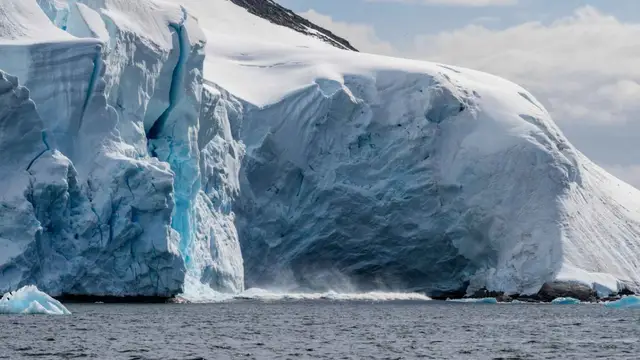
An Australian Navy submarine detects unknown structures beneath Antarctica’s Dotson Ice Shelf, and the find suggests the seafloor there is more active than it looks
A robot submarine sent beneath West Antarctica’s Dotson Ice Shelf has revealed a strange hidden landscape carved into the ice from below, then disappeared…
ECOnews Newsroom · June 4, 2026
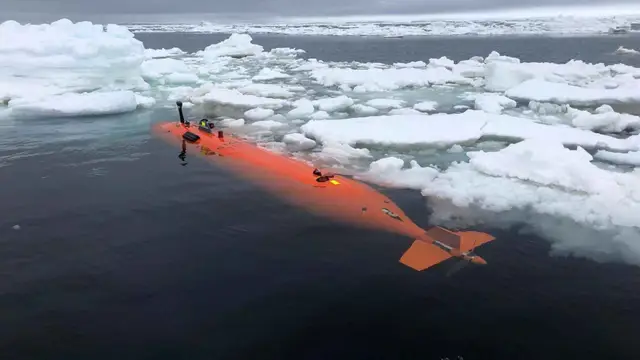
An autonomous submarine named Ran mapped 54 square miles under Antarctica’s Dotson Ice Shelf and found plateaus, terraced “steps,” and teardrop pits carved by basal melt, then lost contact and disappeared, leaving behind data that shows why melt can concentrate in hidden fractures models often miss
Ran, a robot submarine sent beneath West Antarctica’s Dotson Ice Shelf, returned a set of rare maps before it failed to resurface during a later mission.…
Adrian Villellas · June 2, 2026
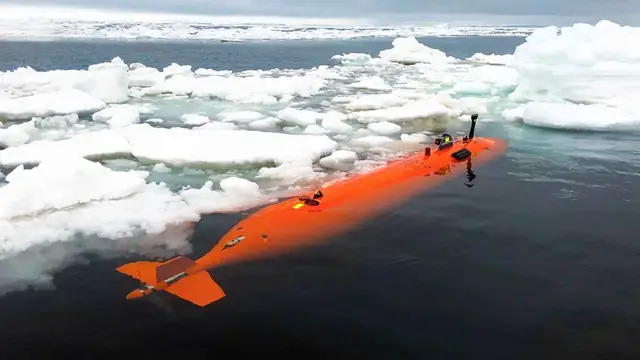
Warm water in the Amundsen Sea is eroding the base of key West Antarctic glaciers, and Thwaites and Pine Island are becoming the ice’s most unsettling thermometer
The warning from West Antarctica is not only that ice is melting. It is that the melt is happening in one of the hardest places to see, beneath floating…
ECOnews Newsroom · June 1, 2026