The Sun
All of these stories relate to the Sun! We have solar flares, the damage they can do to electrical grids and satellites, how long Earth will keep its oxygen, and information we can learn from closely observing our Sun.
24 stories · since 2025 · latest, November 14, 2026
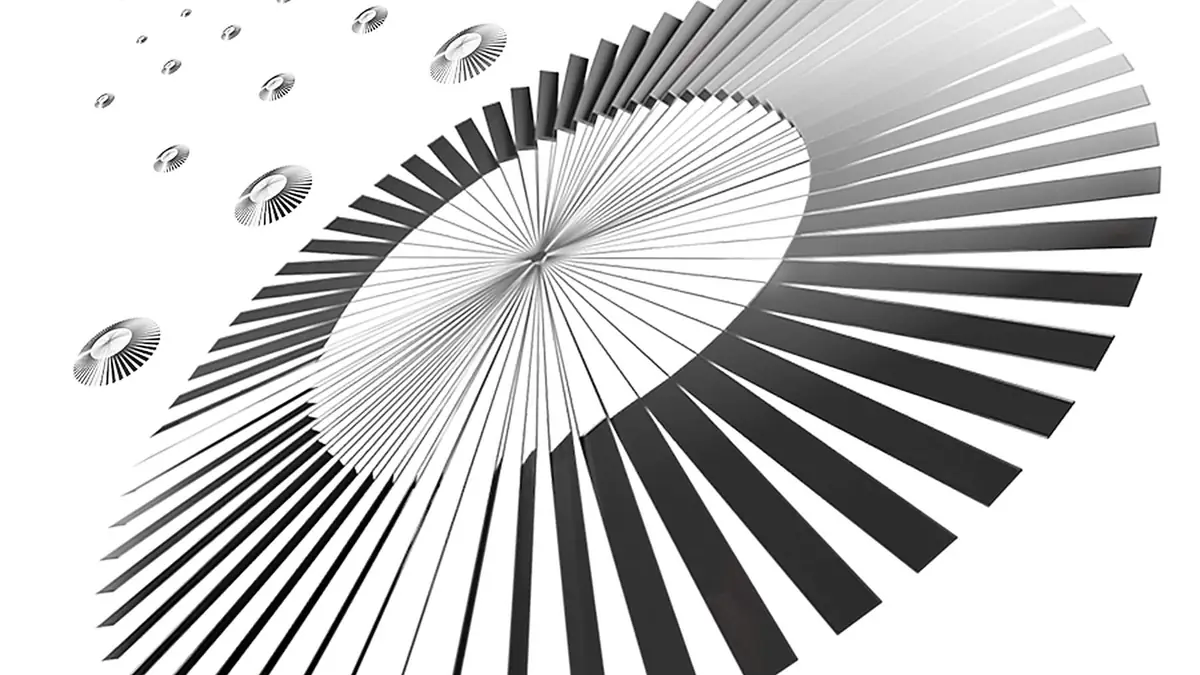
The UK is funding research on a planetary sunshade of 5,000 spacecraft between Earth and the sun, and the catch is that most of the material would likely have to come from the Moon
A planetary sunshade made of about 5,000 spacecraft would block 1 percent of incoming sunlight and cool Earth by about 1.8°F (1°C). That is the estimate…
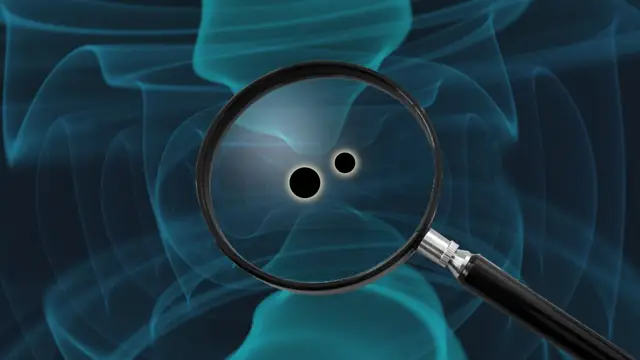
Scientists detected one of the heaviest black hole collisions, weighing about 230 times the sun’s mass, and now they suspect warped spacetime may have been playing tricks on them
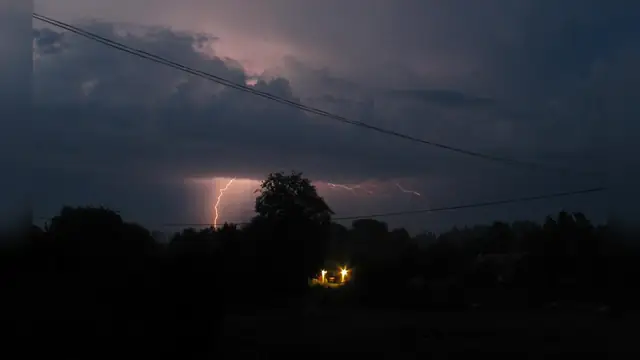
About 9 million lightning flashes recorded over northern Europe from 1998 to 2019 show extreme lightning days came roughly twice as often during high-speed solar wind, and storm clouds still had to come first
Inside the Sun, an Ege University astronomer’s models hint that our star may have swallowed a rocky world of five to ten Earth masses, and the best fit points to about 5.6 times Earth’s mass
The Sun may carry traces of a planet that disappeared billions of years ago. A new study suggests that swallowing a rocky world with five to ten times…
ECOnews Newsroom · October 21, 2026
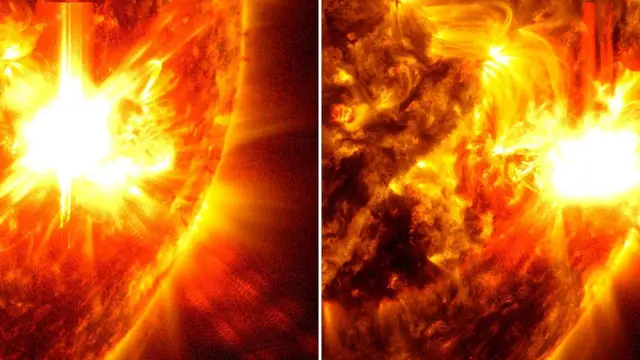
NOAA says the next big solar storm could reach Earth in as little as 15 to 18 hours and warns one as strong as May 2024’s G5 could cause a power blackout
In May 2024, officials from NASA and about 30 other U.S. government agencies met to rehearse their response to an imaginary geomagnetic storm. On May 10…
ECOnews Newsroom · October 16, 2026
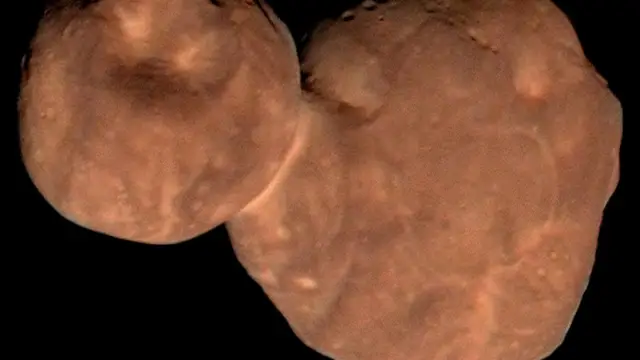
NASA flew New Horizons within 2,200 miles of Arrokoth, a strange two-lobed world about 4 billion miles from the Sun, and its remarkably intact shape suggests two ancient planetary building blocks may have joined at barely 11 mph more than 4.5 billion years ago
What can two ancient bodies touching in deep space tell us about how planets began? During its January 1, 2019, flyby, NASA’s New Horizons photographed…
Adrian Villellas · September 24, 2026
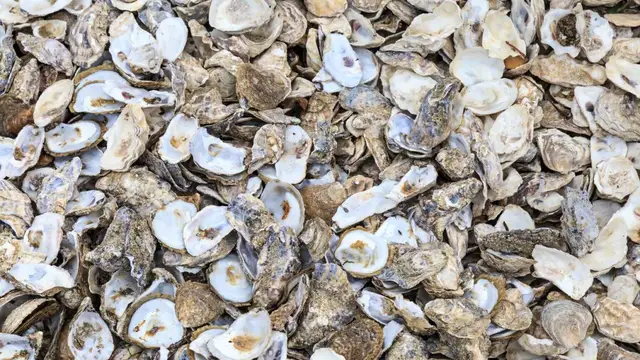
Florida communities collect oyster shells from restaurants, cure them in the sun, and return them to shore to build reefs, but viral claims of 500,000 tons and 25-year highs lack proof
Several Florida communities have found a better place for oyster shells than the compost bin or garbage can. By collecting, curing in the sun, and…
ECOnews Newsroom · August 23, 2026
Across Australia, people are quietly plugging illegal batteries into their apartment walls, and the underground rush to power balconies with the sun is forcing a change few saw coming
A quiet energy experiment is already taking place inside some Australian apartments. A small number of renters and apartment dwellers are plugging…
ECOnews Newsroom · July 13, 2026

The Sun may look yellow from Earth, but seen from space it’s actually white, and our atmosphere is what tints it with that familiar color
Most of us grew up drawing the Sun as a yellow circle with lines shooting out from the sides. Weather apps do the same. Flags, classroom posters,…
ECOnews Newsroom · June 14, 2026
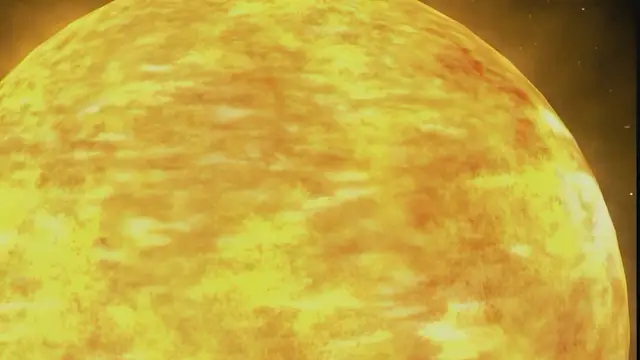
A marine scientist in Southern California has turned restaurant waste into coastal restoration by collecting more than 24,000 pounds of discarded oyster shells, curing them in the sun, and using them to rebuild reefs that protect shorelines and filter water
A pile of oyster shells might not look like the start of an environmental comeback story, but in Southern California, more than 24,000 pounds of discarded…
ECOnews Newsroom · June 1, 2026
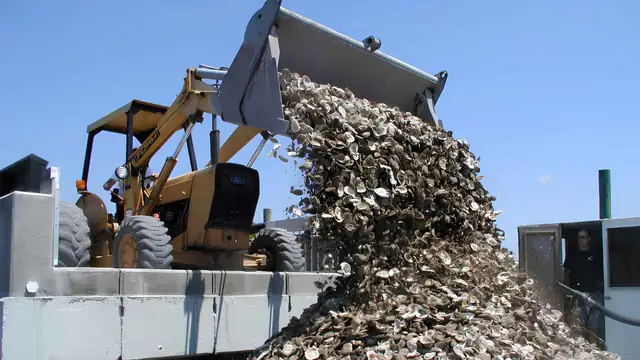
The new threat that worries scientists does not come from Earth, but from the Sun, and could affect satellites, GPS, and communications
Low Earth orbit is getting so crowded that a widespread disruption could tip it into chaos. A research team behind a new metric called the “CRASH Clock”…
ECOnews Newsroom · April 19, 2026
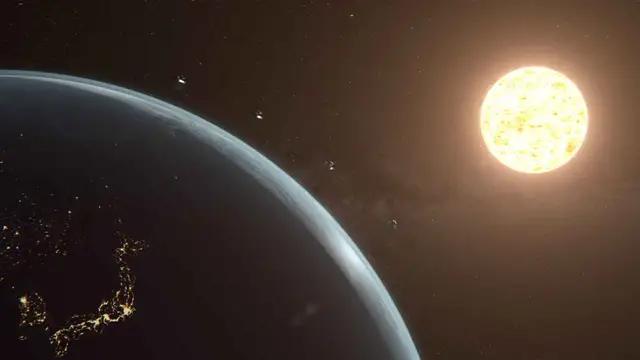
The Moon moves 3.8 cm away from Earth each year, and the last total solar eclipse could come in about 600 million years
Every night, the Moon looks steady and familiar. Yet, on a scale too slow for any human eye, it is slipping away. Careful measurements show that the Moon…
ECOnews Newsroom · April 5, 2026
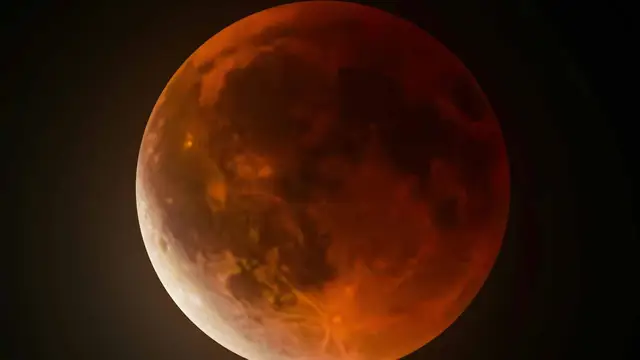
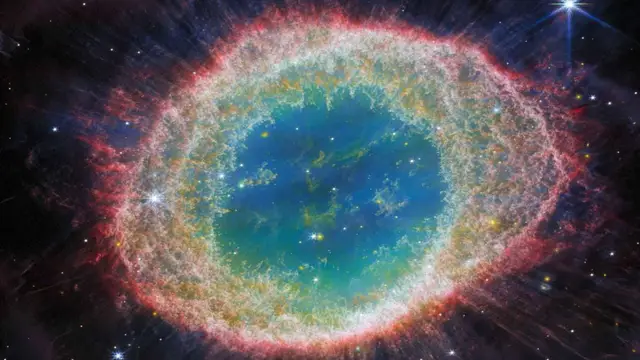
The James Webb Space Telescope points to the “Eye of God,” and what it sees looks like a scene from the future: this is how the Sun could end up in 5 billion years, according to models
If you have ever scrolled past a space photo that looked like a giant blue eye staring back at you, you have probably met the Helix Nebula. That same…
ECOnews Newsroom · March 19, 2026
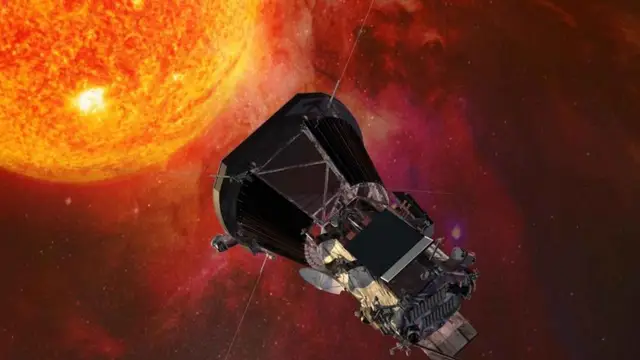
An unprecedented view of the Sun is about to arrive: the Parker probe passed through the solar atmosphere at approximately 429,000 miles per hour (mph) and recorded data that could solve one of science’s oldest mysteries
What happens when a spacecraft skims the atmosphere of our star, in a region hotter than a blast furnace and far beyond any astronaut’s reach? On New…
ECOnews Newsroom · February 28, 2026
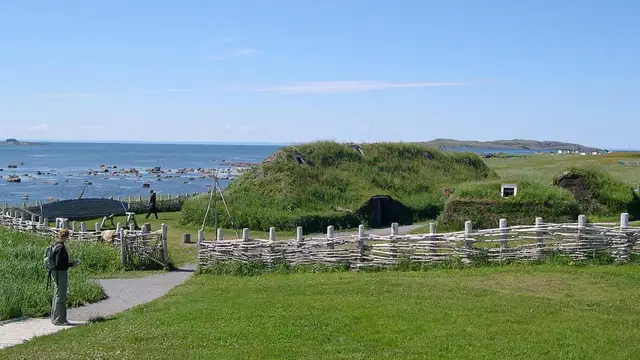
When did the Vikings discover America? Tree rings marked by a solar storm in 993 show Norse visitors were cutting trees at L’Anse aux Meadows, Newfoundland, in A.D. 1021, though how long they stayed is still unclear
Updated November 16, 2026, with the full tree-ring method behind the A.D. 1021 date, a correction on the wood samples (three usable pieces, not four),…
ECOnews Newsroom · January 28, 2026