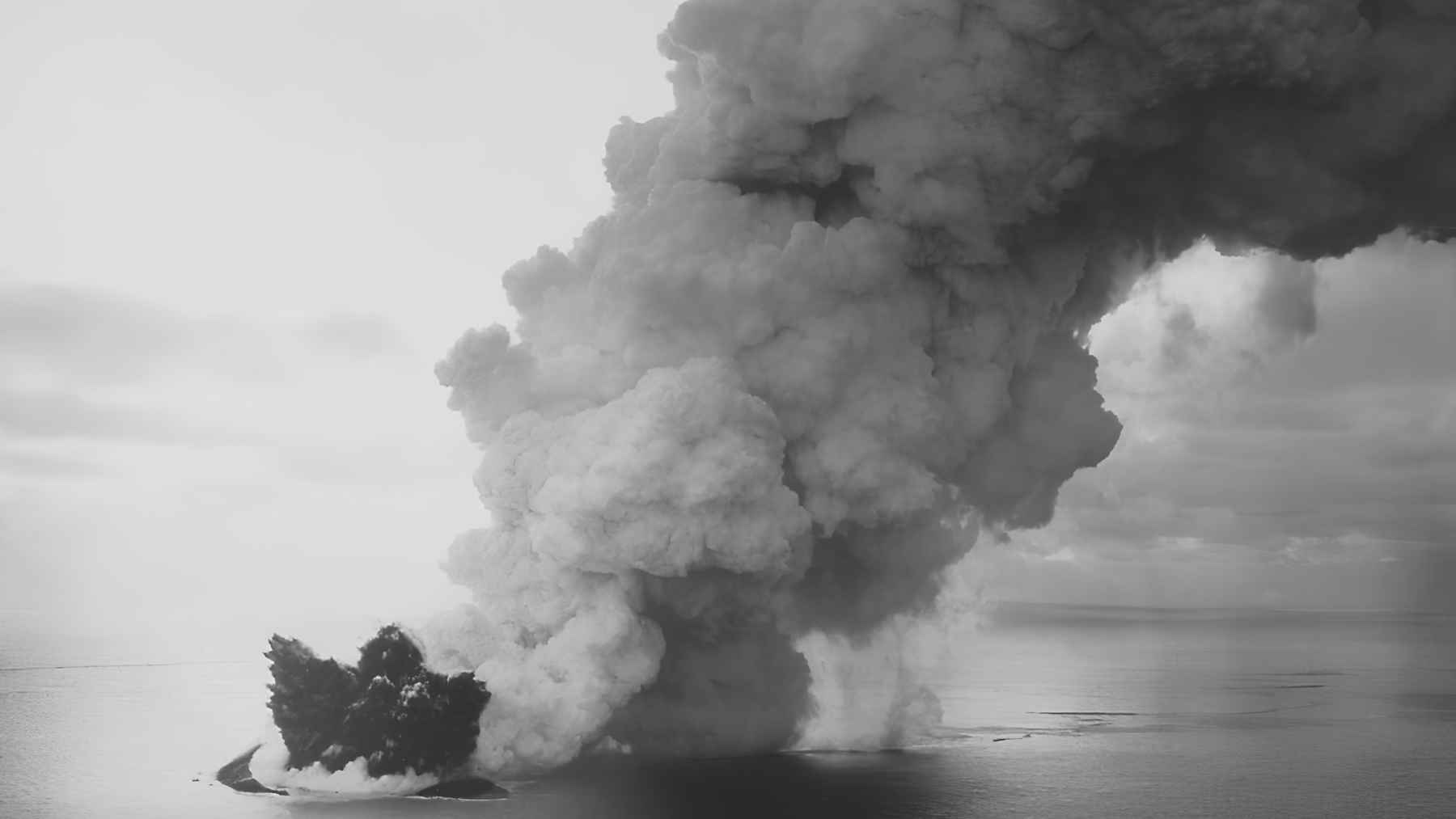
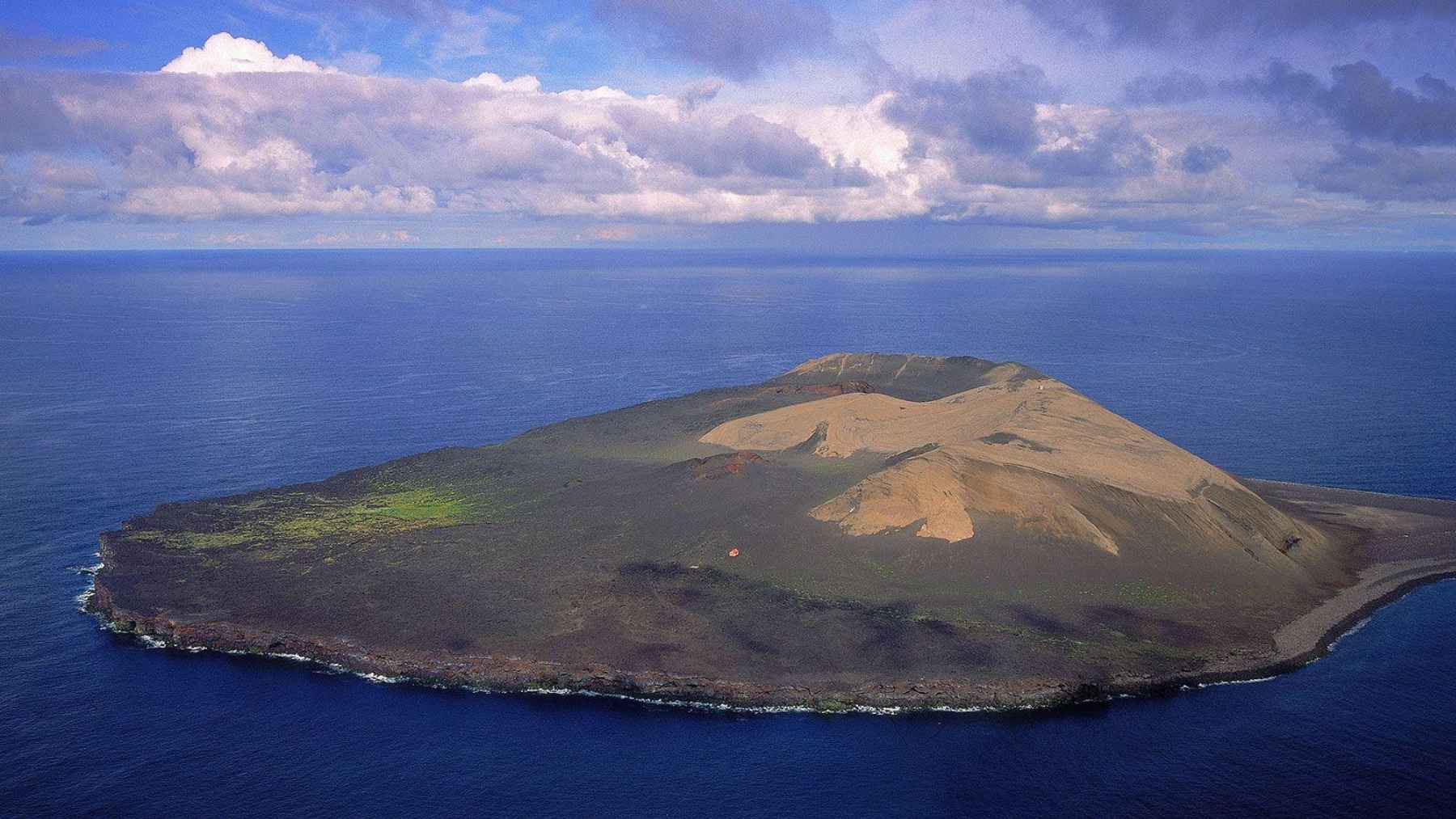
How does life begin on land that did not exist yesterday? Surtsey, a volcanic island about 20 miles south of Iceland, has given scientists a rare answer since it rose from the North Atlantic during eruptions from 1963 to 1967. Protected almost from the moment it appeared, the island has become one of Earth’s rarest natural experiments.
The main lesson is simple but powerful, because life does not need a garden, a forest, or even soil to get started. Give it rock, wind, waves, birds, and time, and nature begins moving in. That is why Surtsey remains almost closed to humans more than six decades after its dramatic birth.
An island born in smoke
The first visible sign came early on November 14, 1963, about 11 miles southwest of Heimaey in Iceland’s Westman Islands. The eruption is believed to have started several days earlier on the seafloor, roughly 426 feet below the surface, before ash, steam, and broken volcanic rock finally broke into open air.
By the next day, a new island had already formed. The explosions were violent because seawater cooled the hot magma so quickly that it shattered into ashlike volcanic fragments. By June 1967, after more than three and a half years of activity, Surtsey covered about one square mile.
That may sound small. But in geological terms, it was a live birth in front of human witnesses. Most islands are ancient stories written long before people had cameras, ships, or scientific instruments ready to watch.
Why scientists locked it down
Soon after Surtsey appeared, Icelandic researchers realized the island could answer a question that is usually impossible to test in the real world. What happens when plants and animals arrive on completely new land, with no farms, roads, gardens, or people to confuse the results?
The answer required discipline. Surtsey was declared a nature reserve in 1965, and today visitors need permission from the Surtsey Research Society. Rules also ban bringing living animals, plants, seeds, plant parts, or waste onto the island.
In practical terms, that means even a muddy boot matters. A seed stuck in a jacket seam could ruin years of observation by giving one plant an unfair human ride to the island. So Surtsey is not closed for drama, but because a tiny accident could rewrite the experiment.
Life arrived anyway
At first, Surtsey looked like the last place life would want to settle. It was hot, loose, salty, windy, and bare, more like a pile of fresh volcanic rubble than a future habitat. Still, the first colonists did not wait long.
Diatoms, tiny algae with glassy shells, were found on the sandy beach in August 1964. Seeds and plant parts washed ashore in the first spring, and in 1965 the first vascular plant, sea rocket, was found along the shoreline. Vascular plants have internal tissues that move water and nutrients, unlike simpler mosses.
This process is called primary succession. That simply means life is building an ecosystem from scratch, starting on land where no true soil existed before. It is slow work, the kind that starts with a film of life and may end, decades later, with grasses, flowers, insects, and nesting birds.
Birds became the gardeners
For years, scientists thought wind and ocean currents did most of the work of bringing plants to remote islands. Surtsey is now complicating that story. A 2025 study reported by the Estación Biológica de Doñana, part of Spain’s National Research Council (CSIC), found that birds carried many of the plants that colonized the island.
The study looked at 78 vascular plant species recorded on Surtsey since 1965 and found that most did not have the classic traits scientists expected for long-distance travel. Instead, gulls, geese, and shorebirds appear to have carried seeds in their guts, droppings, or nesting material.
“Birds turned out to be the true pioneers of Surtsey,” said Dr. Pawel Wasowicz of the Natural Science Institute of Iceland. Dr. Andy Green, who co-led the work, said the findings show animals are key drivers of plant movement. A bird landing for a rest can be more than a visitor, because it can be a delivery service.
The ocean keeps taking it back
Surtsey was born from fire, but the sea began cutting it down almost immediately. Strong winds and North Atlantic waves have carved away large parts of the island since the eruption ended.
The numbers tell the story. Surtsey reached about one square mile at the end of the eruption, but by 2002 it had shrunk to about half that size. In the first years, several acres disappeared each year, though the rate has slowed.
Still, the island is not expected to vanish overnight. Lava and hardened volcanic material protect its toughest core, much like a crust protecting softer bread underneath. The soft edges go first, while the hard center holds on.
Why Surtsey still matters
Researchers continue to track geology, erosion, soil formation, plant and animal succession, and the interactions between living things. That may sound like a checklist, but it is really one connected story about how a dead surface becomes a living place.
Surtsey also makes a bigger point about Earth. The planet is not finished. New land can still rise out of the ocean, and life can still find its way to a place that looked impossible at first glance.
The United Nations Educational, Scientific and Cultural Organization (UNESCO) named Surtsey a World Heritage Site in 2008 because it offers a rare, long-term record of new land being colonized by plants, animals, and marine life with little direct human interference.
The main study on Surtsey’s plant colonization has been published in Ecology Letters.