Can a train station help build a city before the city is fully finished? In northern China, Xiong’an Railway Station was designed to do exactly that. It is huge, fast to build by any normal infrastructure standard, and packed with technology that turns a rail hub into something closer to a live control center.
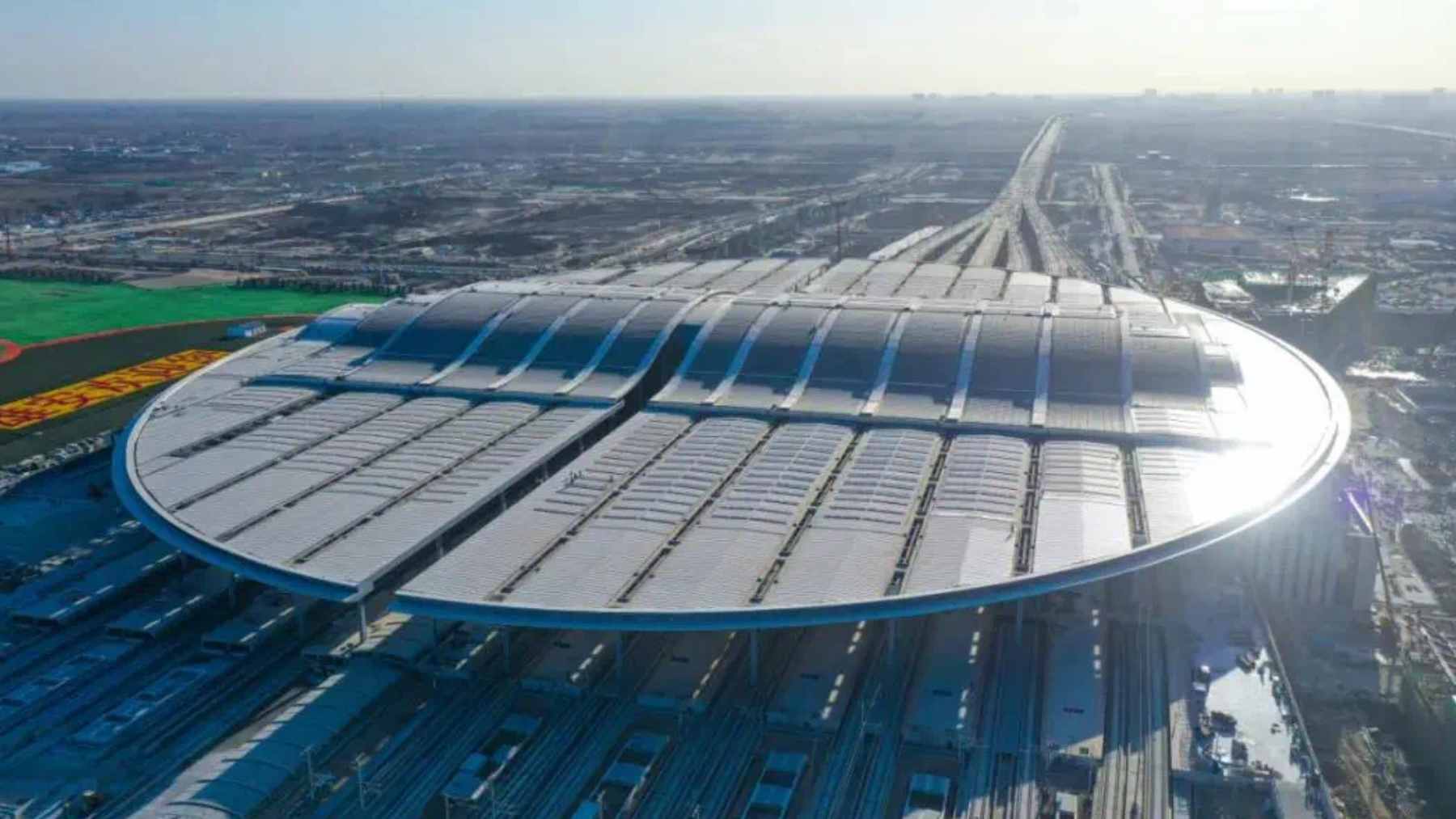
Opened on December 27, 2020, near Beijing, the station covers about 5.1 million square feet, or roughly 117 acres. The complex links Xiong’an New Area to China’s high-speed rail network while using solar panels, digital modeling, welding robots, and smart systems to cut travel times and manage energy use.
A station built for a new city
Xiong’an Railway Station opened when the C2702 Fuxing bullet train departed from the newly built hub. The same day, the rail section between Beijing Daxing International Airport and Xiong’an New Area entered service.
The station became the first major infrastructure project completed in Xiong’an New Area. That matters because the area was created to take on some functions that are not essential to Beijing’s role as China’s capital, while also strengthening ties between Beijing, Tianjin, and Hebei.
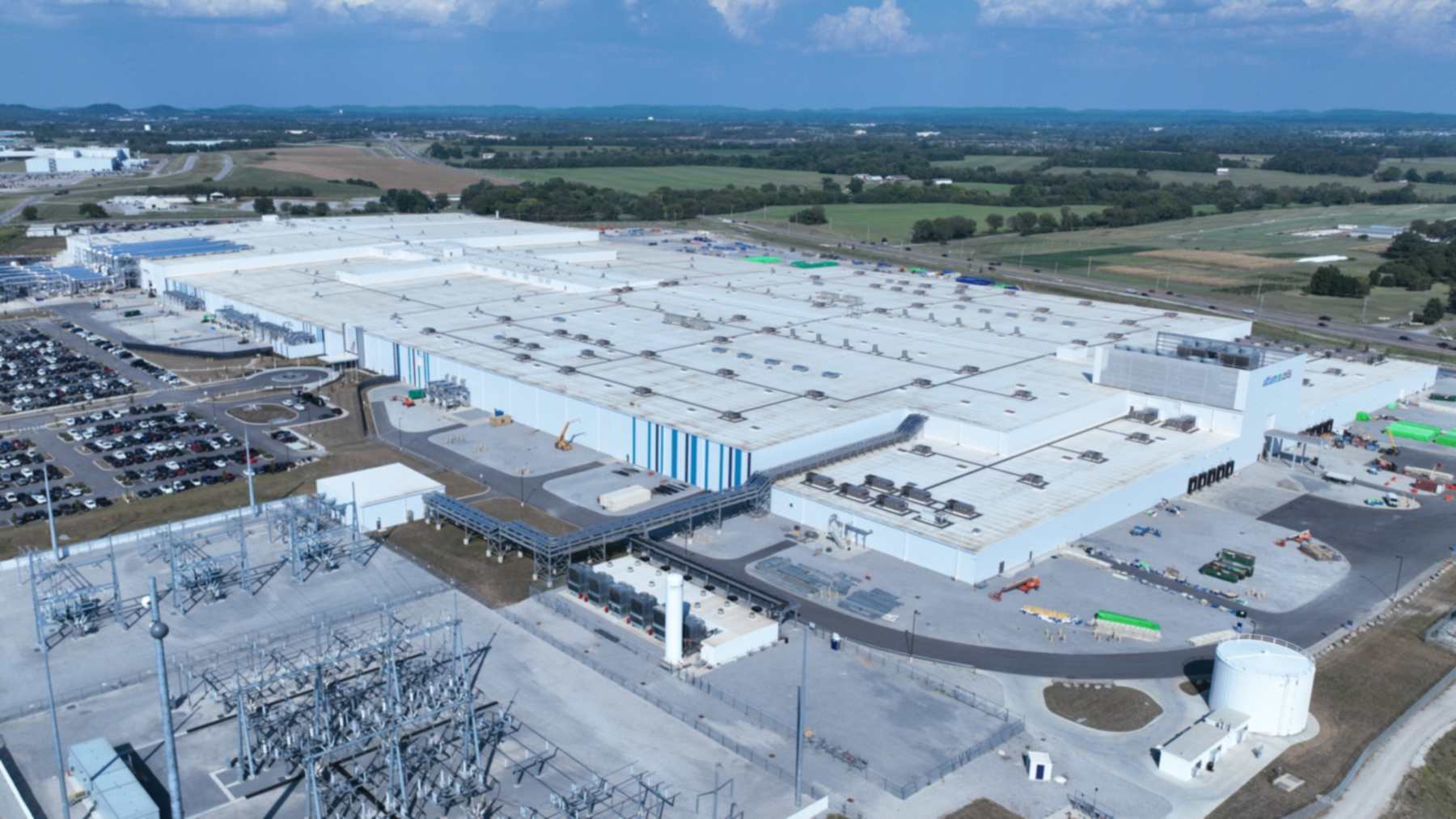
The scale is hard to picture. At more than 5 million square feet, the hub is comparable in total area to three Berlin Central Railway Stations, according to Infrastructure Global. In everyday terms, it is not just a station with platforms, but a small transport district under one roof.
Built fast with smart tools
The speed of construction is one of the most striking parts of the project. The station went from plan to operation in about two years, even with a large roof, steel structure, train platforms, energy systems, and passenger areas all coming together.
One key tool was Building Information Modeling (BIM). Put simply, it is a shared digital model that lets engineers, builders, and operators see the project in three dimensions before and during construction.
Liu Weiqun, chairman of China Railway Design Corporation, said the railway used BIM for “3D and intelligent management” across design, construction, and operation. That helped support automatic rebar processing and smarter compaction of the rail bed, the foundation beneath the tracks.
Robots helped shape the structure
The station also used automatic robots in its steel structure work. Their job was to standardize welding, which can reduce variation on a job site where thousands of repeated connections have to be strong and consistent.
The building made large-scale use of fair-faced concrete, a method where the concrete surface is left visible instead of being covered later. That demands careful casting, because mistakes cannot simply be hidden behind another finish.
There is a quiet lesson here. Big infrastructure is not just about pouring concrete faster. It is also about keeping quality steady when the clock is moving fast.
Faster trips, fewer delays
The Beijing-Xiong’an intercity railway is about 58 miles long, depending on the section measured, and was designed for speeds of about 217 mph. With the line in operation, travel from Beijing West Railway Station to Xiong’an New Area fell to about 50 minutes.
The trip from Beijing Daxing International Airport to Xiong’an takes about 19 minutes. For passengers, that can mean less time in traffic, less exhaust, and fewer long waits between the airport, the capital, and the new urban area.
That is the practical side of high-speed rail. It may sound like a national planning story, but for travelers it often comes down to something simple. You get there before the day slips away.
A solar roof with a job
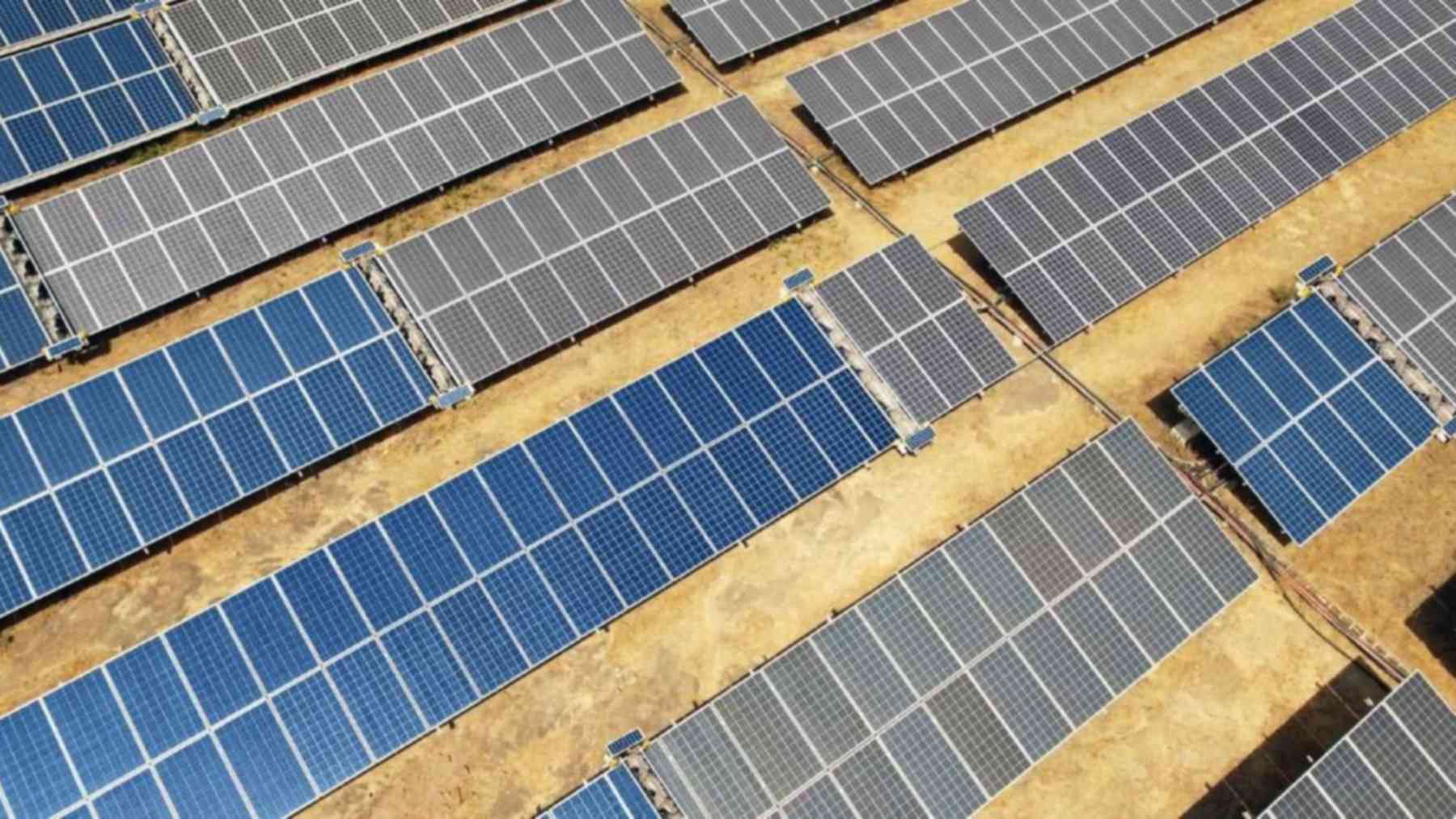
The station’s oval roof is not just an architectural feature. It also works as a solar power station, with about 452,000 square feet of photovoltaic panels installed above the building.
State Grid Xiong’an Integrated Energy Services Co., Ltd. said the system can generate an average of 5.8 million kilowatt-hours of electricity each year.
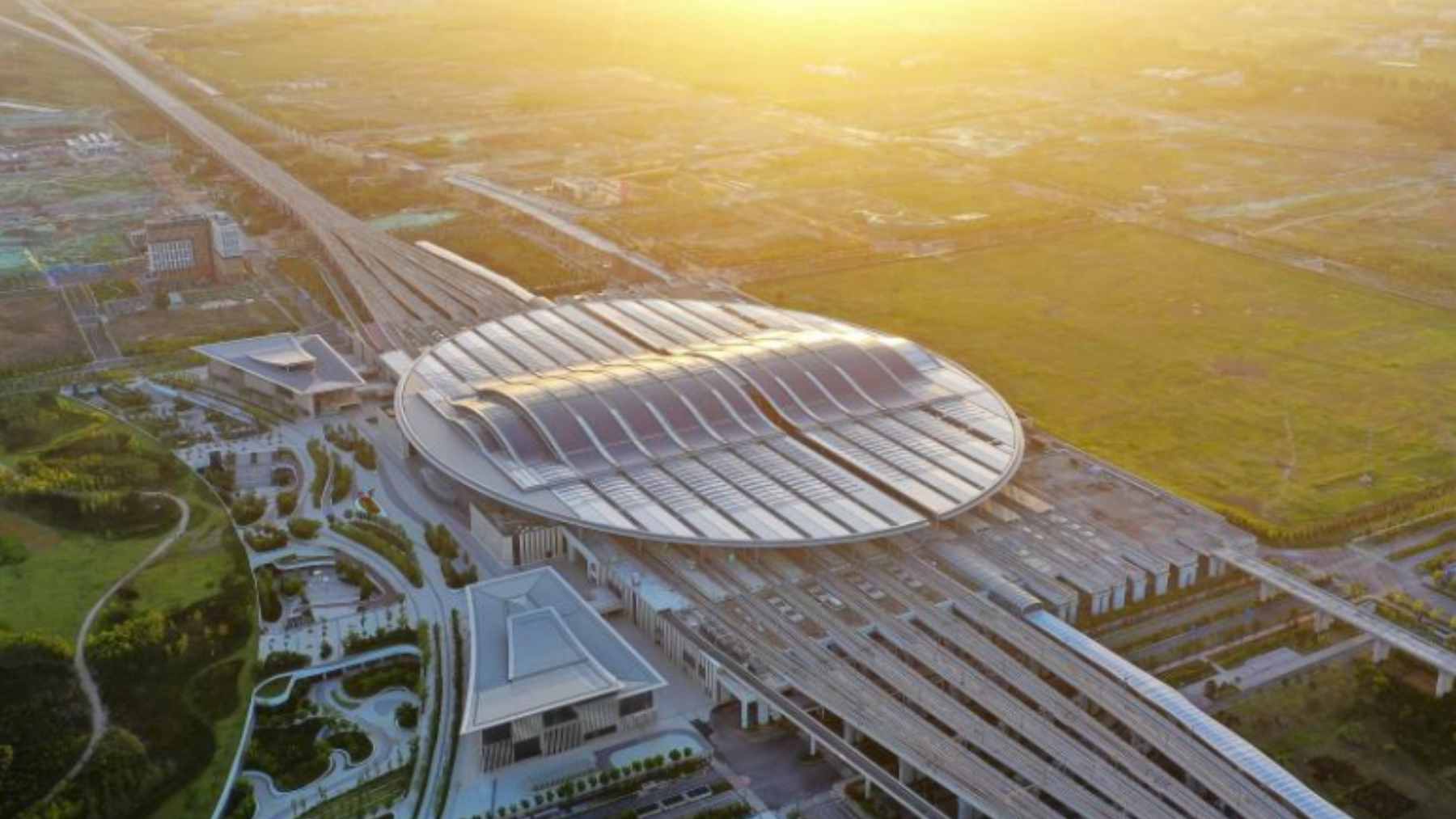
Luo Xiaodong, a project manager with the company, said the project was expected to reduce carbon dioxide emissions by about 4,960 U.S. tons annually and save about 1,984 U.S. tons of standard coal, a benchmark fuel measure used in China.
The solar system was connected to the grid on December 25, 2020, two days before the station officially began operations. In practical terms, that means the station started life with clean power built into its roof, not added later as decoration.
Light, noise, and real-time control
The station was also planned with passenger comfort in mind. Its design includes long natural-light strips, about 49 feet wide, that bring sunlight into the waiting hall and reduce the need for artificial lighting during the day.
Platform walls with sound insulation were included to help reduce noise. That detail matters more than it may seem. Anyone who has stood next to a busy rail line knows how quickly sound can become part of the travel experience.
Artificial intelligence is also used for real-time building management. Instead of treating the station as a fixed structure, its systems can monitor conditions and help operators respond as the building moves through daily waves of passengers, trains, light, and power demand.
Why Xiong’an still matters
Xiong’an Railway Station is more than a big stop on a rail map. It is one of the clearest signs of how China wants to build transport hubs for new urban areas, with high-speed travel, digital construction, and greener power working together.
The project also remains part of a larger national push. In March 2026, Xinhua reported that Chinese officials continued to frame Xiong’an as a place meant to absorb nonessential Beijing functions and develop smart city management models.
That does not mean every challenge is solved. New cities take years to fill with daily life, jobs, schools, and routines. But the station shows the first piece of the puzzle already in motion.
The official project information has been published by China State Construction Engineering Corporation.