Italy is asking the world to change one of the most familiar words in electricity. The government in Rome wants the international unit now known as the “volt” to become the “volta,” restoring the final letter of Alessandro Volta’s last name.
It sounds like a small spelling dispute, but the request touches phone chargers, school textbooks, appliance labels, science history, and national pride all at once. And for now, the answer is far from certain.
A missing letter
The volt is the unit used to measure electric potential difference, often called voltage. In everyday terms, voltage is the electrical “push” that helps move current through a circuit, the number you see on batteries, chargers, and household devices. The current International System of Units (SI) system lists “volt” with the symbol “V” for electric potential difference.
So why does Italy want “volta” instead? The argument is simple. Many units named after scientists keep the person’s full last name, such as newton, watt, hertz, ampere, and ohm, while “volt” drops the last letter of Volta.
That may look minor on a page. Still, language matters in science because it becomes part of daily life. Every time someone checks a charger or worries about the electric bill, they are using a word tied to Volta’s legacy.
Italy takes it to Paris
Alessio Butti, Italy’s undersecretary with responsibility for technological innovation, raised the proposal in Paris during a meeting with Annette Koo, director general of the International Bureau of Weights and Measures (BIPM). The meeting happened as Butti represented the Italian government at the G7 digital and technology ministerial.
Butti framed the request as more than a language fix. He said Italy wants to give “an important historical recognition” to one of the fathers of modern science, whose work changed humanity’s relationship with electricity and technological progress.
The idea also fits into Italy’s preparations for 2027, the bicentennial of Volta’s death. The Italian government has already launched official celebrations meant to highlight his scientific legacy for younger generations.
Who was Volta
Alessandro Volta was born in Como in 1745 and later became a professor at the University of Pavia, where he spent more than four decades. His best-known invention was the voltaic pile, an early battery that provided a steady source of electric current.
That invention changed science in a practical way. Before reliable batteries, electricity was harder to study and control. Volta’s stacked disks of metal, separated by soaked material, gave researchers a more dependable tool.
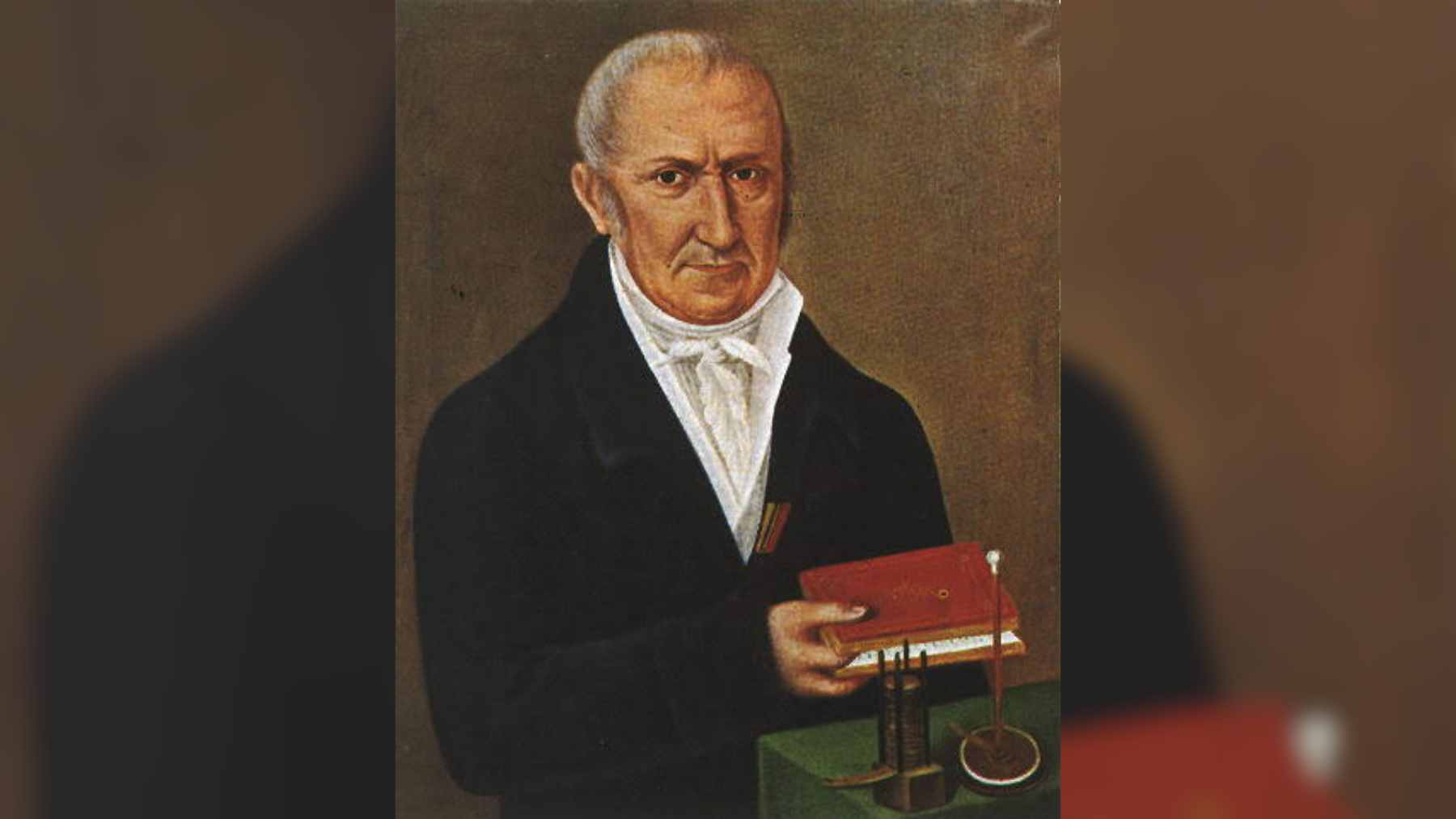
His work was not limited to electricity. In 1776, he collected gas from Lake Maggiore and identified methane, the main component of natural gas.
How the name stuck
The name “volt” was attached to the unit in the 19th century. Britannica notes that the unit of electromotive force was named in Volta’s honor in 1881.
There is also a historical twist. A BIPM committee report says early proposed unit names included altered versions of scientists’ names, and that in 1874 a committee flipped the planned names for voltage and resistance. “Ohma” became “ohm,” while “volt” remained unchanged.
That history makes Italy’s request more complicated than a simple claim that English erased a vowel. The word “volt” appears to come from older international electrical naming choices, not just modern pronunciation habits.
The hard part
Changing a unit name is not like updating a street sign. The BIPM report says the proposal drew comments about the cost and complexity of changing the name of a unit. One official suggested taking note of the letter but taking no action at that stage because a change would require a resolution of the General Conference on Weights and Measures.
That conference is the BIPM’s top decision-making body, made up of representatives of member states. Its 28th meeting is scheduled for October 13 to 15, 2026, in Versailles, France.
Even a successful vote would not instantly change the world. Textbooks, manuals, standards, software, training materials, and equipment documentation could take years to catch up. The letter may be small, but the system behind it is huge.
Would anything change at home
For most people, nothing would change right away. A phone charger would still need the same safe voltage, and an appliance would still use the same electricity. The debate is about the official name, not a new kind of power.
The symbol is another important detail. Current BIPM tables list the unit as “volt” with the symbol “V,” and the public record of the proposal does not say that the symbol itself would change.
That matters because the symbol is what appears most often on labels and diagrams. Even so, teachers and manufacturers would still need clear guidance if the name changed, because confusion in measurement is exactly what international standards are designed to avoid.
Pride and practicality
At the end of the day, Italy’s push is about recognition. The government wants Volta’s full name attached to a unit that helped carry his memory into nearly every corner of modern technology.
However, science also depends on stability. The SI works because people in labs, factories, classrooms, and hospitals use the same names and symbols. A change that feels fair historically could still be hard to justify if the cost is high and the benefit is mostly symbolic.
That is where the story now sits. One missing “a” has become a test of how the world balances heritage, clarity, and the quiet machinery of measurement.
The official record of the proposal has been published by the BIPM in the Report of the 34th meeting of the Consultative Committee for Electricity and Magnetism.