China filled its streets with electric cars faster than almost any country in the world. Quiet buses, plug-in taxis, and low-cost models have changed the sound of traffic in many cities, where exhaust fumes are no longer the only smell people associate with rush hour.
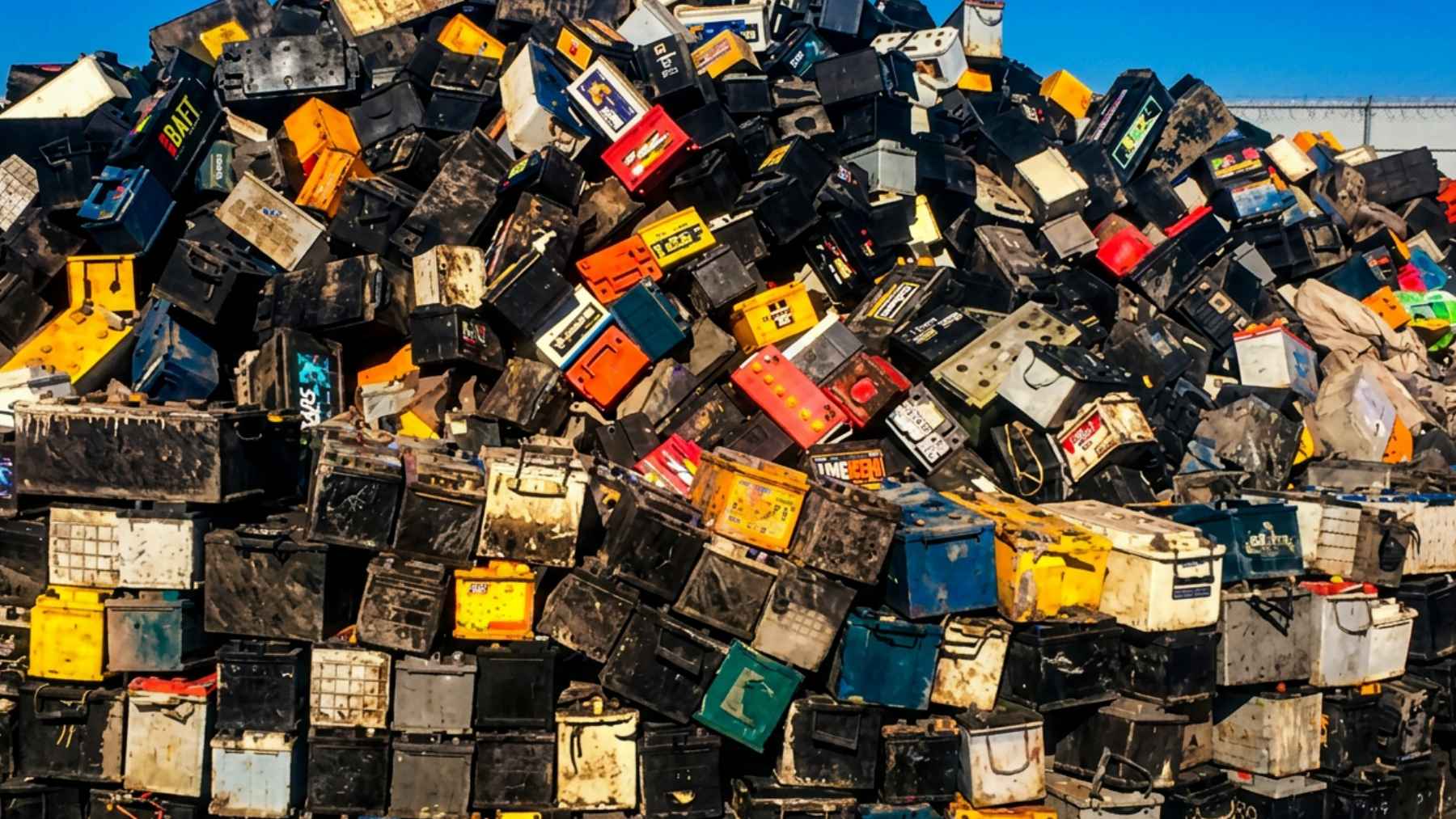
Now comes the less glamorous part of the revolution. Chinese authorities estimate that retired batteries from new energy vehicles could exceed 1 million metric tons a year by 2030, which is about 1.1 million U.S. tons. To manage that wave, the country is moving to give each battery a digital identity so it can be tracked from the road to recycling.
The battery wave is arriving
For years, China’s electric car story was about speed and scale. Official reporting said production and sales of new energy vehicles both passed 16 million units in 2025, while the International Energy Agency said China remained the world’s largest electric car market.
“New energy vehicles” is China’s broad term for battery electric cars, plug-in hybrids, and fuel cell vehicles. That matters because every one of those vehicles depends on a power battery that will eventually lose enough capacity to leave the road.
A car can disappear from traffic, but its battery does not just vanish. Some packs may still work in less demanding jobs, such as storing electricity for buildings or renewable power systems, while others need to be dismantled and recycled carefully.
Digital IDs for batteries
Under interim measures issued by China’s Ministry of Industry and Information Technology and five other departments, each power battery in a new energy vehicle is assigned a digital identity. The rules took effect on April 1, 2026.
Wang Peng, head of the energy conservation and comprehensive utilization department at the ministry, said the system links a battery’s unique code to its journey through production, vehicle installation, replacement, retirement, recycling, and reuse. “This represents a significant institutional innovation,” he said.
In plain terms, traceability means the battery should leave a trail. Who made it, who sold it, who moved it, who opened it, and where its materials ended up should no longer be a mystery.
The weak spot is informal recycling
Used EV batteries are not ordinary scrap. They can contain lithium, nickel, cobalt, manganese, copper, and aluminum, all materials that can return to the supply chain if they are recovered well.
That value also creates a temptation. Unauthorized middlemen and small workshops can pay for used packs, strip them quickly, and skip the safety checks that licensed recyclers are supposed to follow.
Chinese authorities have already called for investigations and penalties against illegal disposal, unlicensed operations, substandard products made from retired batteries, and dismantling that causes environmental pollution. That is not a small paperwork problem. It is a safety problem, too.
A second life is not automatic
Not every old EV battery is ready for the shredder. A pack that can no longer power a car for long trips may still be useful for stationary storage, where weight and fast acceleration matter much less.
Second-life use, however, needs testing, sorting, and monitoring. A weak or damaged battery placed in the wrong setting can become a fire risk instead of a clean-energy tool.
That is why China’s digital ID plan is about more than recycling. It is also about deciding which batteries deserve a second job and which should go straight to professional treatment.
Producer responsibility matters
A 2026 study in One Earth by Hetong Wang, Kuishuang Feng, Laixiang Sun, and colleagues looked at how stronger producer responsibility could change China’s battery recycling future. Extended producer responsibility means companies remain responsible for what happens to products after customers are done using them.
The study warns that without stronger action, formal recycling could stall around 53% after 2030. A tougher producer responsibility strategy could push formal recycling above 92% by 2060 and reduce environmental damage by 44% to 73%.
That is the hard part of going green at scale. Selling cleaner cars is visible and exciting, but building the back-end system is what determines whether the model really works.
Why the world is watching
China’s choices matter because its EV industry is not just large at home. The International Energy Agency says China accounted for 70% of electric car production and more than 80% of battery cell production in 2025.
In practical terms, that gives China unusual influence over how the next generation of battery recycling systems develops. If digital tracking works there, other countries may see it as a blueprint.
And if it fails, the lesson will be just as clear. The green transition cannot rely only on cheaper cars, better charging, and quieter streets. It also needs rules for the day when the battery comes out.
The cleanup has already started
China is not starting from zero. In 2025, more than 400,000 metric tons of retired new energy vehicle batteries were reused in some way, which is more than 440,000 U.S. tons.
Still, the 2030 wave will be much larger. The challenge is not only technical, but also logistical, legal, and human. Someone has to collect the packs, move them safely, prevent illegal dismantling, and make sure the recovered metals do not disappear into a gray market.
At the end of the day, China’s EV revolution is entering its accountability phase. The quiet car on the street was only the first chapter.
The official government announcement was published on China’s State Council website, and the related scientific study was published in One Earth.