A ten-foot crocodile turned up in a Philippine province where the species was believed extinct, but the place officials found her tells a different story from the one going around
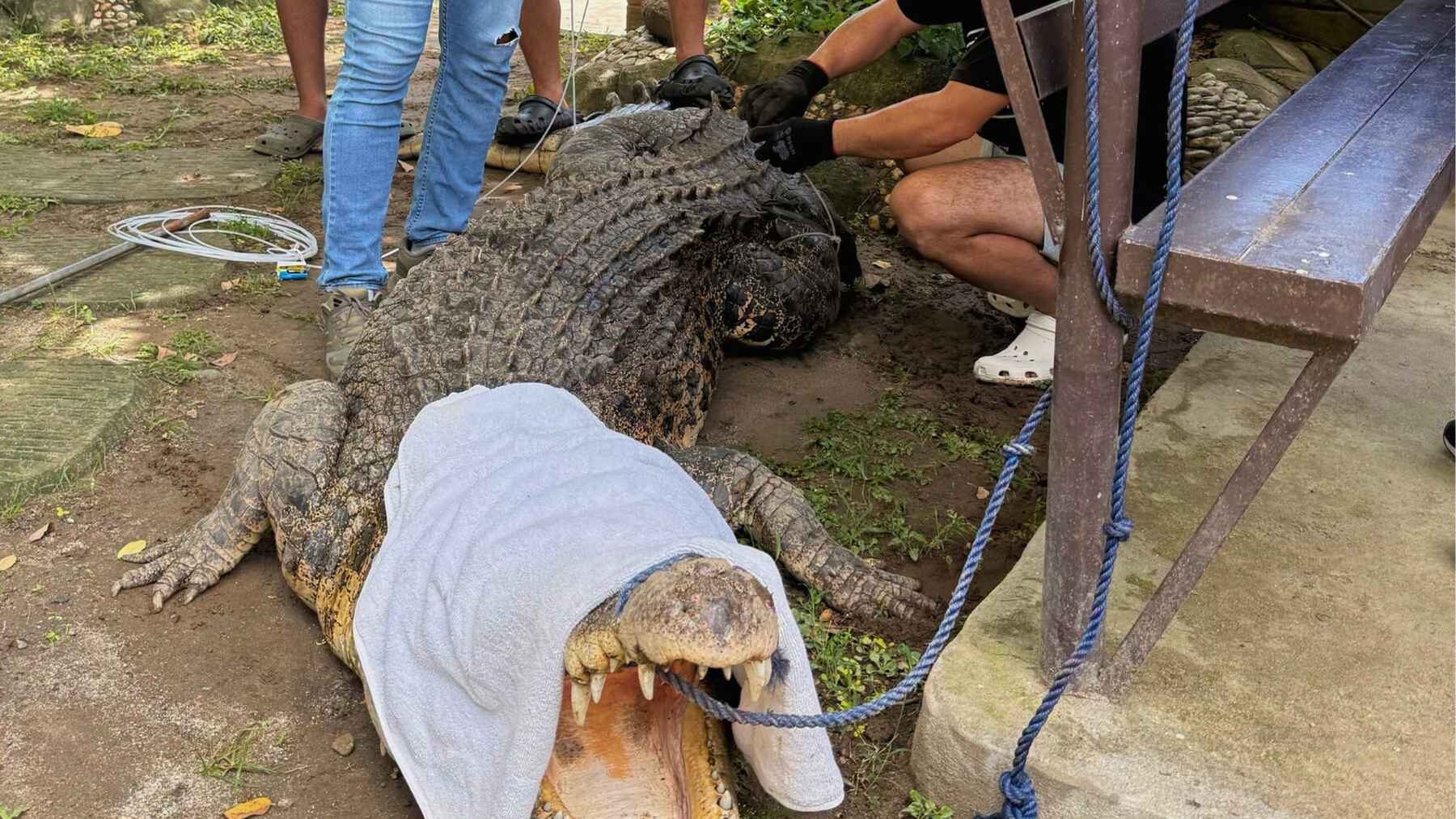
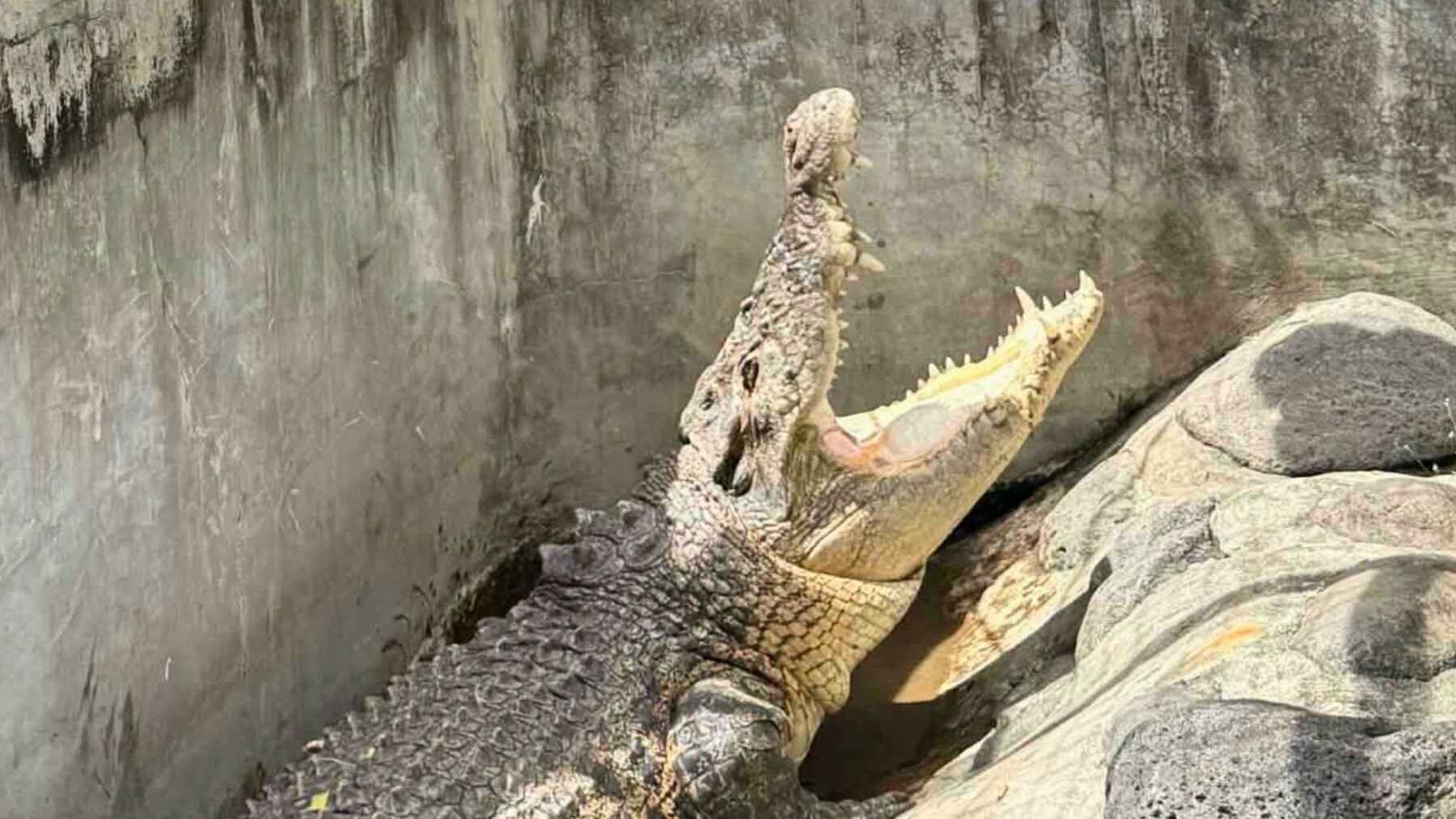
On Aug. 1, 2026, a 10 ft. female saltwater crocodile (Crocodylus porosus) was safely rescued in Barangay San Agustin, Magalang, Pampanga, after a concerned resident alerted environmental authorities. The Department of Environment and Natural Resources described her as about 15 years old and in good condition following an initial assessment.
At first glance, the discovery sounds like the dramatic return of an animal thought gone from the province. The more careful conclusion is different, because officials say the crocodile was found away from Pampanga’s historic coastal habitat and may have been brought from elsewhere or kept in captivity.
A resident’s call changed the outcome
Teams from DENR Pampanga’s Wildlife and Water Resources Management Section and Forest Protection, Surveillance, and Intelligence Section worked with barangay officials to secure the crocodile. They transferred her to Global Zoo and Theme Park Alliance Inc. inside the Clark Freeport Zone, an accredited wildlife rescue center expected to provide veterinary assessment, proper care, and rehabilitation.
DENR Central Luzon Regional Executive Director Ralph Pablo said, “The successful rescue underscores the importance of public vigilance and community participation in wildlife conservation.” In practical terms, one phone call put the animal in trained hands and reduced the risk to nearby residents.
A rescue, not a resurrection
The most important detail is where the animal was not found. DENR provincial head Roger Encarnacion said she was not in the brackish coastal waters around Sasmuan, where saltwater crocodiles once occurred, and preliminary information suggested she may have come from elsewhere and been cared for locally.
Saltwater crocodiles can use freshwater rivers and travel far inland, so the word “saltwater” does not confine them to the coast. Even so, the circumstances reported by DENR make a captive or relocated origin the leading explanation in the available reporting, while the animal’s exact history remains unconfirmed.
Why Sasmuan matters
The Sasmuan Pampanga Coastal Wetlands cover about 3,667 hectares along Manila Bay and became the Philippines’ eighth Ramsar site in 2021. The wetland meets four Ramsar criteria and links coastal waters with mangroves, mudflats, and a river ecosystem that supports wildlife and nearby communities.
That landscape is the ecological backdrop to Pampanga’s crocodile history, but it should not be treated as proof that a breeding population survives there today. A genuine recovery would normally require repeated verified records, multiple individuals, and signs of reproduction such as nests, hatchlings, or different age groups over time.
Least Concern is not no concern
The saltwater crocodile is listed as Least Concern on the IUCN Red List, yet the species remains protected in the Philippines under Republic Act No. 9147. The law regulates the collection, possession, and transport of wildlife and requires lawful sourcing, adequate capability, and appropriate authorization.
This is not a contradiction. The IUCN uses the saltwater crocodile to show how a species rated Least Concern globally can still suffer local extirpation—essentially becoming a ghost in parts of its historic range, like a thriving national population that has completely vanished from a single state.
Why crocodiles are not pets
At 10 ft., this female is a large wild predator, not a backyard curiosity. DENR reminded the public not to capture, harm, or keep wild animals as pets, while Philippine law permits possession only under regulated conditions.
For residents, the safest response is simple. Keep your distance, do not attempt to restrain the animal, and call the nearest DENR office or local government authority, while DENR’s Biodiversity Management Bureau also lists 0912 909 2310 and 0969 014 7241 for wildlife rescue, retrieval, and turnover concerns.
Pampanga remembers its crocodiles
The animal also stirred an older memory. Pampanga historian Robert Tantingco noted that a 1732 Kapampangan dictionary recorded many crocodile-related words, while cultural anthropologist Joel Mallari pointed to former village names such as Babang Dapu and Quematayandapu along river systems in Mabalacat and Magalang.
Those names suggest crocodiles once held a real place in the province’s landscapes and language, yet the lesson from this rescue is not a dramatic comeback; it is the quieter value of habitat protection, lawful wildlife management, and a vigilant community.
The official statement was published on DENR Central Luzon’s website.