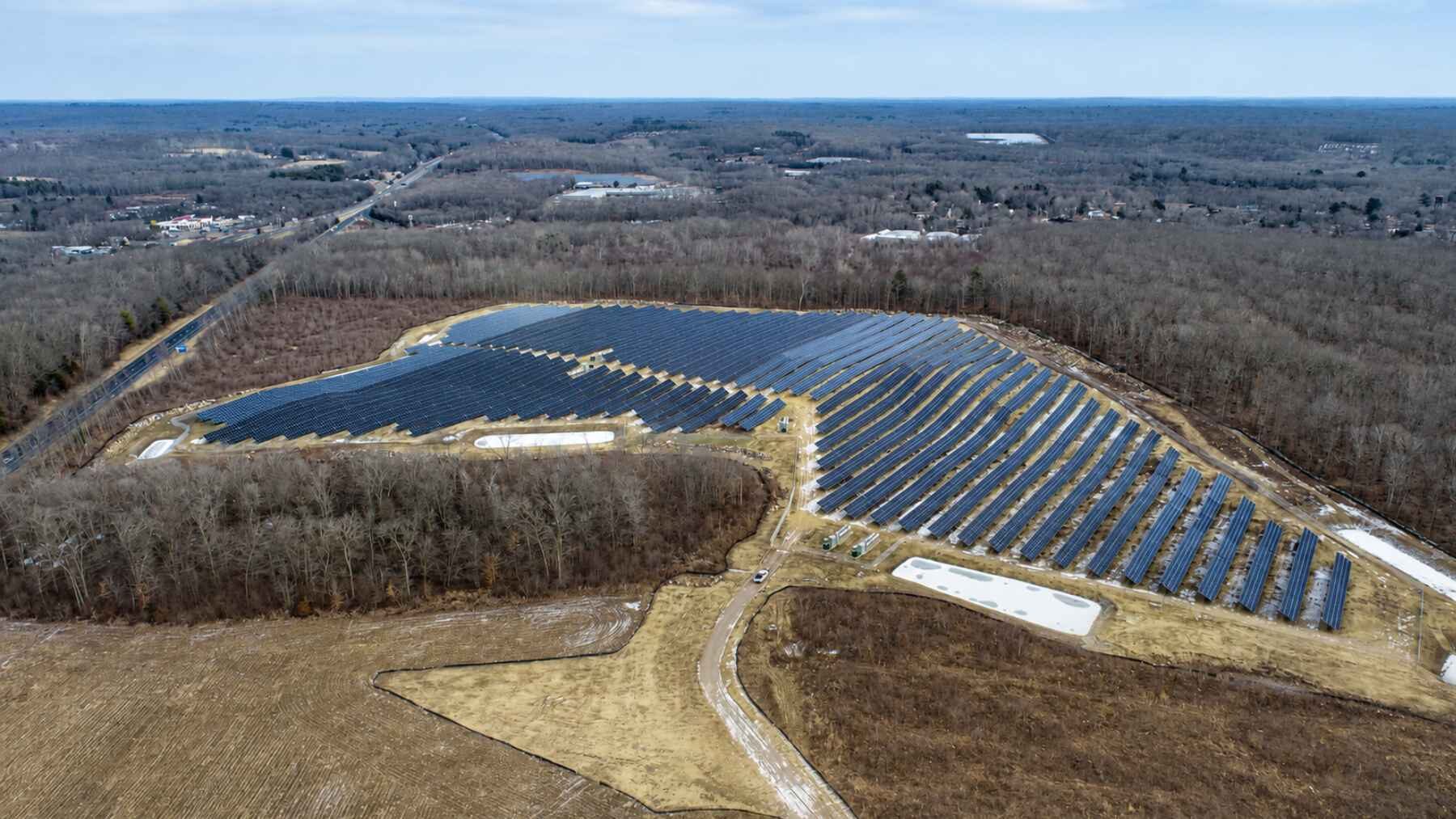
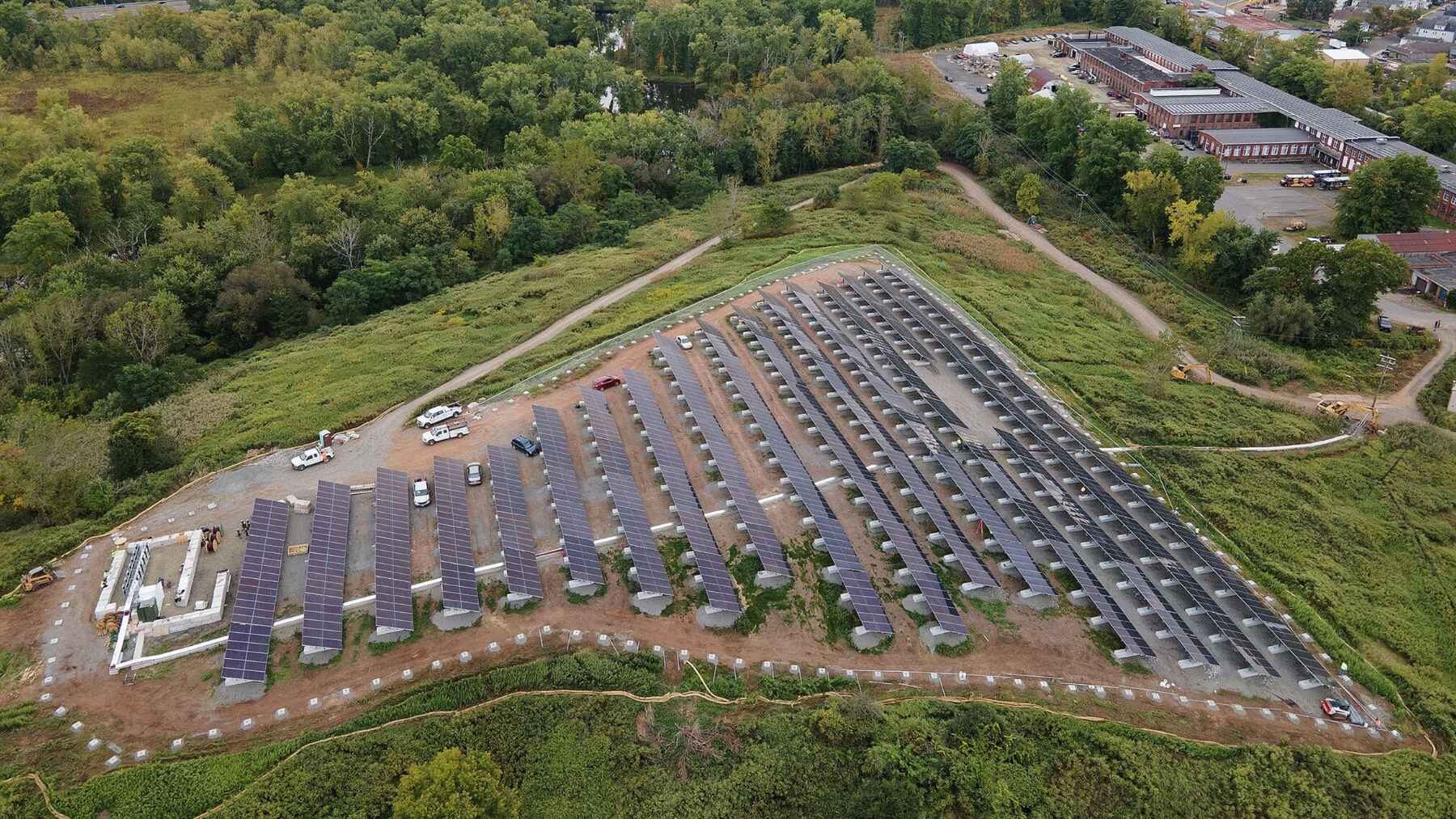
For decades, a grassy mound beside a highway in New Haven, Connecticut, sat quietly holding the city’s garbage. Today, that former dump is generating both electricity and cash. Hosting more than 1,900 solar panels expected to produce over 1.4 million kilowatt-hours a year, the site will power the equivalent of 200 homes — and bring the city about $1.5 million over a 20-year lease.
EPA data show that 332 solar projects on landfills had reached 1,010 megawatts of installed capacity by December 2024, while a 2021 assessment by the clean energy nonprofit RMI found room for at least 63 gigawatts across 4,312 closed sites with adequate data. A rough comparison puts EPA-tracked capacity at about 1.6% of RMI’s modeled potential.
A hill that pays rent
The electricity does not run through a special line to 200 designated houses. Greenskies Clean Energy sells it to United Illuminating, where it joins the broader grid, so the household figure is a production comparison rather than a promise about who receives the power.
New Haven receives $72,000 a year under the lease, while Greenskies built and operates the array. Mayor Justin Elicker captured the contrast at the completion event, saying, “Quite literally, we are on top of the waste of our past and talking about the future of New Haven.”
Why the cap matters
Why put solar on a dump at all? A closed landfill is not ordinary vacant land, and its engineered cover must keep working while developers avoid disturbing buried waste, drainage systems, gas controls, and monitoring equipment.
That is why landfill solar commonly uses ballasted racking — heavy, above-ground mounting frames that function like giant paperweights for the solar panels — that rests on the surface instead of foundations driven into the ground. EPA guidance says this approach can avoid penetrating the cap and reduce the need for trenching, although engineers still have to account for wind, weight, drainage, and future access.
A 63-gigawatt opening
RMI identified more than 10,000 closed landfills nationwide and found that the 4,312 sites with enough information could support at least 63 gigawatts of solar. The estimated output was 83 terawatt-hours a year, roughly equivalent to the electricity use of 7.8 million U.S. homes.
The gap between that estimate and EPA’s 1,010 megawatts of tracked landfill solar is striking, however, it is not a forecast. Many sites will never be economical or technically suitable, and the national estimate shows what could fit under modeled conditions rather than what utilities will necessarily build.
Connecticut changed the math
In the state’s wider market, Connecticut’s current Year 7 Shared Clean Energy Facility procurement maintains a 20% bid preference for qualifying resources on landfills or brownfields. Evaluators use this preference strictly for ranking, making a project look cheaper on paper without cutting the full bid price paid to the selected developer.
That kind of policy matters because landfill arrays often carry added engineering and permitting work. It may also help explain why RMI found that nearly three quarters of operating landfill solar projects were concentrated in Massachusetts, Connecticut, New Jersey, and New York.
Where landfill solar fails
Some old dumps continue to settle unevenly, which can tilt racks, strain mounting systems, and reduce output. Steep slopes, landfill gas equipment, drainage channels, and unstable cap soils can further shrink the usable area, even when a site looks like a broad empty hill from the road.
Grid access can be another major obstacle. EPA guidance says a viable project needs sufficient renewable resources, reasonable interconnection prospects, workable economics, and a design that does not compromise cleanup obligations, so a distant power line or expensive upgrade can stop a project before construction begins.
One hill at a time
New Haven’s array began operating in July 2026, and the city is not treating it as a one-off experiment. Greenskies says municipal properties already host about 4 megawatts of solar, with another 3.5 megawatts in development, suggesting the landfill is part of a broader local buildout rather than a stand-alone installation.
One landfill will not transform the national grid, but New Haven shows a practical way to add clean generation, produce municipal revenue, and reduce pressure to use undeveloped land while leaving the buried waste in place.
The official press release was published on Greenskies Clean Energy.