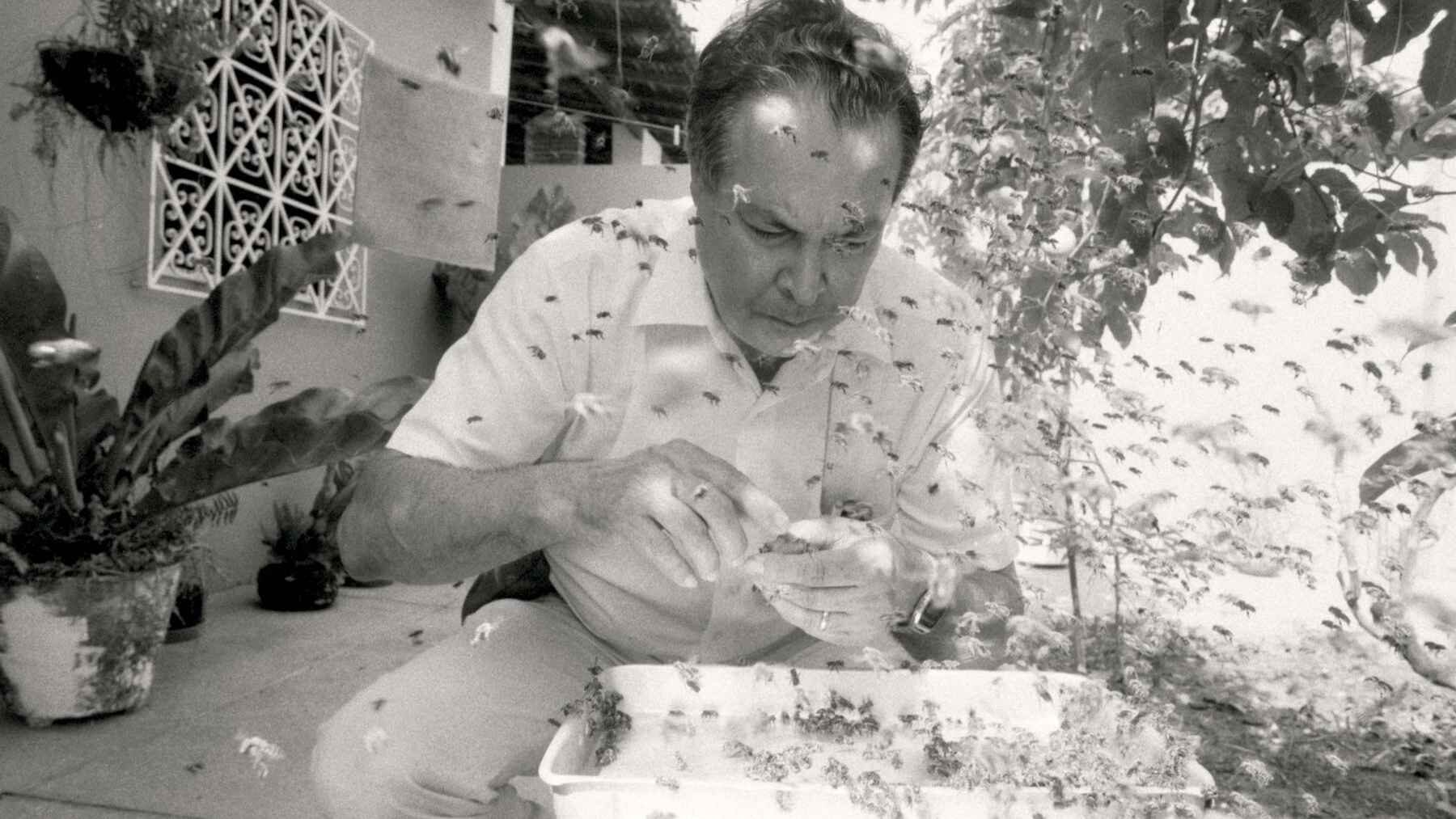
Brazilian geneticist Warwick Estevam Kerr saw a need for a new and improved bee species back in 1956. Backed by the government, his work sought to breed honey bees for higher productivity in tropical climates. The end result was a mass migration from Rio Claro, São Paulo to the rest of the Americas over the next few decades.
The story is often reduced to “killer bees,” but the real legacy is far messier. The hybrids became much more defensive and put pressure on native wildlife in some settings, yet they also became manageable pollinators that helped transform Brazilian beekeeping.
The queen count needs correcting
One headline-friendly detail does not survive the latest official review. Although some retellings say Kerr imported 63 queens, Embrapa’s 2026 synthesis, drawing on Kerr’s own account, says 133 were collected in Africa, 47 survived, 12 were eliminated, and 35 were placed in quarantine.
That discrepancy matters because the best-documented number is 26. Kerr said a visitor removed queen excluder screens from 35 hives and informed the research team 10 days later, by which time 26 bee families had swarmed or migrated.
A plan for tropical farms
European honey bee lines performed well in temperate North America but were less productive in Brazil’s tropical climate. Kerr hoped to combine the African bee’s heat adaptation and productivity with the gentler behavior of Italian and other European stock.
He was not trying to unleash a wild insect. For the most part, this was applied genetics aimed at giving Brazilian beekeepers a better working bee, especially in places where heat made ordinary honey production difficult.
Why the bees moved so fast
Once outside quarantine, their descendants mated freely with European honey bees already living in the Americas, producing the hybrids now known as Africanized honey bees. University of Florida experts say their spread through South and Central America reached roughly 200 to 300 miles per year, with established populations entering the United States in 1990.
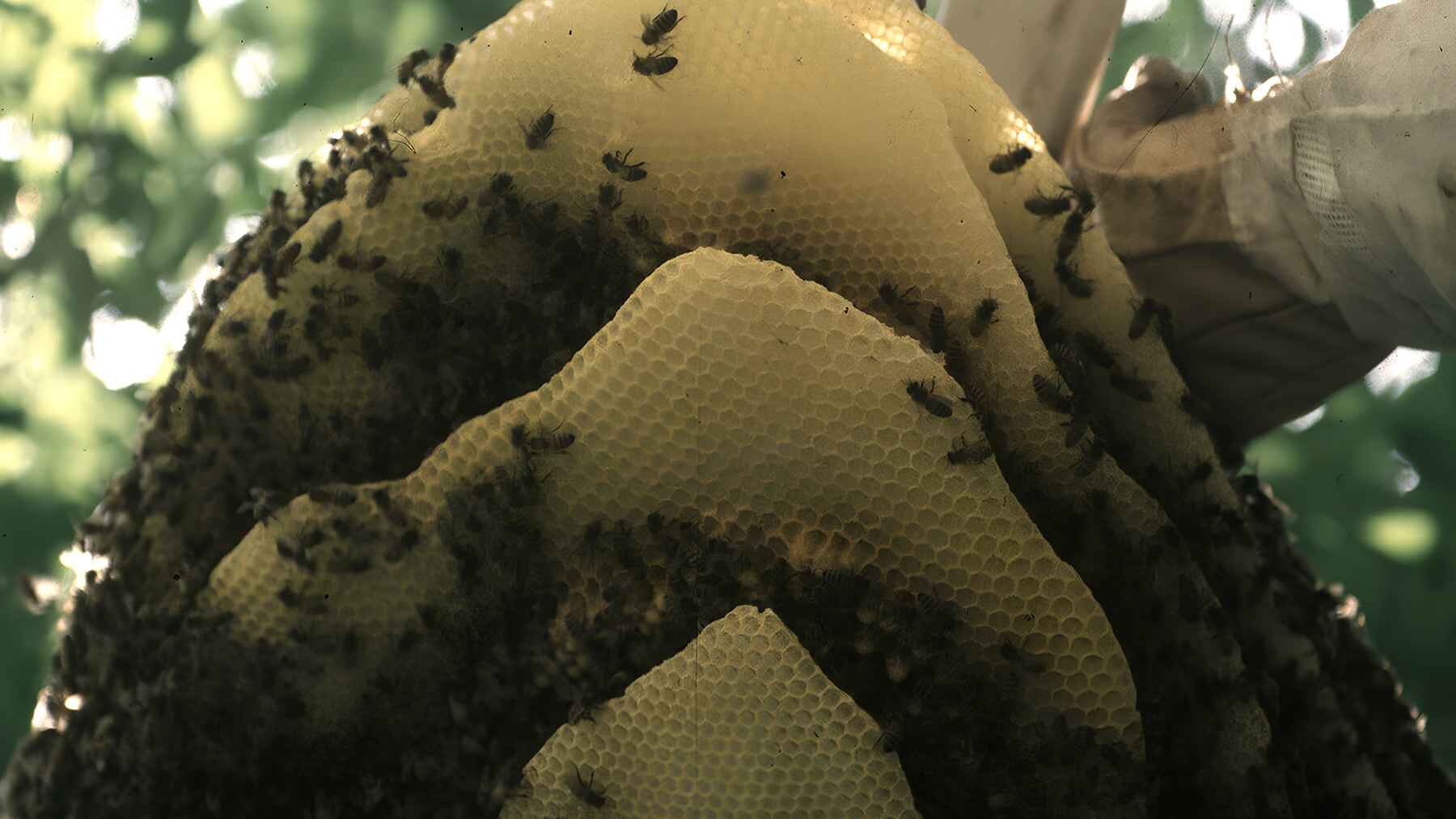
Biology gave them an edge. Africanized colonies swarm far more often, accept smaller nesting spaces, produce more drones, grow faster, and develop queens and workers more quickly, allowing African genetic traits to become widespread.
The venom myth
The nickname “killer bee” suggests a more toxic sting, but that is not the key danger. Africanized and European honey bees use the same type of venom, while a disturbed Africanized colony may send hundreds of defenders instead of the 10 to 20 bees typically involved in a European colony’s response.
In other words, the danger rises because more bees sting at once. Anyone caught in an attack should run to an enclosed vehicle or building, cover the head and airways, and avoid jumping into water or hiding in bushes, according to University of Florida guidance.
A real ecological concern
These bees do more than worry people operating a lawn mower near a hidden nest. Embrapa’s review identifies competition with native wildlife for flowers and nesting sites, transmission of pests and diseases, and possible changes to vegetation through the pollination and spread of invasive plants.
The science is not perfectly tidy, however. The review says the true magnitude of the damage remains uncertain and notes that these concerns apply broadly to introduced Apis mellifera, not only to the Africanized hybrid created in Brazil.
Brazil learned to work with them
After chaotic early years, Brazilian beekeepers changed the way they worked, using more protective equipment and smoke, spacing hives farther apart, and keeping colonies on separate stands. The everyday result was not eradication, but adaptation.
Embrapa connects that management shift with an increase from about 5,500 tons of honey in the 1950s to 74,000 tons in 2024, while Brazil’s official statistics agency confirms that 2024 set a national production record. That does not make every escaped colony beneficial, but it complicates the idea of one simple ecological disaster.
The feared U.S. collapse never arrived
In the United States, Africanized bees created safety and liability concerns, but a University of Florida economic analysis found no substantial reduction in domestic honey production following their 1990 arrival. Beekeepers largely adapted by changing management practices, including more frequent queen replacement.
That is an important reality check for claims that the insects devastated American beekeeping. The strongest evidence instead points to localized safety risks, additional management costs, and possible ecological pressure rather than a nationwide collapse.
Kerr fought another battle
Kerr’s scientific legacy cannot be separated from Brazil’s military dictatorship. FAPESP records that he described himself as a socialist, opposed the regime’s abuses while leading the Brazilian Society for the Advancement of Science, and was arrested in 1964 and again in 1969.
He later became the first Brazilian admitted as a foreign member of the U.S. National Academy of Sciences. The bee release shadowed his career, but it did not define the full life of a scientist who also established institutions, trained researchers, and promoted science for public benefit.
What 26 colonies still teach us
The history suggests a biosecurity warning with no neat villain. A project designed to solve a farming problem escaped its safeguards, after which biology and hybridization drove much of the continental spread, with deliberate hive transportation contributing later.
At the end of the day, the lesson is not that ambitious science should stop. It is that containment, transparent records, long-term monitoring, and ecological impact studies must be treated as part of an experiment from day one.
The official historical review was published by Embrapa Meio-Norte.