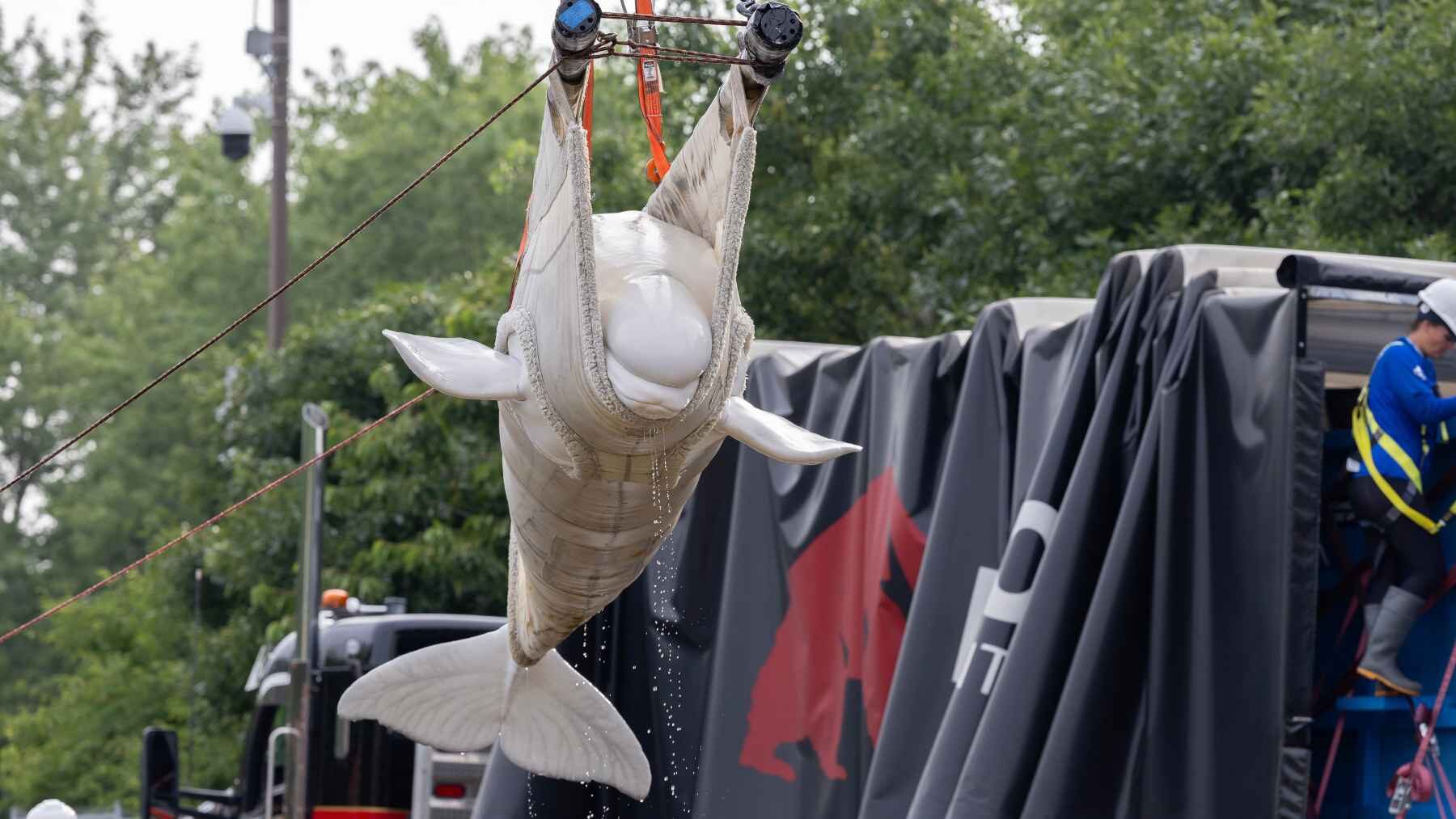
Two beluga whales named Bertie Botts and Frankie arrived at SeaWorld San Antonio on July 21, 2026, after a journey of more than 1,500 miles from Niagara Falls, Ontario. The roughly 1,200-lb. animals are now settling into a 2-million-gallon saltwater pool while caregivers assess how they handled the move.
Their arrival opened a much larger cross-border operation involving 30 belugas left at Marineland of Canada after the theme park closed to visitors in 2024. Four other whales reached Shedd Aquarium in Chicago on the same trip, making them the first six moved under a plan that could send 28 to U.S. facilities and two to Spain.
A difficult journey by road and air
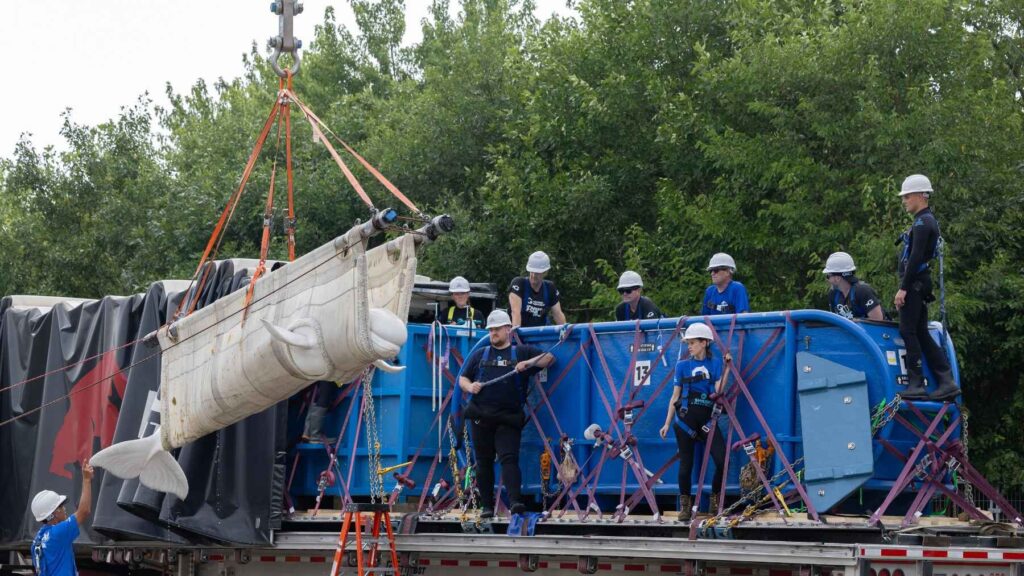
How do you move a whale across a continent? Very carefully, and with little room for improvisation. Bertie Botts and Frankie traveled in specialized cold-water containers, first by truck and then aboard a 777 cargo aircraft, while veterinarians and animal care specialists continuously monitored their condition.
Steve Aible, vice president of zoological operations at the Texas park, was among 10 caretakers who accompanied the whales. “Who would ever think that you’ve got a chance to fly with a whale?” he recalled after the unusual flight, which followed nearly two years of international coordination.
The first group was organized around existing social relationships rather than convenience alone. Acadia, Osiris, Sierra, and Lillooet, the four females sent to Chicago, traveled together because they already formed a bonded sub-pod, a smaller social group within the larger collection of whales.
Why the relocation became urgent
The Ontario facility stopped operating as a public theme park in 2024 but continued holding its marine mammals. It later said it lacked the resources to maintain long-term care and warned that euthanasia could become unavoidable unless new homes or additional funding were secured.
The National Oceanic and Atmospheric Administration (NOAA) Fisheries approved emergency imports of up to 28 belugas after concluding that the U.S. receiving facilities could provide medical treatment and care that was otherwise unavailable. The federal authorization also said no viable Canadian option could meet the whales’ husbandry and medical needs.
This was not approved as a routine commercial transfer. Each whale must be certified by a veterinarian as stable enough to travel, and every destination must hold the required federal license and follow U.S. Animal Welfare Act transport standards.
Bertie Botts and Frankie begin acclimation
Early signs from Texas have been encouraging, although caregivers are avoiding firm conclusions. The two males have maintained steady appetites and displayed alert, engaging behavior as teams conduct repeated medical assessments and learn their individual routines.
For now, the newcomers are being kept apart from the eight belugas already living at the park. Introductions will happen gradually, because a new pool, unfamiliar sounds, different people, and new companions can make even a carefully planned move demanding for a highly social animal.
Belugas are Arctic and subarctic toothed whales known for their white adult coloring and wide range of clicks, whistles, and chirps. They often move between groups in the wild, but social contact remains central to communication and daily life, which is why the relocation teams placed so much weight on established bonds.
Federal rules put care before display
The rescue comes with conditions that go well beyond the flight itself. Under the federal agreement, the imported whales are considered to be held for rehabilitation, and officials must later determine whether any return to a natural habitat is feasible based on veterinary information.
Public viewing is allowed only when it does not interfere with care. The agreement requires an educational component and bars the newly imported belugas from public touching, feeding, photo sessions, or performance training unless the agency gives specific approval.
That caveat matters. The animals may eventually be seen by visitors, but their medical status, adjustment, and welfare are supposed to set the timetable, not a show calendar or a busy weekend crowd.
More whales are still waiting in Canada
The first six arrivals are only the opening stage. Federal records assign 13 of the 28 U.S.-bound belugas to Texas, 10 to Chicago, 3 to SeaWorld San Diego, and 2 to Georgia Aquarium, while Oceanogràfic Valencia is expected to receive the two animals going to Spain after the remaining approvals are completed.
That means 11 more whales from the closed park are expected in San Antonio after Bertie Botts and Frankie. Future transfer dates are not being announced in advance, and participating aquariums say each plan may change as teams learn from the first journey and reassess the health and social needs of the whales still in Ontario.
A successful landing is a major milestone, but it is not the finish line. The next test will be whether the animals continue eating, exploring, socializing, and responding well as they settle into more active environments and meet new members of established beluga groups.
The official joint press release has been published by SeaWorld and its partner aquariums.
Image credit: Shedd Aquarium