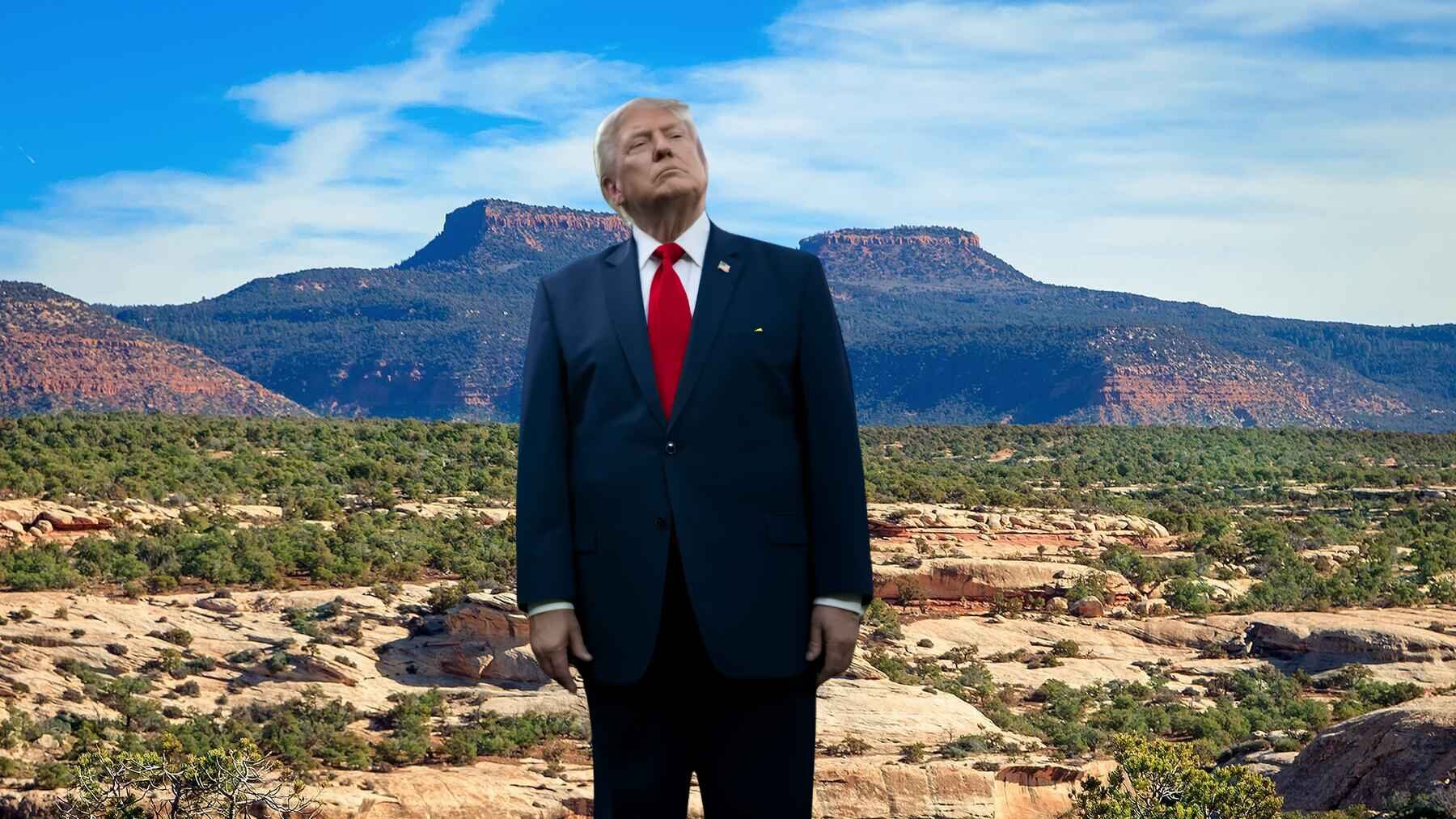
President Donald Trump signed two proclamations on July 13, 2026, removing national monument protections from most of Bears Ears and Grand Staircase-Escalante in southern Utah. Bears Ears falls from about 1.36 million acres to 121,096 acres, while Grand Staircase-Escalante shrinks from about 1.87 million acres to 181,541 acres.
Together, the changes exclude nearly 2.93 million acres, or roughly 4,600 square miles, from the monuments. The land remains federally owned, but the proclamations say the excluded areas can reopen on Sept. 11, 2026, to mining claims, mineral and geothermal leasing, and other public-land uses, subject to existing rights and federal law.
Nearly all of both monuments is removed
The cuts leave about 9% of Bears Ears and about 10% of Grand Staircase-Escalante inside the new boundaries. Around 303,000 acres remain protected as national monuments out of a previous combined area of more than 3.2 million acres.
This is also a much deeper rollback than Trump ordered in December 2017, when he reduced Bears Ears by roughly 85% and Grand Staircase-Escalante by about half. President Joe Biden restored the larger boundaries in October 2021, setting up the latest swing in a land dispute that has now crossed four presidential terms.
What reopening actually means
A national monument is a federal designation that places special management rules over land already owned by the public. Removing that designation does not hand the property to Utah, mining companies, or private developers overnight, and other laws protecting archaeological sites, wildlife, forests, and historic resources still apply.
The important change is what federal agencies may authorize. At 9 a.m. Eastern time on Sept. 11, 2026, the excluded lands are scheduled to reopen to mining claims, mineral and geothermal leasing, and certain land transactions. A claim or lease would not equal an operating mine, since later exploration and extraction would still face project-specific requirements.
Minerals and energy move to the center
The proclamations openly connect the boundary cuts to resources described as important for economic and national security. The administration says the former monument lands can support a wider mix of activities, including resource development, grazing, timber harvesting, infrastructure work, and motorized recreation.
Trump called the action “very dramatic and very important” for Utah and the country. Utah Governor Spencer Cox also welcomed the move, arguing that agencies can focus limited resources on the most significant sites while the surrounding federal lands remain protected under other laws.
Sacred land and scientific records
For Tribal Nations, Bears Ears is not simply a collection of ruins scattered across a map. The region contains an estimated 100,000 or more archaeological structures, sites, and cultural objects, and it remains a living homeland connected to the Hopi Tribe, Navajo Nation, Ute Indian Tribe, Ute Mountain Ute Tribe, and Pueblo of Zuni.
The proclamation also terminates the Bears Ears Commission, which brought representatives of those five Tribal Nations into collaborative management with federal agencies. Curtis Yanito, a Navajo Nation Council delegate, responded, “We are not visitors here; we are locals, and we are still here.” The retained areas include places such as Newspaper Rock, Moon House, and the Citadel, but Tribal leaders argue that separating individual sites misses the meaning of the wider landscape.
Grand Staircase-Escalante carries a different but equally striking scientific record. Its canyons, plateaus, fossils, dinosaur remains, rock layers, and archaeological resources have made the area an outdoor laboratory, while the new proclamation keeps only two much smaller units under monument status.
The Antiquities Act heads back to court
The legal fight centers on the Antiquities Act of 1906. The law allows a president to declare national monuments on federal land and says the reserved area must be the smallest compatible with protecting the objects involved, but its text does not expressly spell out a separate presidential power to shrink a monument created by an earlier president.
The Trump administration says that designation authority includes the discretion to remove land when protected objects are considered insufficiently important, already covered by other laws, or better managed under multiple-use rules. Earthjustice takes the opposite view and has promised litigation, with attorney Heidi McIntosh saying, “The Antiquities Act authorizes presidents to designate national monuments, not to destroy them.”
The lawsuits filed after the 2017 reductions did not reach a final resolution on that central issue before Biden restored the monuments in 2021. That is why this new round may become more than another political reversal. It could produce a major ruling on how much control one president has over a predecessor’s conservation decisions.
What happens next
Federal land managers must now oversee the much smaller monument units and adjust management plans, while applying existing environmental and cultural-resource laws across the excluded areas. The proclamations also call for public involvement and consultation with federally recognized Tribes during future planning, even though the Bears Ears Commission itself has been ended.
Earthjustice and allied conservation groups have promised to return to court. Mining, drilling, or roadbuilding would not begin automatically, but the legal status of nearly 3 million acres has changed, creating a path for prospective developers to prepare claims, seek leases, or submit later project proposals. The next decisive move may come from a judge.
The proclamations were published by the White House.