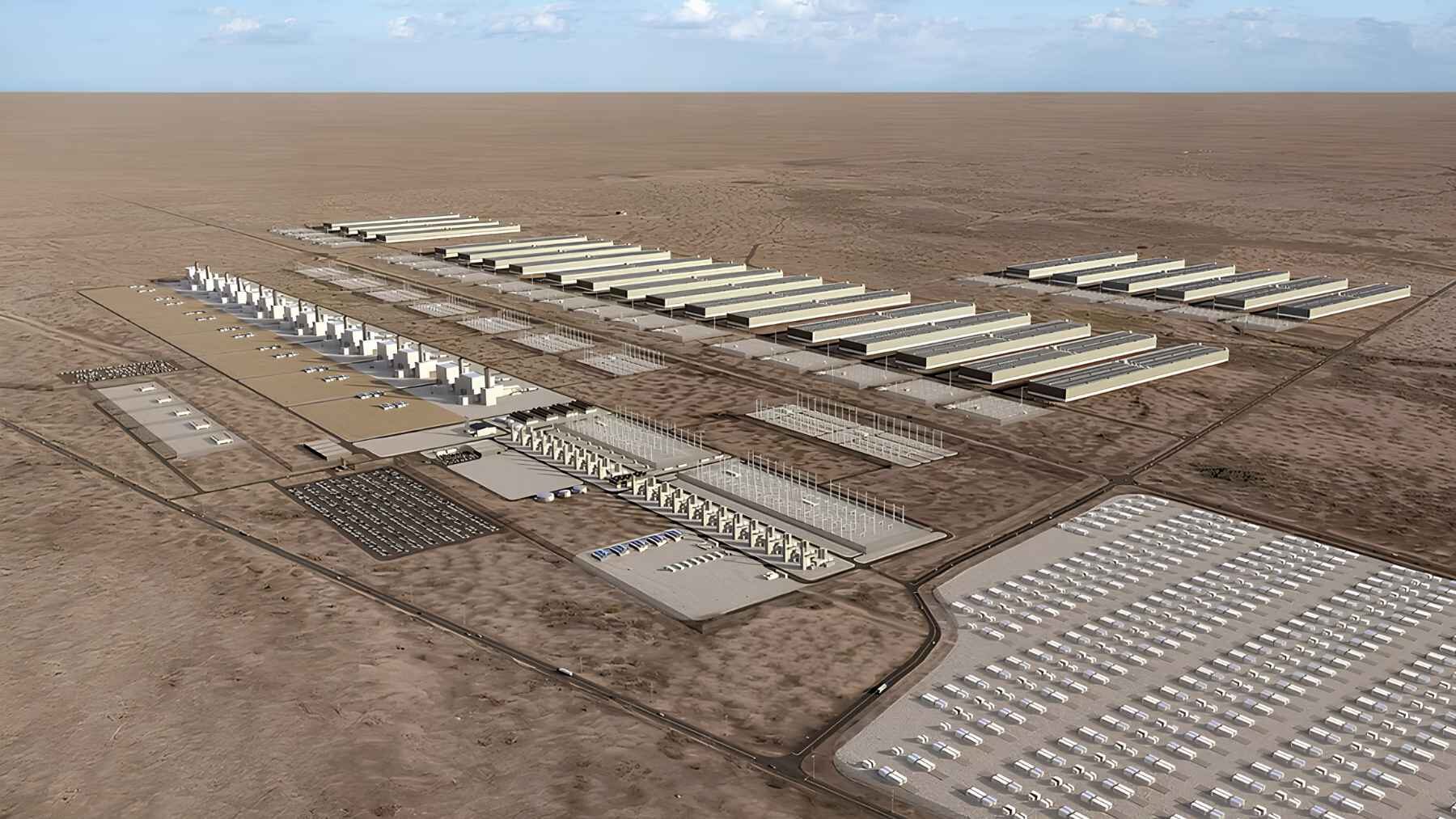
Amazon’s planned AI data center campus in Pecos County, Texas, is tied to an on-site natural gas power project of unusual scale. Texas regulators authorized Pacifico GW to build 35 simple-cycle turbines for the GW Ranch Energy Center, which the permit describes as serving an on-site AI data center that cannot exchange power with the local utility system under its permitted design. Amazon has confirmed that it bought the site and plans to purchase electricity from the project.
The headline figure is enormous, but it needs context. The permit allows up to 33.2 million U.S. tons of carbon dioxide equivalent each year, or about 30.1 million metric tons, and reaching that ceiling would put the plant roughly 58% above the highest-emitting U.S. facility reported for 2024 and amount to about 37% of Amazon’s entire 2025 corporate carbon footprint.
A private power plant for AI
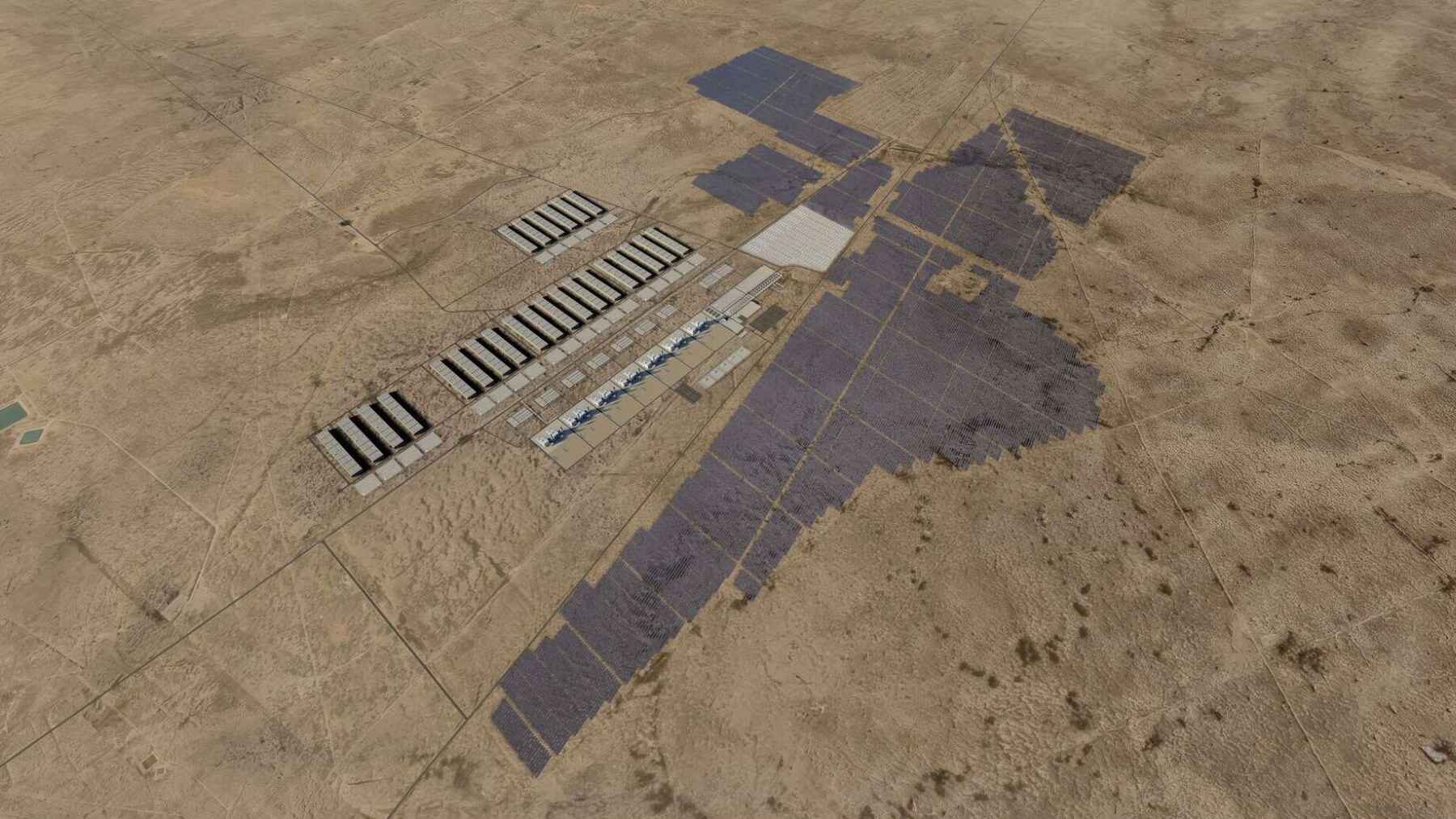
Pacifico Energy markets GW Ranch as a 7.65 GW gas platform backed by 1.8 GW of battery storage and 750 W of solar power. Its first phase is listed at 1 GW, with initial power expected in the first half of 2027.
That 7.65 GW figure is a permitted gross buildout, not capacity that is already operating. TCEQ’s technical summary describes a nominal 5,000 MW simple-cycle plant, while Pacifico says the project will begin smaller and scale through later phases.
Why the ceiling is so high
The 33.2 million-ton greenhouse gas figure was calculated on the assumption that every turbine burns natural gas for 8,760 hours a year outside startup and shutdown periods. In practical terms, it is a maximum permitted case rather than a prediction of what the facility will emit in a typical year.
Still, a ceiling is not just paperwork. Even at half the permitted greenhouse gas output, GW Ranch would release about 15.1 million metric tons of CO2e a year, placing it close to the top of the latest available U.S. facility rankings.
Pacifico’s planned 750 MW of solar could reduce gas use when sunlight is available, but it represents less than one-tenth of the project’s permitted gas capacity. Battery systems can shift electricity from one part of the day to another, yet they are not a source of new power.
CO2 is only part of the permit
The permit also authorizes annual releases of up to 2,830 U.S. tons of nitrogen oxides, 5,955 tons of carbon monoxide, about 991 tons of fine particulate matter and 1,925 tons of ammonia. These pollutants are separate from the project’s greenhouse gas total and make the air permit relevant well beyond the climate headline.
TCEQ found the proposed pollution controls consistent with best available control technology and accepted modeling that predicted no exceedance of national ambient air quality standards. The real-world picture will become clearer after operations begin and measured emissions can be compared with those modeled assumptions.
Amazon’s climate pledge meets AI growth
Amazon continues to target net-zero carbon emissions across its global operations by 2040. Yet its own 2025 sustainability report shows a carbon footprint of 80.85 million metric tons of CO2e, up 16% in one year, while emissions from purchased electricity rose 34% partly because of data center demand.
The company also says it matched 100% of the electricity used by its operations with renewable energy for a third consecutive year and had enabled more than 712 carbon-free energy projects by January 2026. Those investments matter, but they do not make the physical emissions from natural gas burned at a specific site disappear.
What Amazon says about local impacts
Amazon says the on-site generation “won’t raise electricity costs for Texas families,” a promise aimed squarely at concerns over the monthly electric bill. The company also says it plans to use water unsuitable for drinking or irrigation, install custom cooling technology and explore produced water as another nonpotable source.
Those measures address grid costs and water use, but the public statements and reports reviewed for this article did not detail a site-specific route for reconciling GW Ranch’s potential emissions with the 2040 target. Amazon spokesperson Margaret Callahan nevertheless said that “our commitment hasn’t changed.”
AI is forcing an energy reckoning
Data centers consumed about 4.4% of U.S. electricity in 2023, according to the Department of Energy, and that share could reach between 6.7% and 12% by 2028. What happens when one fast-growing industry asks for the power of entire cities?
The International Energy Agency expects global data center electricity use to more than double to about 945 TWh by 2030, with AI as the main driver and both renewables and natural gas taking leading roles. Private generation can sidestep slow grid connections, but when it relies on gas, the pressure shifts from the waiting queue to the carbon ledger.
What happens next
The biggest number in the permit may never be reached. What matters next is how many turbines are installed, how many hours they run, how much solar and storage actually comes online, and what the facility reports once commercial operations begin.
For now, GW Ranch stands as a test of whether Amazon can expand AI at unprecedented scale without turning its 2040 climate pledge into a moving target.
The official permit record was published by the Texas Commission on Environmental Quality’s website.