Desalination is a very specific method used to generate freshwater where rainfall, rivers, and reservoirs fall short, but there can be a problem: this usually comes together with a very high electricity bill. That problem is not just a small thing that happens to some parts of the population… The Water Development Report says that 2.1 billion people still lack safely managed drinking water, which means that even where a supply exists, it is not always managed in a safe way.
The sea does work normally assigned to pumps
Why did the company decide to go 500 meters down for the most difficult part? At that depth, the ocean water naturally can exert 50 bar. This would be almost the same as what a conventional coastal plant can create, but with the difference that those end up consuming a lot of energy. Also it is important to explain that at this depth, and the reverse osmosis depending on the pressure, most of the salts stay behind.
Flocean’s design takes advantage of this ambient pressure and places a smaller pump on the freshwater side. That way, water can be extracted through the membrane and then taken to the shore. And here is the key point of the project: the company is calculating that the energy consumption is reduced between 40 and 50 percent. This matches with the reverse academic models, which also show a significant savings of up to 50 percent.
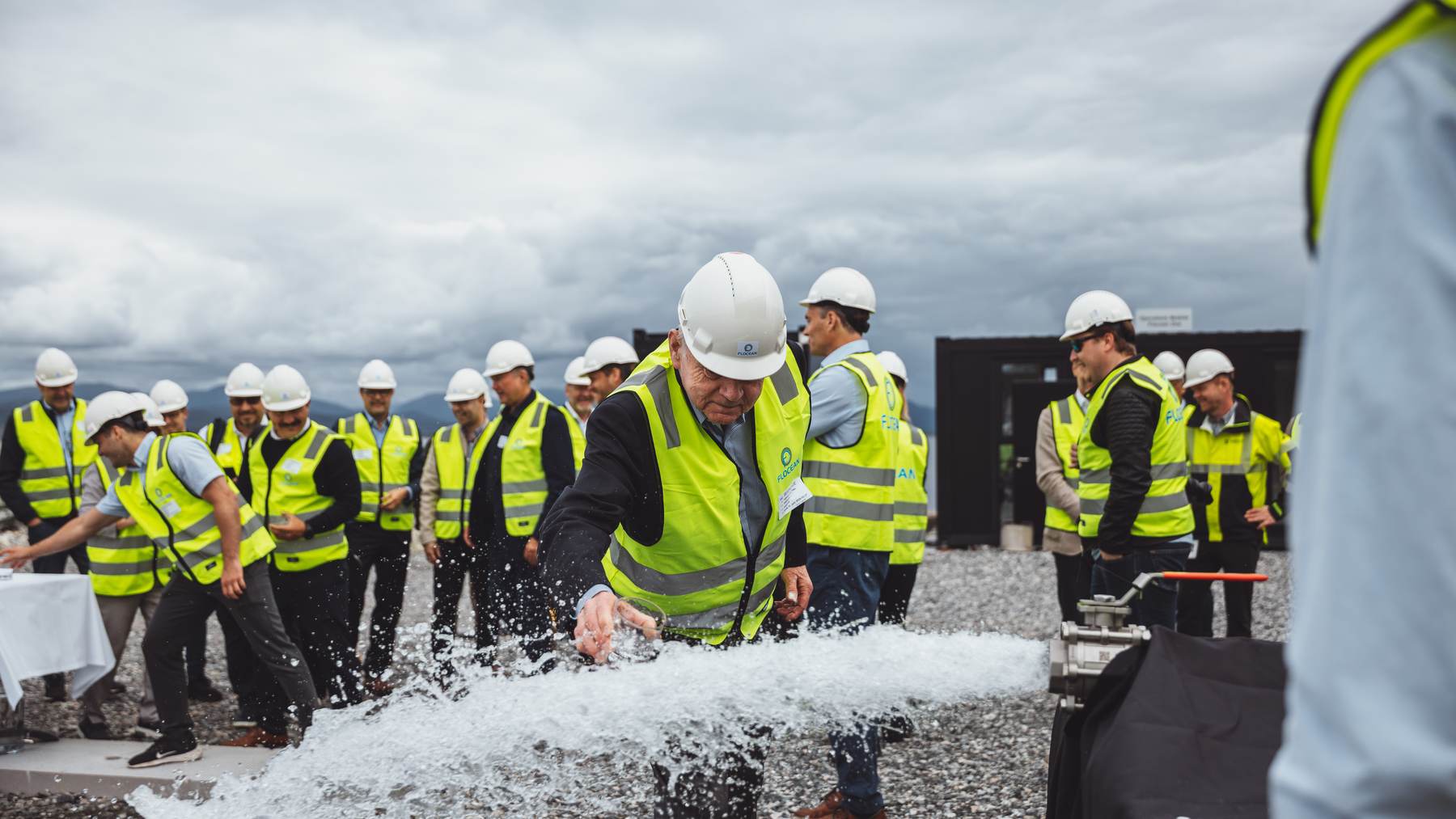
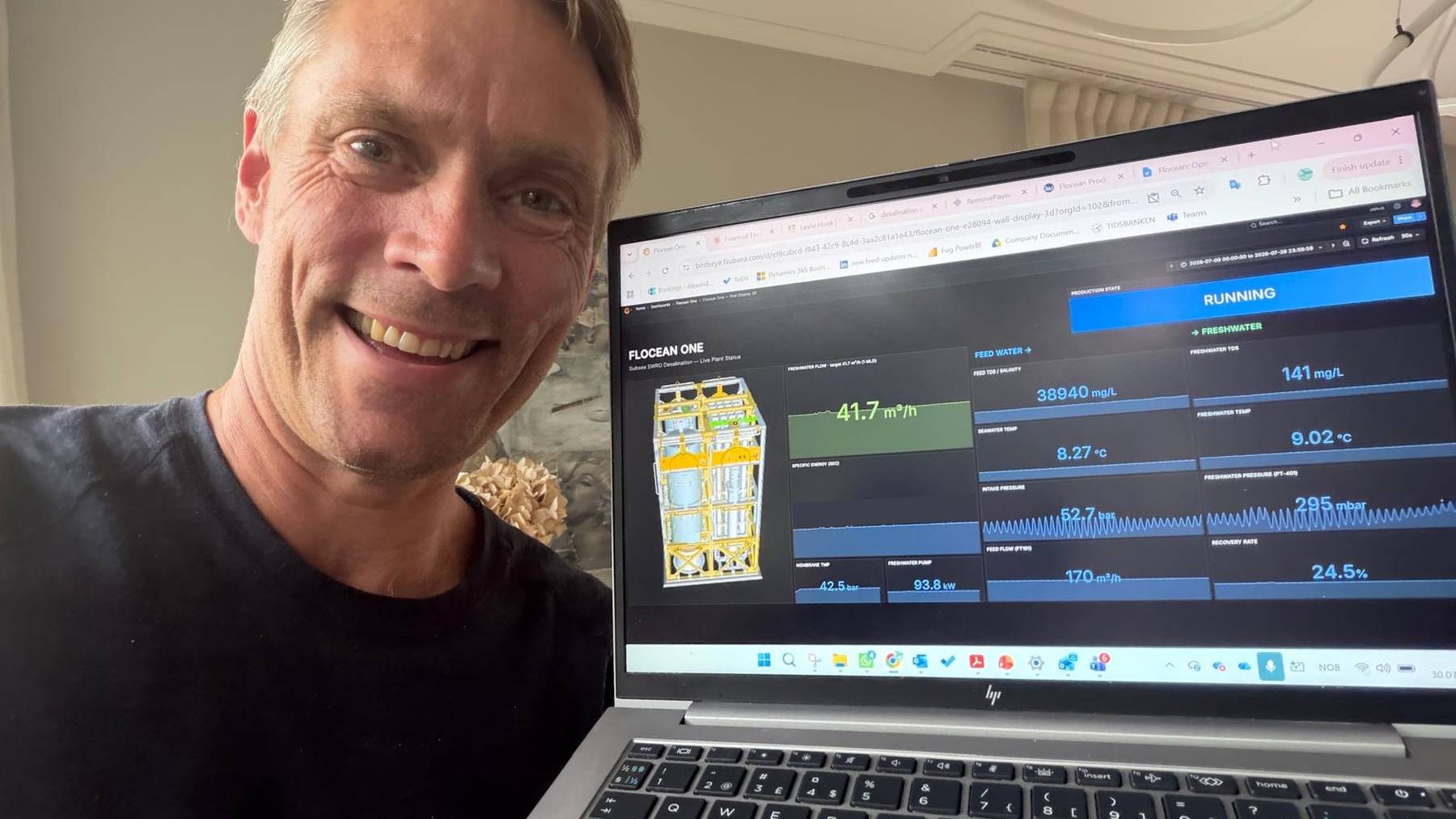
In front of Norway’s west coast, the company Flocean, has a 22-ton pod (named Flocean One) that produces up to one million liters of the freshwater a day. In fact, the company informed that on July 31, 2026 the system had been working without literally stopping for a single hour since the beginning of July. The founder and CEO Alexander Fuglesang even said that they were producing drinkable water at an industrial scale.
Cleaner intake water could simplify the plant
But there is more about why going deep is a good option. Under 200 meters, sunlight is almost a dream, which ultimately, does not let photosynthesis to happen. And so, the water that is collected has much less algae and organic material than the water collected near the surface.
This is extremely important because the accumulation of living organisms (what is known as biofouling), is one of reverse osmosis technology’s biggest problems. This is actually because it increases things such as feed pressure, costs and cleaning frequency.
One million liters is a milestone, not a megacity supply
Flocean One produces 1,000 cubic meters a day, and supposedly they say that this could be enough for about 6,000 family homes. This turns out to be really significant for an industrial site that is already functioning, or for a smaller local network. But, still it is not as big as, for example, the Carlsbad desalination plant in California, which can produce about 204 million liters per day.
So, that is why the Norwegian pod needs to be understood more as a commercial test and less as the solution in capital letters to solve the urban water scarcity. Flocean says its modular systems could eventually scale up, but still they need to prove that those costs are cost-effective over the years.
The environmental promise still needs long-term evidence
In these areas, it is known that the traditional methods of desalination can create two major marine pressures. These ones are the intake systems that trap organisms and concentrated brine that can really affect and damage the seafloor habitats when dispersion is not done effectively. And what modern seawater systems do is actually recover only 30 to 50 percent of their feedwater.
Flocean wants to show that its process is free of chemicals, and if this is true, it would be a great step forward. Still, the community thinks that as the company is currently collecting environmental data, the ecological impacts need to be observed in the long term by independent monitors.
Norway’s experiment is already pointing beyond Norway
Nowadays, the final infrastructure is being finished so that Flocean One can be connected to the municipal water network in Alver. With these kinds of projects many things can happen at the same time, and this is the case here too: the company also has a development agreement for a proposed project serving Malé and Hulhumalé in the Maldives. According to Flocean members, there are more than 15 projects in development!
For now, it is really a big project. Literally having a machine under the sea that generates freshwater continuously even using the natural pressure of the ocean is amazing.
The official update was published on Flocean.