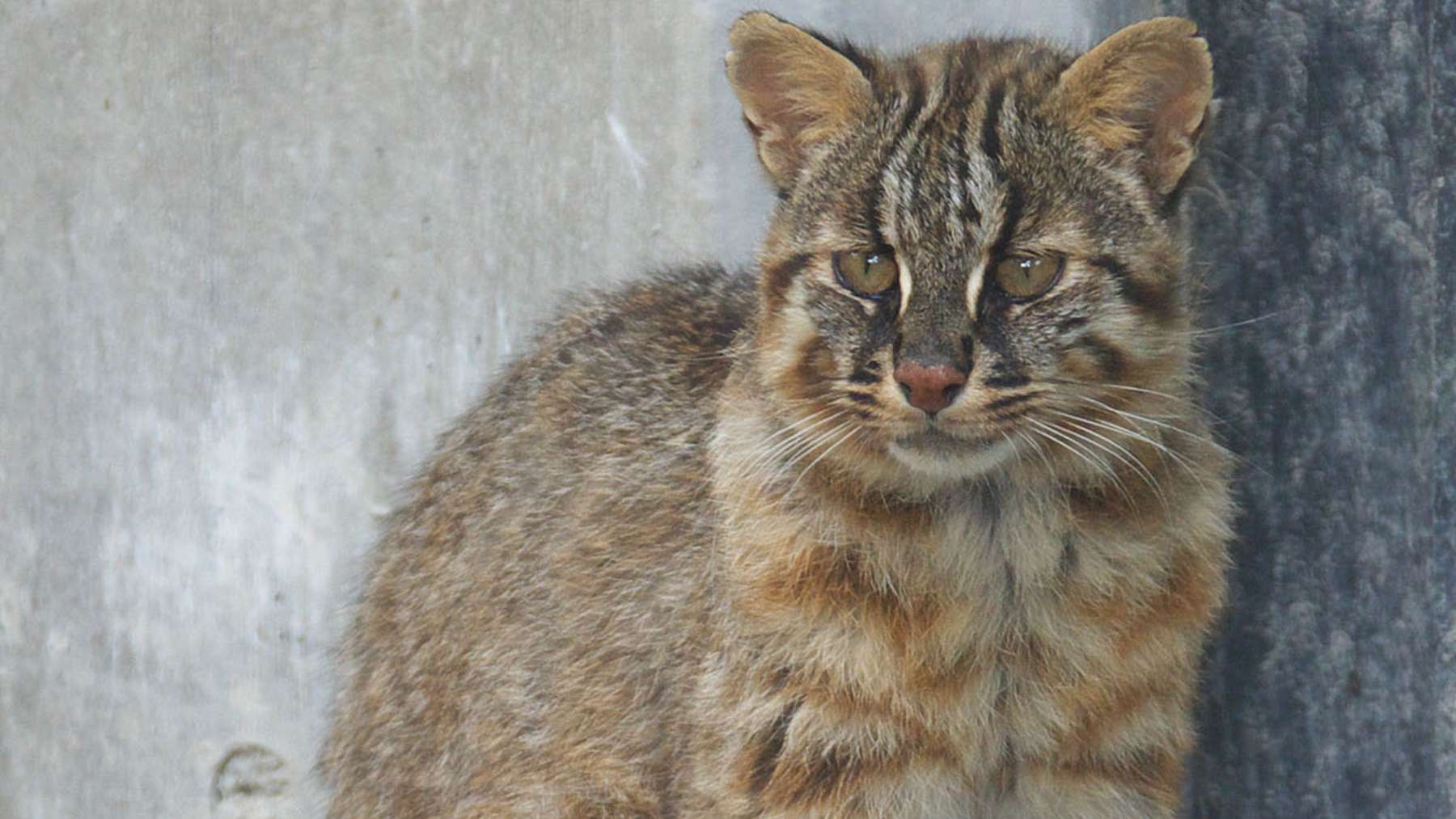
An unusually short tail can be a small detail with serious consequences for an endangered animal. On Japan’s Tsushima Island, researchers investigated whether leopard cats with shortened tails might have domestic cats in their family tree, but genomic tests found no evidence of that ancestry in the animals examined.
The findings ease one concern for this rare island population while leaving another question unanswered. What caused the short tails? A research team involving Kyoto University says the case shows why conservation decisions need more than a photograph or an animal’s unusual appearance.
A small tail raised a serious question
Field surveys identified at least three Tsushima leopard cats with shortened tails at different locations. Such tails are familiar in domestic cats, but the researchers describe their work as the first clinical and genomic characterization of a short-tailed animal in the wild cat genus Prionailurus.
One animal was captured for examination, and its tail was roughly half the usual length. Because domestic cats share the island, the team wanted to investigate “introgression,” the incorporation of genetic material from one population into another through interbreeding and subsequent reproduction. The question was whether the tail pointed to recent domestic cat ancestry or something arising within the wild population.
What the DNA comparisons revealed
The researchers examined the short-tailed cat’s genome alongside those of 15 other Tsushima leopard cats. They also included five domestic cats sampled on the island and four mainland Amur leopard cats, providing reference groups against which to compare the unusual individual.
Several analytical approaches examined genetic relationships and possible mixed ancestry, while mitochondrial DNA provided another view of its lineage. Across those comparisons, the short-tailed animal grouped with the Tsushima leopard cats, and none of the 16 island leopard cats showed evidence of domestic cat introgression.
That finding matters, but its reach has limits. The team’s detailed research statement explains that the methods are suited to detecting recent hybridization, while much older interbreeding or very small genetic contributions remain difficult to detect. These results describe the sampled animals and do not establish that hybridization could never occur on Tsushima.
The short tail remains a mystery
Researchers also screened two genes associated with tail abnormalities in domestic cats. They found no changes predicted to affect their function that could explain this animal’s shortened tail, and its estimated level of inbreeding was similar to that of the other Tsushima leopard cats.
Possible explanations still include congenital or developmental factors, while an injury cannot be ruled out. Seeing unusual tails in several places gives researchers a reason to keep investigating, but camera images alone cannot establish their cause. The next step is to examine more affected animals and compare the findings.
Why the distinction matters for conservation
Japan’s Environment Ministry classifies the Tsushima leopard cat as critically endangered on its national Red List. Its latest survey, released in April 2026, estimated approximately 90 or 100 resident cats in northern Tsushima, depending on the calculation method, and confirmed at least 17 individuals in the south. Uncertain southern estimates make a precise island-wide total difficult to state.
There is encouraging news in that survey, which found that the cats’ distribution had expanded substantially in southern Tsushima. But local declines and road collisions remain concerns, and the ministry also identifies habitat fragmentation and disease transmission from domestic cats as threats. The genomic findings therefore resolve a specific suspicion without removing the need to protect the animals’ everyday surroundings.
The practical implication is that an unusual-looking cat needs careful assessment before its appearance influences conservation decisions. “Appearance alone can be misleading when managing endangered wildlife,” first author Yuki Matsumoto said in Kyoto University’s release. Field observations, veterinary examinations, and genetic evidence together offer a more dependable basis for those decisions.
Following the cats without capturing them
The researchers are developing noninvasive genetic monitoring that could help them follow the population without capturing each animal. Their detailed statement describes using DNA obtained from material such as droppings, while further clinical examinations would help investigate the tail abnormalities themselves.
For a small wild population, that combination could make continued monitoring more practical. The lesson from this case is straightforward, even if the biology remains unsettled. A visible difference can flag a question, but answering it requires evidence about the animal behind it.
The study was published online on August 5, 2026, in Global Ecology and Conservation. The accompanying English-language press release was published on September 7, 2026, on Kyoto University’s website.
Photo: Pontafon / Wikimedia Commons (CC BY-SA 3.0)