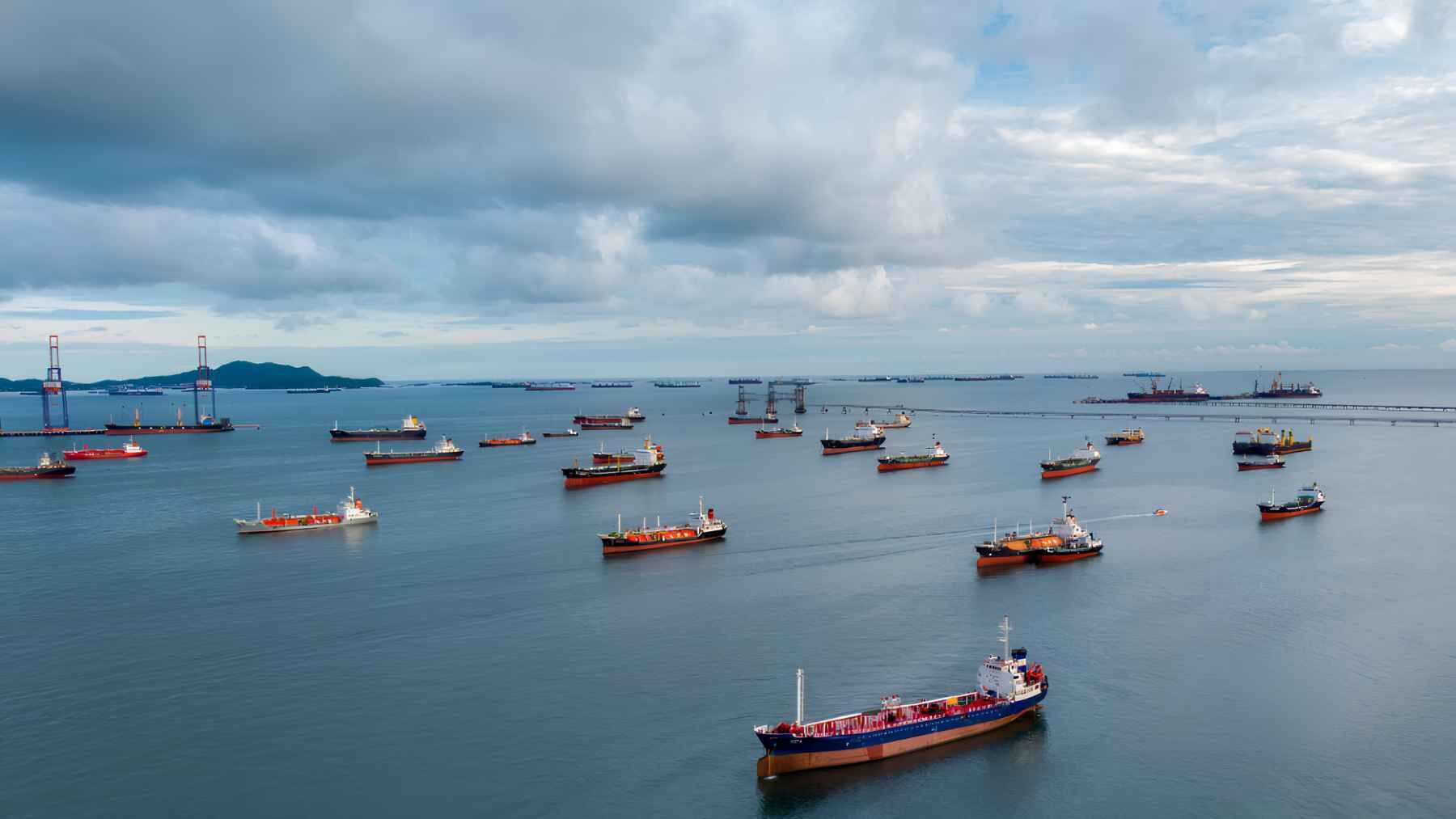
The next environmental shock from the Strait of Hormuz may not be stored inside a tanker or shipping container. It could be clinging beneath the waterline, where algae, barnacles, mussels, worms, and other marine organisms have had months to grow on vessels held in the Gulf.
Marine ecologist Mario N. Tamburri at the University of Maryland Center for Environmental Science led a new analysis that warns that more than 1,500 idle commercial ships in the Persian Gulf, plus hundreds more in the Gulf of Oman, have created the conditions for a possible marine bioinvasion “super-spreader” event. When regular trade accelerates again, those vessels could carry warm-water species to ports thousands of miles away.
A hidden cargo is growing
The process is known as biofouling. It begins with bacteria and a thin layer of slime on submerged surfaces, then develops into more complex communities that can include seaweed, small crustaceans, shellfish, and other invertebrates.
That growth can speed up surprisingly fast. The researchers note that static surfaces may enter a rapid biofouling phase after about 10 days, while International Maritime Organization (IMO) guidance says idle periods typically range from 18 to 30 days before the risk becomes much higher. Many ships affected by the disruption that began on Feb. 28, 2026, have remained still far longer than that.
Movement normally helps antifouling systems perform as intended, but when a large ship sits in warm water week after week, those defenses can weaken, leaving its hull, propeller, rudder, sea chests, and piping systems open to colonization. Think of it as an underwater neighborhood forming across acres of steel.
Warm Gulf waters raise the odds
The Persian Gulf is shallow, salty, and extremely hot. Its average depth is about 115 ft., while summer surface temperatures can reach roughly 100°F. Organisms that survive there are already equipped to handle environmental stress, which may also help some endure long voyages and difficult conditions at a new port.
Spring and summer made the timing even more concerning because many marine organisms grow and reproduce faster in warmer water. One widely distributed barnacle discussed in the paper can release up to 36 larvae per adult each day at 86°F. With dense communities covering protected areas of a hull, a single ship could release millions of larvae during an extended lay-up.
That does not mean every organism will become invasive. It must survive the journey, reach suitable habitat, reproduce, and compete successfully with local species. However, the sheer number of vessels increases the number of opportunities, and that is what worries the international team of 24 scientists.
Shipping routes can turn local growth global
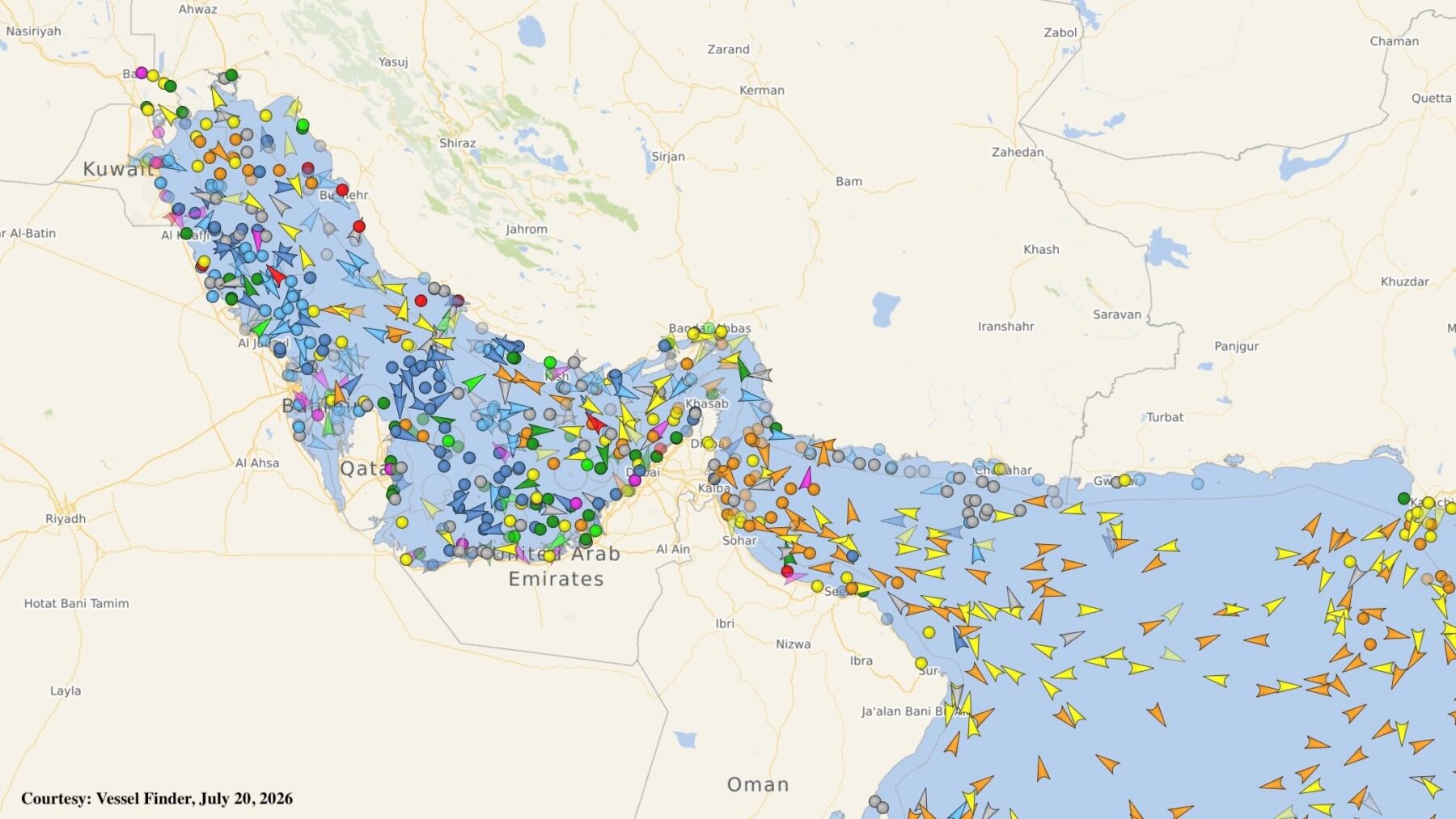
Ships do not leave the Gulf and travel to one destination. They join a tightly connected trade system, often moving through several ports and creating repeated chances for attached organisms or larvae to enter new waters.
The research team examined a network of 3,027 ships linked to the region. Those vessels made 248,362 calls at 3,517 ports and anchorages, showing how quickly a biological hitchhiker could move from a regional crisis into the global economy. The first ports visited after departure are expected to face the greatest immediate risk.
The study identifies places such as Mumbai, Colombo, Singapore, Alexandria, Piraeus, Algeciras, and Rotterdam as ports requiring particular attention. Similar temperature and salinity conditions can improve an introduced species’ chances of establishment. For Europe, that puts major Mediterranean gateways on the front line.
The damage would not stop at wildlife
Marine invasive species can crowd out native animals, alter food webs, damage fisheries, and interfere with aquaculture. They can also clog intake systems, foul docks, damage port infrastructure, and raise maintenance costs for coastal industries.
Biofouling communities may carry parasites and pathogens as well. Once a harmful species becomes established in a busy harbor, eradication is often extremely difficult, and ships can then move it onward. A quiet arrival can become a long and expensive problem.
“Marine invasive species have profound ecological and economic impacts on coastlines across the globe,” said Woods Hole Oceanographic Institution biologist Carolyn Tepolt. She added that they can be “extremely difficult, if not impossible” to remove after establishment.
Dirty hulls also burn more fuel
This is not only a biodiversity issue. Biofouling creates roughness and drag, forcing engines to work harder to push a vessel through the water. In everyday terms, it is like driving with extra weight and badly underinflated tires.
An International Maritime Organization analysis found that a slime layer of only about 0.02 in. thick over half a hull could raise greenhouse gas emissions by roughly 20% to 25%. Light barnacle or tubeworm growth can produce an even larger penalty, with increases reaching about 55% for an average-length container ship under certain operating conditions.
The result is a double environmental cost. Organisms may be transported into vulnerable ecosystems, while the ships carrying them burn more fuel and release more pollution. Scraping a hull is hardly glamorous, but in this case it can protect both coastal habitats and the climate.
Cleaning is the narrow window
The authors say the best option is controlled in-water cleaning before ships depart. The removed material must be captured and disposed of properly, because careless scraping can release live organisms, coating chemicals, and microplastics directly into the harbor.
Yet a practical bottleneck exists. Cleaning capacity is limited, commercial pressure to restart voyages is intense, and some ports restrict underwater work. That is why the team also calls for hull inspections, route forecasting, early monitoring at likely first ports, and rapid international alerts when a high-risk vessel is approaching.
The warning is not a prediction that a global invasion will definitely happen. It is a chance to act before thousands of ships scatter their hidden passengers across the ocean.
The study was published on Springer Nature Link’s website.
Most read
- US scientists poured 16,500 gallons of lye into the Gulf of Maine and dyed the water bright pink to track it, the first federally approved try at reversing ocean acidity
- Britain is dropping 20 concrete reef cubes and 44 tons of scallop shells into the sea, and the goal is to bring back oysters down more than 95% since the 1800s
- Soviet scientists released giant red king crabs into the Barents Sea in the 1960s to build a fishery, but decades later those invaders are still changing the seafloor
- New Orleans is collecting thousands of used Christmas trees and dropping them from helicopters to slow the loss of land, which has already exceeded 5,000 square kilometers
- The U.S. will pay up to $65 million to leave Colorado River water in Lake Mead, and Hoover Dam explains why