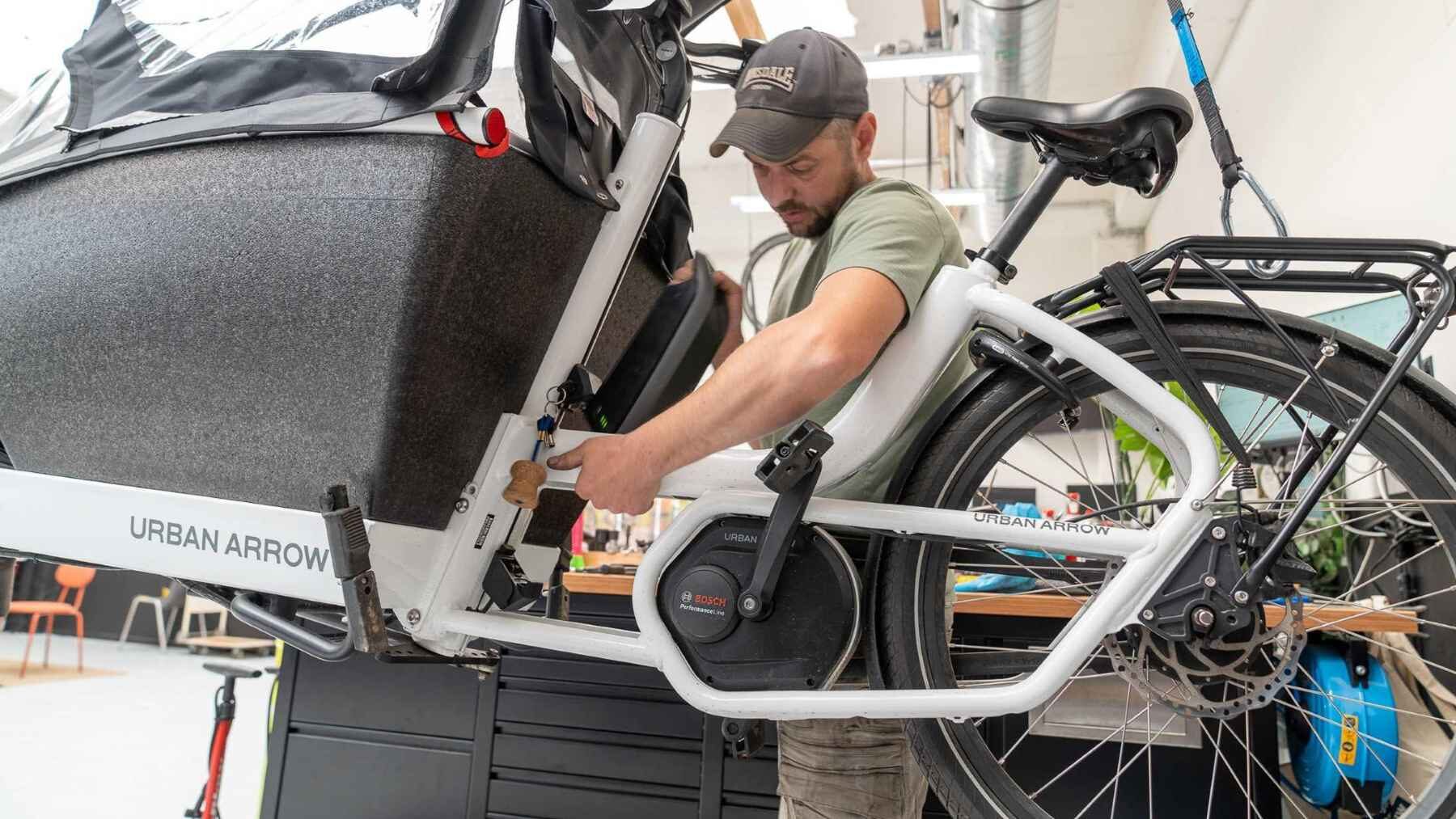
Spain has officially created a national vocational specialization for people who assemble, diagnose, and repair bicycles and personal mobility vehicles. The move answers a demand the cycling industry has raised for years, just as electric bikes, cargo bikes, and battery-powered urban vehicles are making workshop work far more complex.
The Council of Ministers approved the 690-hour program on July 14, 2026, and the final regulation was published on July 21. One detail matters, though. The widely reported $35.6 million figure belongs to a broader vocational training package approved alongside the new credential, not to a dedicated bicycle mechanic budget.
A qualification built for modern workshops
A traditional bicycle may look simple, but a modern shop can face hydraulic brakes, electronic shifting, suspension systems, hub motors, controllers, sensors, and large lithium-ion batteries. The new program covers both mechanical and electric models, including personal mobility vehicles such as scooters and other small urban vehicles.
Students will complete four main modules focused on maintenance planning, full component assembly, basic service operations, and advanced maintenance. The curriculum also includes a training period inside a company, bringing students into real workshops where a stubborn brake problem or battery fault cannot be solved from a textbook alone.
Those who meet the access requirements and pass every module can earn the official Specialist in Comprehensive Assembly and Maintenance of Bicycles and Personal Mobility Vehicles credential. The regulation identifies jobs including bicycle assembler, personal mobility vehicle assembler, bicycle repair mechanic, and electric mobility vehicle repair mechanic.
Why the bicycle sector pushed for it
The project began in 2021 after years of concern about the shortage of technicians with recognized, consistent training. The Spanish Association of Bicycle Brands, known as AMBE, worked with the Maristak vocational center in Durango and education officials to help define the professional profile and core skills before the proposal went through public consultation.
Jesús Freire, the association’s secretary general, called it “a historic demand that arrives at the right moment.” His point is easy to understand. As electric bikes become more digital and technically demanding, knowing how to tighten bolts is no longer enough.
The qualification is meant to create a common professional baseline for stores, repair shops, distributors, and manufacturers. That could mean more reliable repairs and better after-sales service when a commuter’s e-bike suddenly shows an error code on Monday morning. The association also argues that a stronger technical workforce could support bicycle assembly and manufacturing in Spain, although the credential alone cannot guarantee new factories or jobs.
Electric bikes change the mechanic’s job
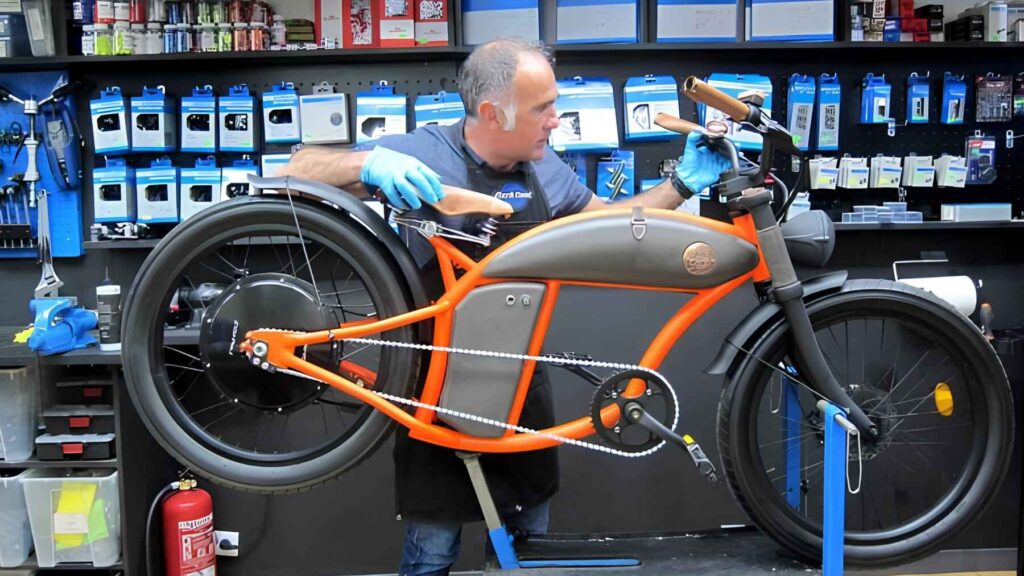
An e-bike is still a bicycle, but its electrical system changes the repair process. A mechanic may need to find a conventional drivetrain problem one minute and diagnose a motor, wiring, sensor, or battery issue the next. That mix of mechanical and electrical work is one reason the new course is arriving now.
The official curriculum includes suspension, brakes, transmissions, electrical systems, fault detection, wheel assembly, and replacement of energy-storage systems in pedal-assisted cycles. It also requires students to follow workplace safety, environmental protection, and quality procedures.
Waste handling is part of the training too. Workshops can generate worn parts, lubricants, damaged electronics, and battery-related waste that should not end up in the nearest trash can. The regulation therefore includes separate collection and proper storage of waste produced during maintenance.
The $35.6 million covers much more
On the same day it approved the bicycle program, the government authorized regional distribution of a broader vocational training fund worth about $35.6 million. That conversion uses the European Central Bank’s July 24 reference rate, under which one euro was worth about $1.14.
About $15.3 million is intended for innovation, applied digitalization, business collaboration, and support for small companies. Roughly $10.9 million will support training and placements for teachers and other vocational staff, about $8.2 million will fund skills competitions, and close to $1.2 million will support student mobility. The spending period runs from Sept. 1, 2026, through Aug. 31, 2027.
The headline number is not the price tag of the bicycle credential. The funding decision and the creation of two new specializations were announced together, but the official documents do not assign the full amount to bicycle training. That distinction keeps the story on solid ground.
What happens next
The royal decree gives the bicycle specialization official status throughout Spain and is scheduled to enter into force on Aug. 10, 2026. Regional education authorities can introduce the full curriculum and may add content within their legal powers, which means availability and enrollment dates may differ from one region to another.
Access is mainly designed for people who already hold certain mid-level technical qualifications, including credentials in machining, vehicle bodywork, automotive electromechanics, machinery maintenance, and outdoor activity guidance. Competent authorities may also provide other access routes allowed under Spain’s vocational training rules.
For cyclists, the change will not transform every repair counter overnight. But over time, a nationally recognized pathway could help shops hire people with clearer skills, give students a direct route into a growing trade, and make repairs more consistent as bikes become increasingly connected and electric. Small wheels, big shift.
The regulation has been published in Spain’s Official State Gazette.
Most read
- US scientists poured 16,500 gallons of lye into the Gulf of Maine and dyed the water bright pink to track it, the first federally approved try at reversing ocean acidity
- Soviet scientists released giant red king crabs into the Barents Sea in the 1960s to build a fishery, but decades later those invaders are still changing the seafloor
- New Orleans is collecting thousands of used Christmas trees and dropping them from helicopters to slow the loss of land, which has already exceeded 5,000 square kilometers
- The U.S. will pay up to $65 million to leave Colorado River water in Lake Mead, and Hoover Dam explains why
- Britain is dropping 20 concrete reef cubes and 44 tons of scallop shells into the sea, and the goal is to bring back oysters down more than 95% since the 1800s