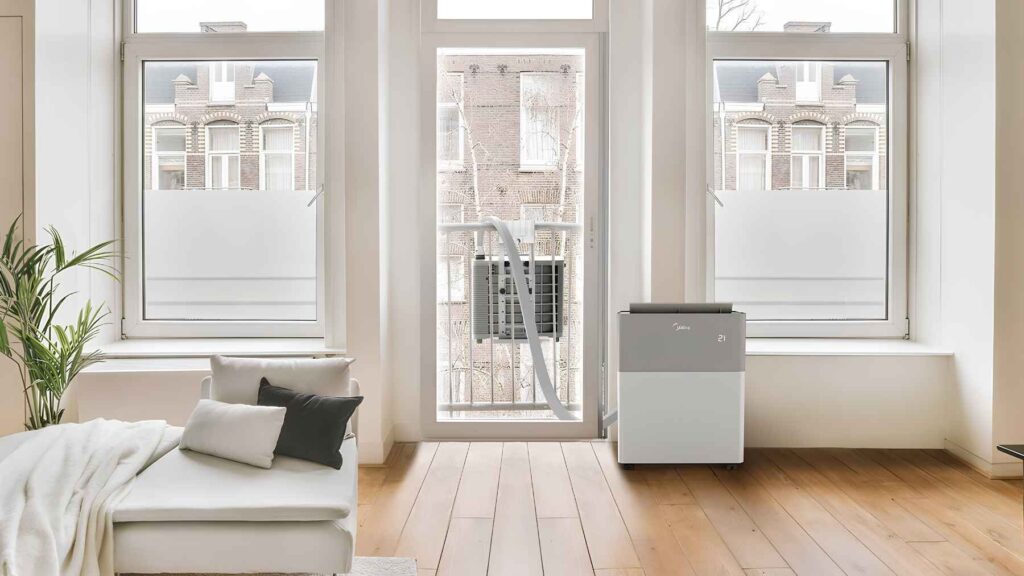
Europe’s latest must-have summer appliance is not a fancy fan or a high-tech sunshade. It is a Chinese-made portable split air conditioner that can cool an attic apartment without permanent drilling, a small design detail that is suddenly opening a large market.
Western Europe experienced its hottest June on record in June 2026, while temperatures in several German cities climbed above 104°F.
With more heatwaves expected before summer ends, brands such as Midea, TCL, and Gree are finding eager customers in a region that long viewed air conditioning as unnecessary, wasteful, or incompatible with older homes.
Old homes meet new heat
Steven Scholtysek, a 36-year-old German engineer, knows what a hot European summer feels like, but after moving into an attic apartment in Hamelin, he found this year’s conditions especially difficult because rooms directly beneath a roof can trap heat for hours.
“It is impossible to live a normal life in those apartments in summer heat,” Scholtysek said.
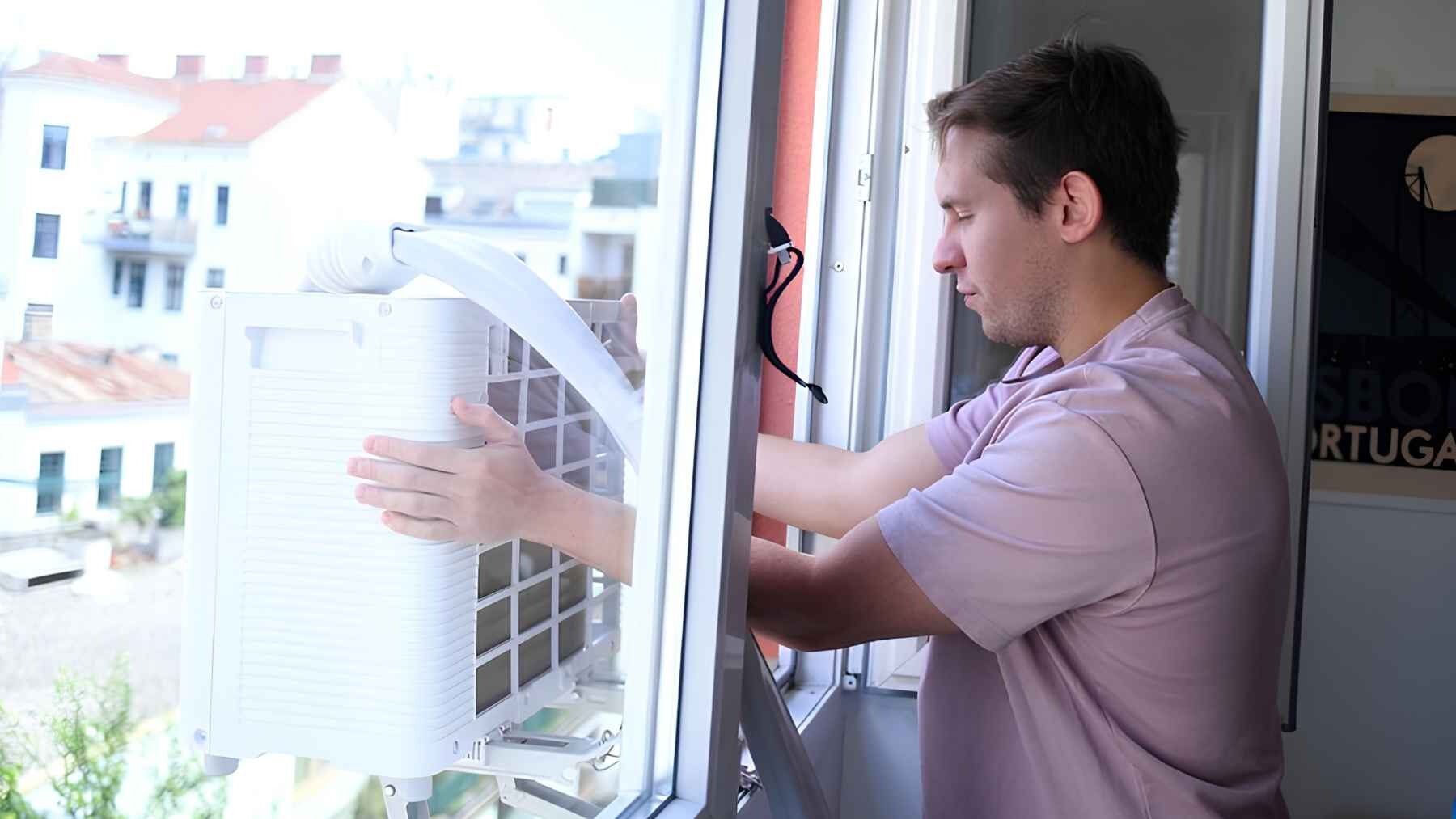
His solution was a portable split air conditioner made by Chinese appliance giant Midea and designed to work within European building rules.
That matters more than it sounds.
Many conventional systems require holes to be drilled through walls, which can be difficult in rented homes and restricted historic buildings, while newer portable split models can be installed without permanently changing the property.
First-time buyers drive sales
Scholtysek’s experience is becoming less unusual.
Vienna resident Denis Yurchak said he discovered one of the Chinese systems while researching cooling options and ran it “basically 24 hours a day, seven days a week” during the worst of the heat.
Midea told the state-run Global Times that its sales rose by more than 70% year over year in France, Spain, Germany, and the United Kingdom.
Its European office did not confirm those figures to the BBC, so they should be treated as company-reported estimates rather than independently verified market data.
The broader pattern is still striking.
TCL said its air conditioner sales increased by more than 300% in France, while Gree reported “notably higher demand” and said many customers were buying an air conditioner for the first time.
Cooling carries a climate cost
The attraction is easy to understand when an apartment feels more like an oven than a home.
The trouble is that air conditioning already accounts for about 7% of global electricity use and 2.75% of carbon dioxide emissions from fossil fuels and industry.
That creates an uncomfortable feedback loop.
Hotter summers push households to use more cooling, but rising electricity demand can increase emissions when power systems still depend on fossil fuels, helping worsen the climate conditions that made the cooling necessary.
Air conditioners also release heat outdoors. In dense neighborhoods, environmental advocates and policymakers warn that this can add to local heat, even while the people inside each apartment finally get some relief.
Health is changing the argument
For years, many Europeans treated air conditioning as an unnecessary expense for one or two miserable weeks each summer.
That calculation becomes harder when schools close, older buildings remain hot overnight, and daily routines break down under repeated heatwaves.
At the end of June, schools across France were forced to close during extreme temperatures.
Soon afterward, state-owned utility EDF announced about $91 million for cooling systems, including fans and air conditioners, in schools, kindergartens, day care centers, and other institutions that care for children.
The World Health Organization’s European office has called for a “nuanced approach” to air conditioning.
It is not a sustainable answer to extreme heat on its own, the agency warned, yet it can remain crucial for protecting people who face the greatest health risks during dangerously high temperatures.
Chinese technology changes its image
The sales surge is also challenging an old assumption about the “Made in China” label.
Chinese state media have celebrated the trend as evidence that domestic manufacturers can win European customers with products tailored to local rules rather than competing on low prices.
Scholtysek said the marketing and design looked more modern than the older Chinese products he remembered.
When the unit arrived, he found its quality comparable to products he had used in Europe and linked that shift in perception to Chinese technology brands ranging from DJI drones to electric vehicles.
Adrien Olar in France had been splashing water on his face to cool down before buying what he described as perhaps his first Chinese product.
Now, he said entering his room feels “like walking into a refrigerator,” a simple comparison that explains why the market is moving so quickly.
Europe faces a cooling dilemma
Chinese manufacturers have found a practical answer to one part of Europe’s heat problem.
Their portable split systems fit homes that were never designed for modern air conditioning, and they offer immediate relief without the disruption of major installation work.
However, the appliances do not solve the larger challenge.
Europe must protect people from dangerous heat while limiting higher electric bills, pressure on power grids, outdoor heat, and additional emissions.
A cool room can be a health safeguard rather than a luxury.
The question now is whether Europe can expand access to efficient cooling without allowing the response to extreme heat to deepen the climate problem behind it.
The climate update was published on Copernicus Climate Change Service’s website.
Most read
- US scientists poured 16,500 gallons of lye into the Gulf of Maine and dyed the water bright pink to track it, the first federally approved try at reversing ocean acidity
- Soviet scientists released giant red king crabs into the Barents Sea in the 1960s to build a fishery, but decades later those invaders are still changing the seafloor
- New Orleans is collecting thousands of used Christmas trees and dropping them from helicopters to slow the loss of land, which has already exceeded 5,000 square kilometers
- The U.S. will pay up to $65 million to leave Colorado River water in Lake Mead, and Hoover Dam explains why
- Britain is dropping 20 concrete reef cubes and 44 tons of scallop shells into the sea, and the goal is to bring back oysters down more than 95% since the 1800s