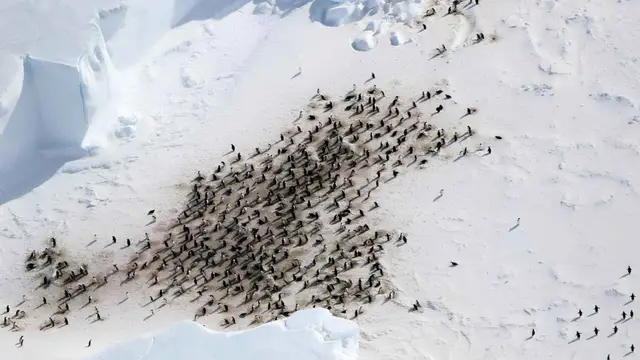
Antarctica
71 stories · since 2025 · latest, November 19, 2026
Around Antarctica, 1,712 zircon crystals drilled from the seafloor point to Himalayan-style mountains now buried under the ice, and two geologists say their erosion may have helped set the stage for the Cambrian explosion
Under the ice of Antarctica lie the roots of Himalayan-style mountains, according to two geologists tied to the Australian National University (ANU), who…
ECOnews Newsroom · October 17, 2026
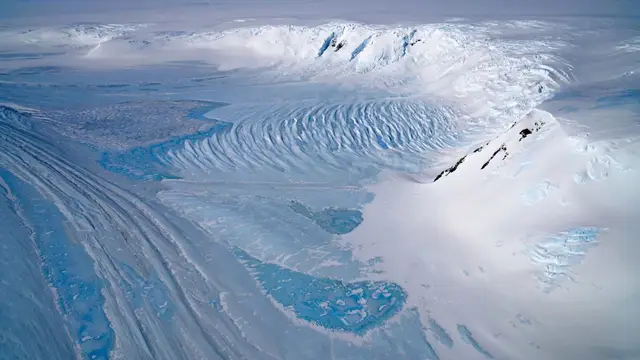
Scientists cut the ultraviolet light reaching moss and lichen on Antarctica’s Ardley Island by 20%, and the Antarctic tundra took up about half as much carbon, an unwelcome twist in the healing of the ozone layer
“We might expect lower ultraviolet radiation to be simply beneficial, but Antarctic tundra does not respond in such a straightforward way,” Xiyan Xu, a…
ECOnews Newsroom · October 6, 2026
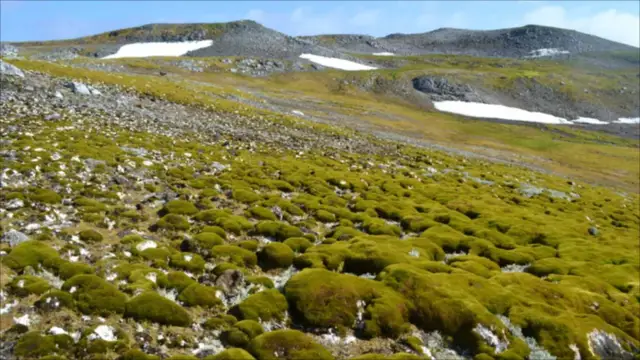
The world’s southernmost wind farm uses just three turbines to help power U.S. and New Zealand research bases in Antarctica, cutting diesel consumption by about 122,000 gallons a year and preventing an estimated 1,242 metric tons of CO₂ emissions despite operating in one of Earth’s harshest environments
On a frozen ridge of Ross Island, three wind turbines turn above American McMurdo Station and New Zealand’s nearby Scott Base. Their electricity flows…
Adrian Villellas · September 28, 2026
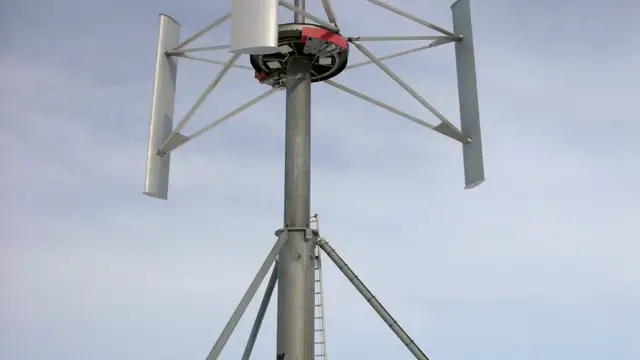
The Ross Ice Shelf is roughly the size of Spain and acts as a giant brake on Antarctic glaciers, but scientists monitoring beneath its hundreds of meters of floating ice have found warm summer water can nearly triple melting in vulnerable areas hidden from view
An enormous slab of floating ice in Antarctica is doing a job that matters far beyond the polar seas. The Ross Ice Shelf, roughly the size of Spain, slows…
Adrian Villellas · September 25, 2026
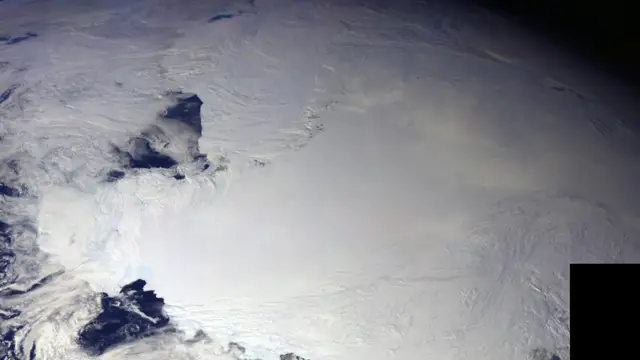
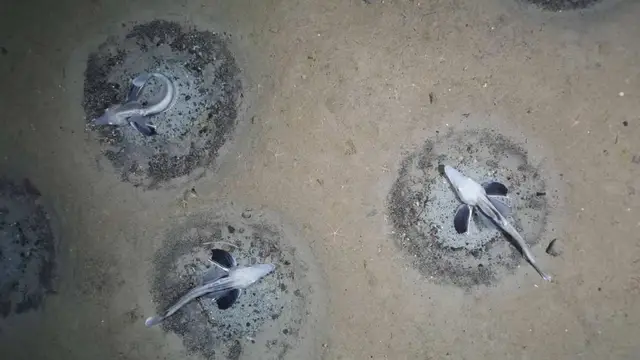
A camera towed over the Weddell Sea floor kept finding the same circular nest again and again, until researchers realized they had stumbled onto 60 million icefish nests spread across 93 square miles of Antarctic seabed
When researchers lowered a camera system into Antarctica’s Weddell Sea, circular fish nests kept appearing on their screens. The seabed survey revealed a…
ECOnews Newsroom · September 24, 2026
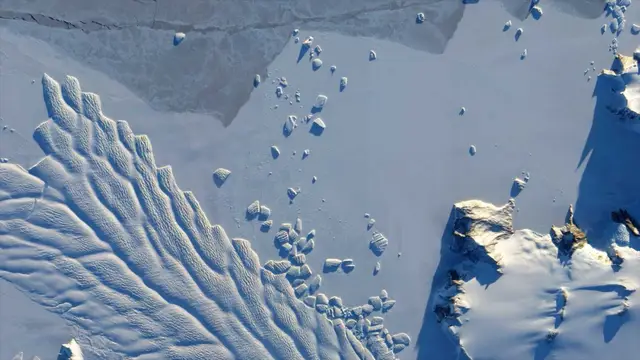
Antarctica gained 695 billion tons of ice in less than two years, the largest increase in the satellite record, and the cause was warm tropical water thousands of miles away that changes nothing about where the continent is heading
Antarctica briefly gained an extraordinary amount of ice while its longer decline continued. Between July 2021 and April 2023, the ice sheet added about…
ECOnews Newsroom · September 24, 2026
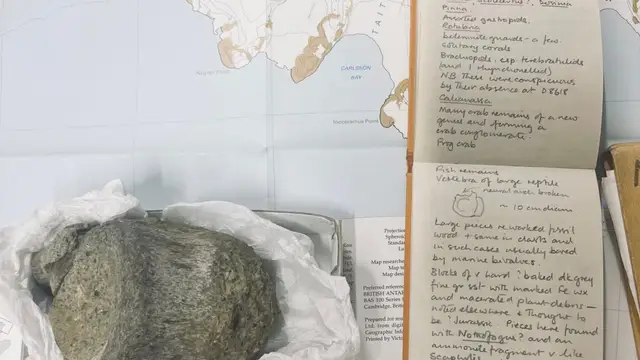
A fossil collected in Antarctica in 1985 sat in a museum drawer for 40 years labeled as a marine reptile, until scientists took another look and discovered the four-inch bone belonged to a 20-foot titanosaur that lived roughly 82 million years ago
How does the first dinosaur bone ever collected in Antarctica spend four decades inside a museum drawer? A roughly 82-million-year-old tail vertebra,…
ECOnews Newsroom · September 19, 2026
Satellites scanned Antarctica between 2004 and 2016 and found about 100 shallow hollows where the snow plunged to roughly −144°F (−98°C), revealing how darkness, extraordinarily dry air and almost no wind can create the coldest surfaces measured on Earth
Satellite measurements have revealed snow temperatures of roughly −144°F (−98°C) in shallow hollows high on the East Antarctic Plateau. Published in 2018,…
ECOnews Newsroom · September 13, 2026
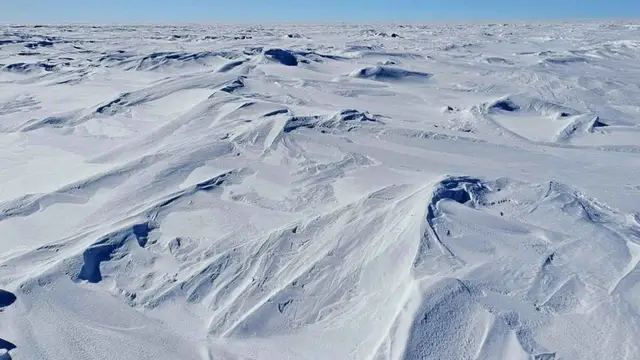
A thermometer in Antarctica hit -119.4 °F twice in nine minutes, and the coldest air reading in 14 years hides a climate paradox
The Northern Hemisphere is not the only place in the world dealing with strange, and let’s say also extreme, temperatures. Let’s go now deep down to…
ECOnews Newsroom · August 27, 2026
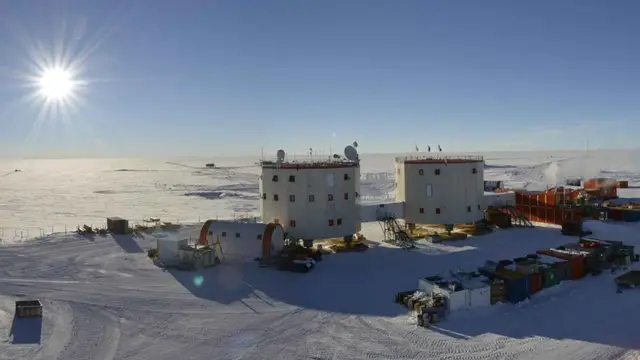
Lake Vostok lies liquid four kilometers beneath Antarctic ice at minus 3°C, not from antifreeze but from pressure lowering water’s melting point while thick ice slows heat loss and Earth’s internal energy persists
Nearly 2.5 miles beneath the frozen expanse of East Antarctica sits a liquid body of water the size of Lake Ontario. At first glance, Lake Vostok should…
ECOnews Newsroom · August 21, 2026
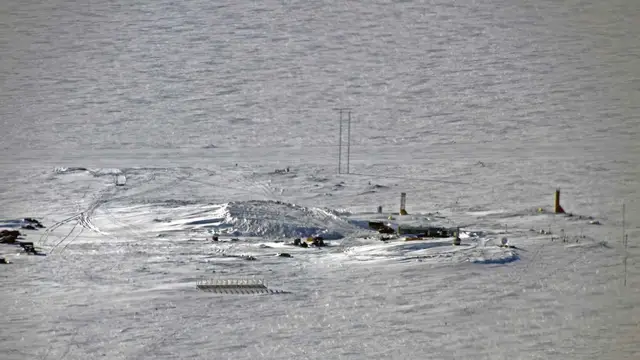
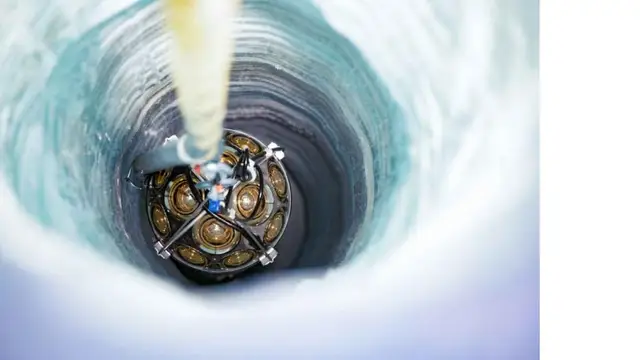
IceCube’s detector spreads 5,160 light sensors across a cubic kilometer of Antarctic ice between 1,450 and 2,450 meters deep, using Earth itself as a shield to catch neutrinos arriving upward from the northern sky
At the geographic South Pole, astronomers are looking straight down to map the stars. By suspending 5,160 light sensors across 86 strings frozen between…
ECOnews Newsroom · August 20, 2026
Twenty-five Antarctic guides gave up the job they loved as visitor numbers passed 113,000 in a single season, and the question that pushed them out has no comfortable answer
For years, it looked like a dream job. Antarctic guides passed the seasons among penguin colonies, orcas, icebergs, and glaciers, yet some finally…
ECOnews Newsroom · August 17, 2026
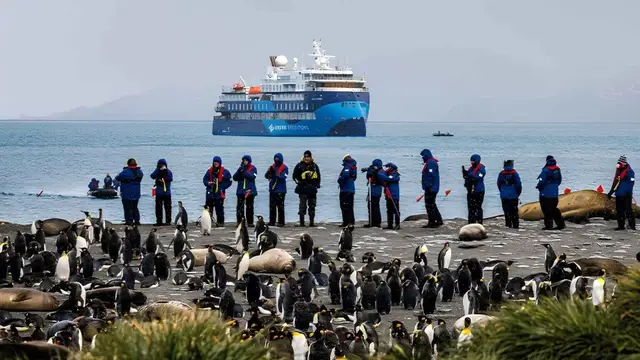
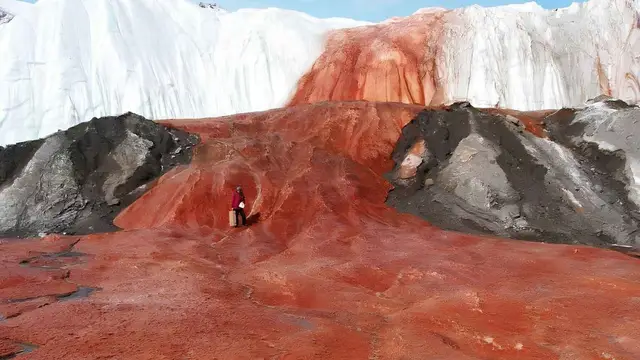
For the first time, researchers found that Antarctica’s mysterious red falls are not blood but ocean, trapped for millennia beneath ice with a microbial ecosystem that could transform glacial science
Antarctica’s Blood Falls looks like a wound in the ice. But there’s nothing bloody about it.
ECOnews Newsroom · August 9, 2026
Antarctic Bottom Water shrunk by 2.9 percent between 2002 and 2023, a hidden ocean mass that fills forty percent of the global sea and is losing volume
At the very bottom of the Southern Ocean, a vast layer of cold, dense water is getting smaller. Slowly, but steadily.
ECOnews Newsroom · August 8, 2026
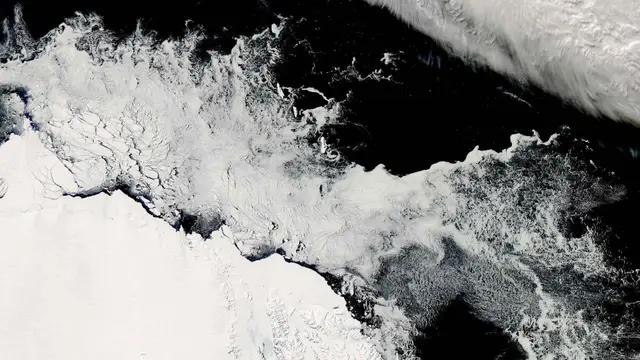
Satellite images are reading penguin droppings across Antarctica, and the color of the stains is revealing how climate change is reshaping their food web
From the ground, an Adélie penguin colony can look like a noisy blur of birds, rocks, snow, and reddish stains. From orbit, those stains have become a…
ECOnews Newsroom · July 31, 2026