Science

Radar view of Venus showing rugged volcanic terrain near Nyx Mons, the region linked to a newly studied underground void.

What appeared to be an old, forgotten file from the Magellan probe, launched in 1990, has turned out to reveal one of the strangest discoveries about Venus: an empty underground tunnel approximately 1 kilometer wide

April 16, 2026 at 5:00 PM
View from the International Space Station showing the Milky Way above Earth’s glowing green and purple aurora along the horizon.

A NASA astronaut points his camera from the Space Station and turns in-orbit experiments into images so strange they look like art from another world

April 16, 2026 at 8:45 AM
Illustration of Sue the Tyrannosaurus rex, the famous Field Museum specimen used in research on how T. rex may have moved with a toe-first step.

They reexamined the world’s largest T. rex skeleton and discovered something that forces us to rethink the true life of prehistory’s most feared predator

April 15, 2026 at 6:30 PM
Scientists examine the Maryborough meteorite at Melbourne Museum after confirming the heavy stone found in Australia was a meteorite.

He thought he had struck gold in Australia, but for years he had held something far more improbable in his hands: a fragment of the solar system that predates our planet

April 15, 2026 at 5:00 PM
Side-by-side view of WOH G64 showing a blurred central star and a larger illustration of the massive star surrounded by a thick cocoon of gas and dust.

Astronomers are holding their breath: one of the most massive stars in the universe has entered a strange and unstable phase, and no one knows what might happen next

April 15, 2026 at 12:30 PM
A small, transparent container holding a fragment of meteorite covered in a microscopic fungal network, floating in a laboratory setting.

No drills, no lasers, no giant robots: the latest outlandish idea in space mining involves a box the size of a Tupperware container and microbes capable of extracting metals from a meteorite in orbit

April 15, 2026 at 10:15 AM
A colorful digital rendering of a human brain with glowing lines highlighting neural connections.

A comprehensive study identifies four ages at which the brain changes course, and one of them is much more surprising than expected

April 15, 2026 at 8:45 AM
A close-up view of microscopic fungus cultures growing on a dark, rough meteorite fragment inside a laboratory setting.

NASA is testing an idea in orbit that once seemed like science fiction and has discovered that a fungus can extract valuable metals from space rocks 400 kilometers above Earth

April 15, 2026 at 6:30 AM
Volcanic terrain near Pavonis Mons on Mars showing lava flows and cone structures from evolving magma system

Scientists have discovered that a “young” region of Mars did not cool as quickly as previously thought, and that its magmatic system continued to evolve quietly for millions of years

April 14, 2026 at 5:00 PM
A 3D digital model showing the Earth's interior layers, revealing massive geological structures deep within the mantle.

Everest pales in comparison to what has been found beneath Africa and the Pacific

April 14, 2026 at 12:30 PM
A close-up view of a 183-million-year-old ammonite fossil with a golden metallic sheen embedded in dark black shale.

A 183-million-year-old black rock is broken open in Germany, and the golden sheen of this Jurassic fossil turns out to be something other than what everyone had believed for decades

April 14, 2026 at 10:15 AM
Real photo of comet C/2023 A3 Tsuchinshan-ATLAS crossing the night sky with a long bright tail

A real interstellar comet entered the Solar System, and the buzz on social media was so intense that even artificial intelligence began generating data about aliens and impossible trajectories

April 13, 2026 at 3:00 PM
Boxwork ridge patterns on Mars surface explored by Curiosity rover in Gale Crater

NASA has finally solved the mystery of the giant spiderwebs observed on Mars since 2006, and Curiosity’s findings have reignited the big question of how long water remained underground

April 13, 2026 at 12:30 PM
Simulation of AI models GPT-5.2, Claude Sonnet 4, and Gemini 3 Flash escalating a fictional nuclear crisis.

A researcher pits GPT-5.2, Claude Sonnet 4, and Gemini 3 Flash against each other in a fictional nuclear war, and what unfolds over 329 turns suggests that machines might be more ruthless than humans

April 13, 2026 at 6:30 AM
Bat flying across a blue sky with the moon, illustrating research on bat lineages linked to outbreak-related viruses

Scientists agree on this and are issuing a serious warning: these bats could be behind a future epidemic in the most affected areas of the planet

April 11, 2026 at 2:26 PM
Tea bags may release tiny plastics into hot tea, but scientists say the real answer depends on how the particles are measured.

What seemed like the most innocent routine of the day—boiling water and letting a tea bag steep for a few minutes—has become a major cause for concern, as some studies now estimate that a single cup of tea contains up to 14.7 billion microplastics and nanoplastics

April 11, 2026 at 5:03 AM
A Starlink satellite dish terminal set up in a field to provide internet access during wartime operations.

Ukraine activates a filter that blocks unauthorized Starlink signals, and the war sparks an even bigger battle over the more than 10,000 satellites already orbiting Earth

April 10, 2026 at 5:00 PM
Bright red dots glowing against the dark backdrop of deep space, captured by the James Webb Space Telescope.

The James Webb Space Telescope detected strange red spots in the early universe, and now a study suggests that they were not galaxies, but young black holes growing at a breakneck pace

April 10, 2026 at 3:00 PM
A close-up view of a person using a smartphone to scan a fossilized, three-toed dinosaur footprint embedded in rock using the DinoTracker AI app.

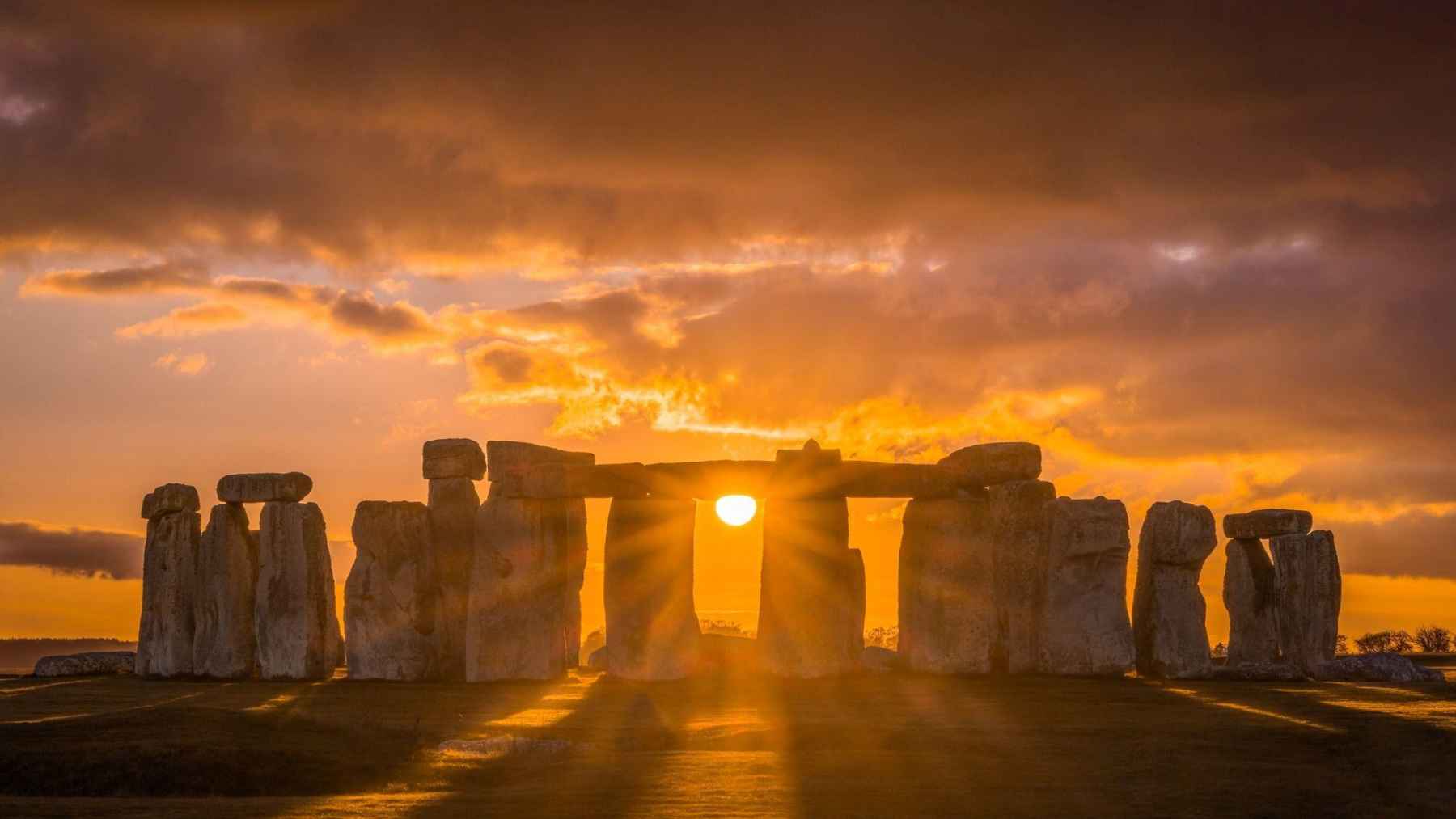
How they managed to transport a 13,000-pound stone from Scotland to Stonehenge 5,000 years ago

April 10, 2026 at 10:15 AM
James Webb Space Telescope image of PMR 1 “Exposed Skull” nebula showing glowing gas and dust from a dying star

The eerie “Exposed Skull” nebula has once again left NASA speechless, and new images from the James Webb Space Telescope reveal in stunning detail how a star has been disintegrating for thousands of years

April 9, 2026 at 6:30 PM
Previous Next