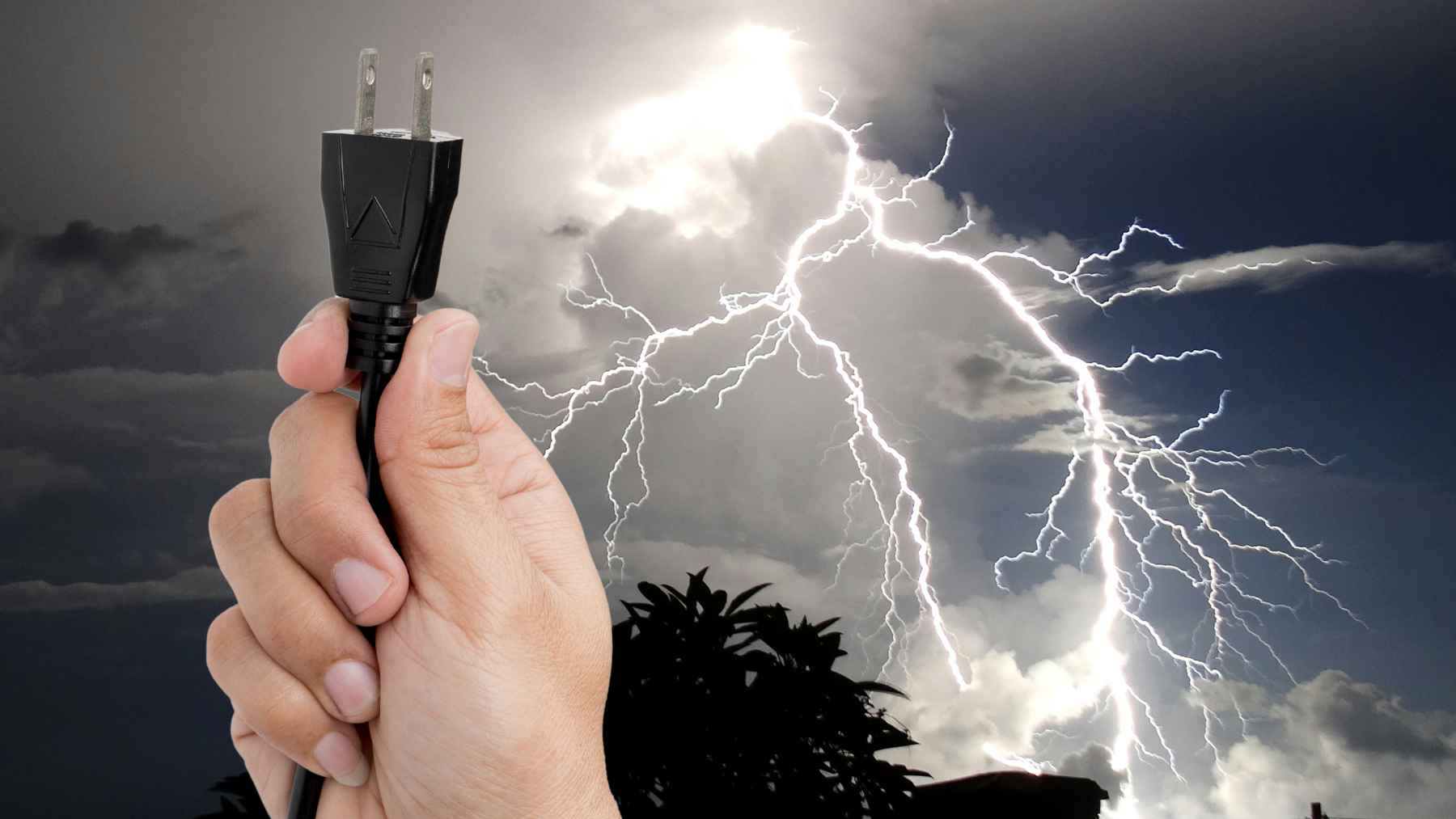
When thunder cracks and the sky turns dark, many people yank the plug on the kettle or the toaster. The real weak spot in the house often sits right in front of the couch, glowing away on the TV stand. Who wants to lose a favorite show or a big game because a storm silently burned out the screen?
Modern TVs work more like slim computers than old tube sets, packed with tiny chips and power circuits that need steady electricity.
Lightning and power grid glitches can send sudden voltage spikes through your outlets that overwhelm those parts. Electronics specialists and home safety guides agree that physically disconnecting the TV from power during a storm is still the most reliable way to keep it safe.
Why your TV is so vulnerable
Flat screen sets including LED, QLED and OLED models contain delicate power supplies and main boards that are designed for stable voltage. A nearby lightning strike can push thousands of extra volts into household wiring even if it never hits your building. That short jolt can punch through weak points on those boards and leave the screen completely lifeless in a second.
Sometimes the damage builds slowly instead of all at once. Micro outages and rapid on-off cycles during a storm make the TV restart again and again, which wears out capacitors and other components well before their normal lifespan. Repair guides note that power supply boards and capacitors are among the parts most often replaced after surge events in modern TVs.
How to unplug it the right way
Turning the TV off with the remote does not protect it because the electronics remain connected to the grid. To really cut the risk you need to pull the plug from the wall or from the power strip before or as the storm arrives. If you are at home and hear thunder nearby that is the moment to act, not after the lights flicker.
Experts also warn about hidden paths for surges. Antenna leads, cable TV lines and HDMI cables connected to set top boxes or game consoles can all carry a spike into the TV. Technicians recommend unplugging those cords during intense storms so that a surge on one device does not destroy everything in the chain.
Stabilizers, UPS units and what they can really do
Many households rely on basic voltage stabilizers or cheap surge strips and assume that is enough. According to specialists from the Instituto Nacional de Tecnología Industrial (INTI), the energy released by a lightning strike often exceeds what domestic stabilizers or small UPS devices can absorb.
In practical terms they help with everyday bumps in voltage but may fail when the sky lights up right over your neighborhood.
Higher grade UPS systems and surge protectors that comply with national standards offer a better safety net, especially in places with frequent outages. Even then, electricians stress that nothing comes as close to full protection as simply unplugging the device during an active thunderstorm.
That extra step can feel annoying in the moment yet it is still cheaper than replacing a large TV.
Other home devices in the danger zone
The TV is usually the first target but it is not alone. Modems, Wi Fi routers, streaming boxes, game consoles and audio receivers all use sensitive circuit boards that react badly to sudden surges. Many safety guides now place these gadgets right behind televisions on the list of equipment to unplug when storms appear in the forecast.
Kettles, toasters and other simple heating appliances tend to survive storms more often because their inner parts are more basic and rugged. That is why experts focus on the entertainment corner and the home office where clusters of electronics share the same outlet.
Spending a minute to disconnect that small cluster can save you from losing your internet, your favorite console and your main screen all at once.
The main recommendations have been published by the National Institute of Industrial Technology.