Every animal, plant, and fungus on Earth might trace its family tree back to a single strange microbe hiding in the seafloor. Humans, dinosaurs, starfish, and sea grasses share that same deep origin, so in a sense we are all part of what scientists now call an Asgardian lineage.
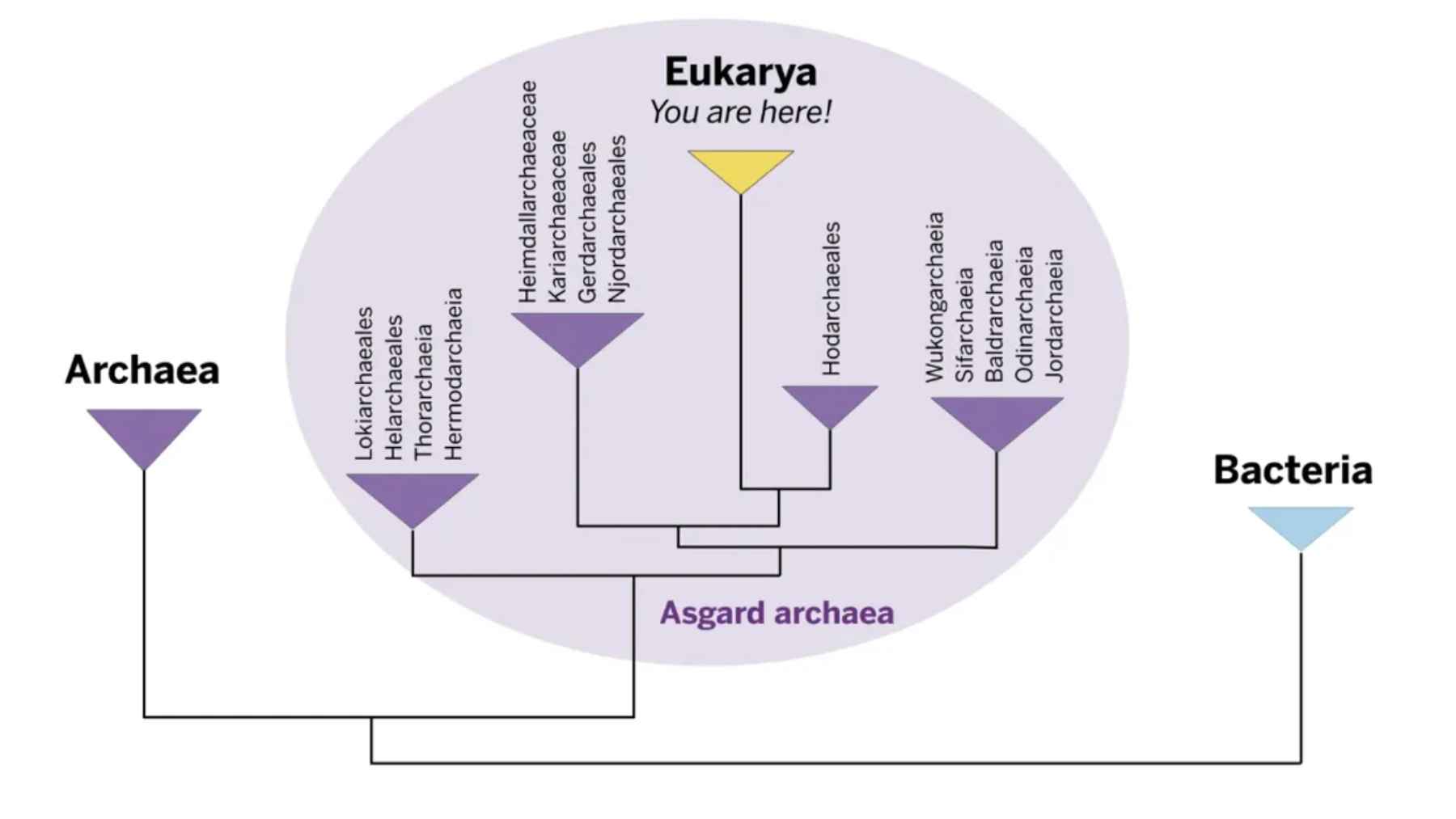
In a 2023 study, researchers show that all known complex life forms, also called eukaryotes, appear to descend from one ancient group of microbes known as Asgard archaea. By comparing the DNA of hundreds of these tiny organisms, the team found that eukaryotes form a branch inside the Asgard group and sit especially close to a newly named subgroup.
The work brings together scientist Brett Baker at University of Texas at Austin, evolutionary biologist Thijs Ettema and many other collaborators, and it appears in the journal Nature.
What are eukaryotes and Asgard archaea?
Eukaryotes are organisms whose cells have a nucleus wrapped in a membrane. That group includes animals, plants, fungi, algae, and even the yeast that helps bread dough rise. On an ordinary day we rarely think about it, yet this cell design is what makes complex bodies like ours possible.
Scientists have argued for years about how and when these complex cells first appeared. Many estimates place their origin roughly around two billion years ago, long before the first dinosaurs walked the planet.
The leading idea is that an early archaeon, a simple microbe living without oxygen, teamed up closely with a bacterium that used oxygen, creating a shared cell that could do more than either partner alone.
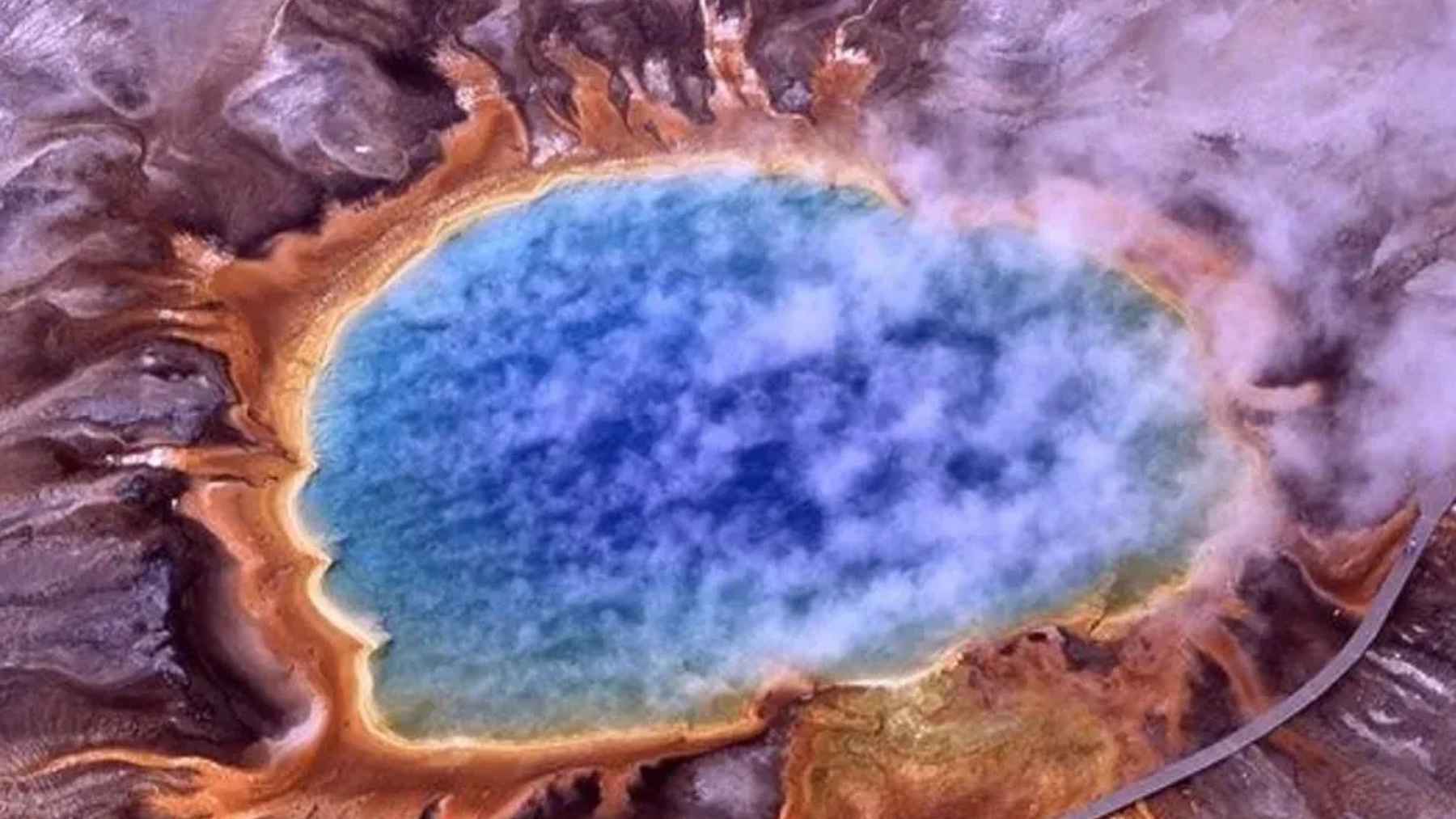
Archaea are single-celled organisms that often live in extreme environments such as hot springs or deep-sea sediments. For a long time they seemed distant from us, more like remote cousins than close family.
The Asgard name nods to Norse stories in which Asgard is the home of the gods and Hod is a blind son of Odin who is tricked into killing his own brother, a reminder that scientists had mythology in mind when they named this group.
Following the genetic trail to a common ancestor
In the new work, the team analyzed the genomes of hundreds of archaea, including more than fifty newly-reconstructed Asgard genomes from seafloor sediments and hydrothermal deposits around the world.
A genome is the complete set of DNA instructions that tells a cell how to live, grow, and reproduce. By lining up these genetic blueprints, the researchers built a detailed family tree that compares Asgard archaea with eukaryotes.
The tree showed that eukaryotes fall inside the Asgard group instead of sitting as a separate branch. Within Asgard archaea they link most closely to a newly-defined order called Hodarchaeales, or Hods, which belongs to a broader class named Heimdallarchaeia.
In everyday terms that means all animals, plants, and fungi seem to trace back to one specific Asgard lineage rather than to archaea in general.
So what events led microbes to evolve into eukaryotes? That is how associate professor Brett Baker puts the problem, and he adds that finding a shared ancestor is a big step toward answering it. Pinning down that ancestor gives scientists a starting point for testing ideas about how complex cells emerged.
Hodarchaeales and the first steps toward complex cells
Hodarchaeales might look simple under a microscope, yet their genomes hint at surprising complexity. Like other Asgard archaea, they carry a set of proteins that were once thought to exist only in eukaryotes, involved in shaping the cell and moving materials around inside.
That overlap is one reason scientists see them as a kind of missing link between simple microbes and more elaborate cells.
The study also suggests that Asgard genomes went through many rounds of gene duplication, where copies of genes were made and then took on new roles over time. In eukaryotes such duplications helped create new cell parts and functions, from internal skeletons to complex signaling systems.
Researchers suspect that similar processes in Asgard ancestors laid some of the groundwork for eukaryotic complexity, even if the exact steps are still being worked out.
For biologist Valerie De Anda, who works in Baker’s lab, studying Asgard genomes is a bit like using a time machine built from DNA. She explains that instead of fossils or ancient artifacts, the team reads the genetic plans of living microbes and infers how their ancestors might have made a living billions of years ago.
That kind of molecular time travel helps narrow down which metabolic tricks could have powered the rise of complex life.
A new way to look at our family tree
The findings point to an ancestor that probably lived in hot environments and fed on carbon dioxide and simple chemicals, while the branch that led to eukaryotes shifted toward cooler settings and food sources rich in organic carbon.
In practical terms that means the roots of our own cells likely lie in dark seafloor or hot spring habitats that bear little resemblance to the cities and forests we see today. It is a humbling thought.
Asgard archaea themselves have not disappeared. So what does that mean for the world around us today? Their descendants still live buried deep in marine sediments and bubbling up in hot springs around the globe, and by sampling those environments and decoding their DNA, scientists hope to keep filling in the missing chapters between simple microbes and the first complex cells.
Baker likes to joke in his talks that “We are all Asgardian,” a line that he says might end up on his tombstone. It is a playful way to capture a serious idea that every animal, plant, and fungus belongs to this ancient Asgard family.
The main study has been published in Nature.