For most of us, living past one hundred already sounds like science fiction. Now imagine still paying the electric bill at one hundred eighty or even two hundred.
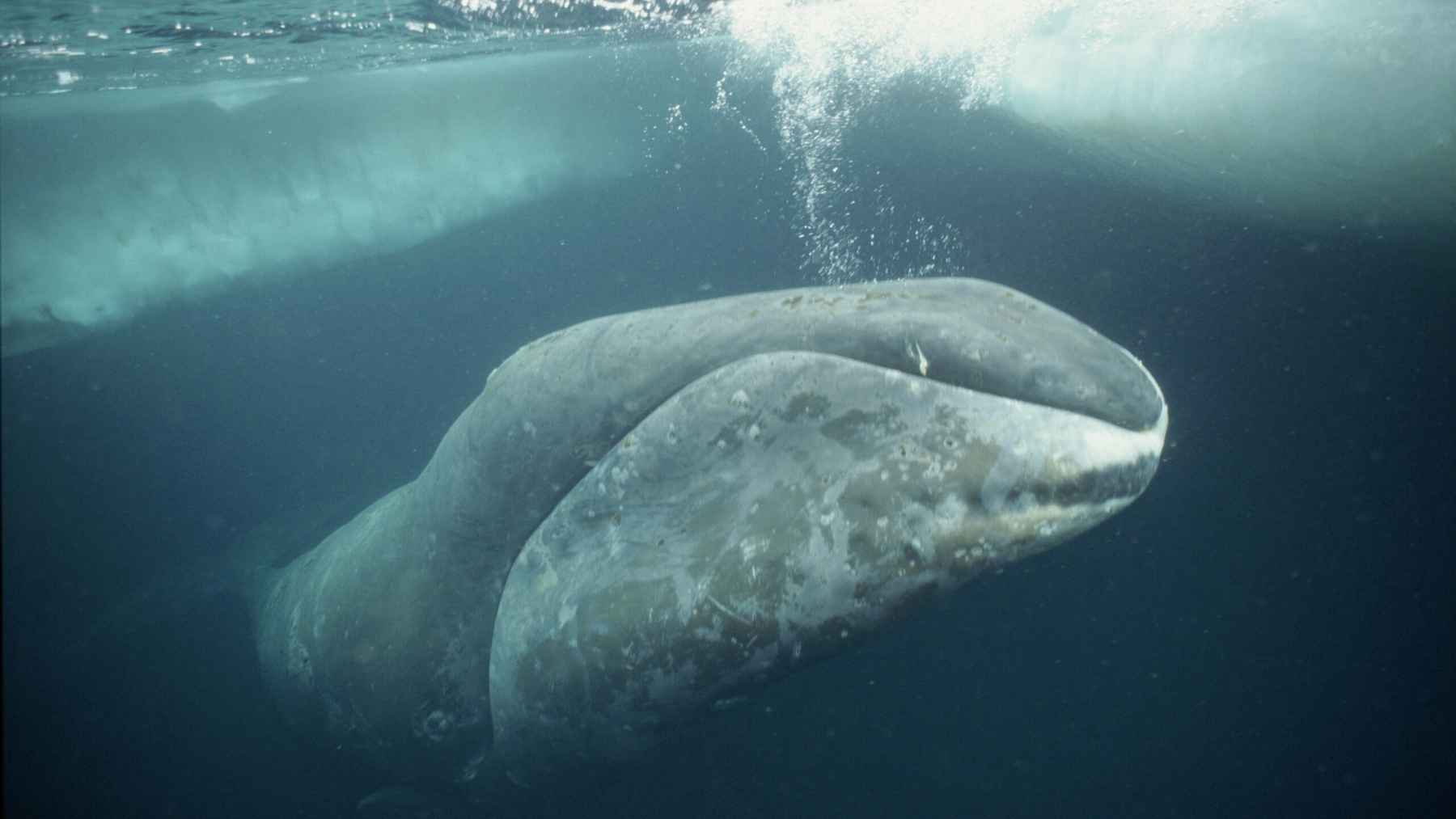
That kind of lifespan is normal for the bowhead whale, and a new American study is probing whether the same biological trick could someday stretch human lives much further than today.
A team at the University of Rochester in the United States has pinpointed a single protein that seems to help these Arctic giants keep their DNA in good shape for centuries.
The work, published in the journal Nature, shows that this molecule can boost DNA repair in human cells and even extend the lives of fruit flies, raising cautious hope that stronger DNA maintenance could one day push the limits of human aging.
The Arctic giant that hardly ever gets cancer
Bowhead whales are the longest-lived mammals we know. Some individuals are estimated to be more than two hundred years old, yet they almost never develop age-related diseases such as cancer that become common in people after only a few decades.
That is a puzzle because larger animals have far more cells, which should mean more chances for dangerous mutations over time. This contradiction is known as Peto’s paradox, and it has pushed scientists to look for hidden defenses in species like whales and elephants that seem to dodge cancer despite their size.
CIRBP, the cold friendly protein doing the repair work
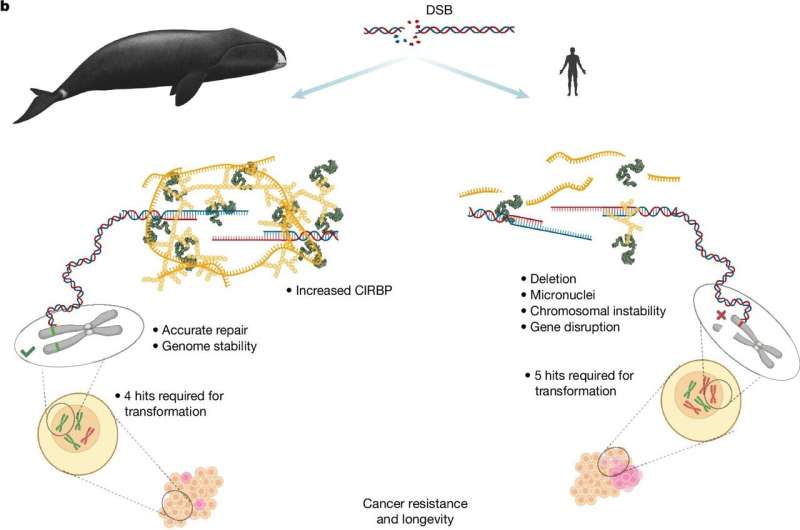
In the new study, researchers focused on a molecule called CIRBP, short for cold inducible RNA binding protein. In bowhead whale tissue, they found CIRBP levels roughly one hundred times higher than in other mammals, suggesting that this protein is a major part of the whale’s repair toolkit.
When the team added the bowhead version of CIRBP to human cells in the lab, the cells fixed serious DNA breaks more accurately and produced fewer mutations. Fruit flies engineered to make extra CIRBP not only survived radiation better, they also lived longer than normal flies, hinting that this repair strategy works across very different species.
From Peto’s paradox to a possible longevity roadmap
The study suggests that bowhead whales do not rely mainly on extra copies of cancer fighting genes, as elephants do, but instead on unusually precise DNA repair. Their cells seem to follow a quiet rule of repair rather than destroy, fixing damage instead of simply killing off stressed cells, which may help tissues stay healthy for many decades.
That is one reason evolutionary geneticist Alex Cagan at the Wellcome Sanger Institute has described the bowhead as “a superstar of longevity research,” a kind of natural test case for extreme healthy aging.
So could humans really reach 200 years?
Some media coverage has asked whether copying this whale strategy could let humans live for two centuries, turning the bowhead into a model for future super centenarians.
The biology does show that there is room to improve our own DNA repair systems, and senior author Vera Gorbunova notes that “this research shows it is possible to live longer than the typical human lifespan.”
That does not mean anyone is close to guaranteeing a two hundred year life. The current results come from cell cultures and fruit flies, not from people, and experts warn that dialing up repair in the wrong way could let damaged cells linger when they should be removed.
For the most part, the two hundred year figure is a way to illustrate what might be possible in theory rather than a concrete forecast for our birth certificates.
Cold showers, lab tests, and what comes next
One detail makes this story feel surprisingly down to earth. CIRBP responds to cold, which fits a species that spends its life in icy Arctic water. In lab tests, human cells cooled a few degrees below normal body temperature showed whale-like improvements in DNA repair, and researchers saw CIRBP levels rise in response.
Co-author Andrei Seluanov points out that if human cells behave in the same way inside the body, simple habits such as brief cold showers or winter swims might nudge our own CIRBP production upward, although that idea still needs careful testing.
Gorbunova’s team is already raising mice with boosted CIRBP and plans to check whether regular cold exposure in volunteers really changes levels of the protein over time.
At the end of the day, this research is less about chasing immortality and more about stretching the healthy part of life, the years when people can work, travel, and enjoy family without constant hospital visits.
The bowhead whale shows that warm-blooded animals can stay robust for centuries when their DNA repair systems are tuned just right, and that simple fact is already reshaping how scientists think about aging.
The main study was published on the Nature.