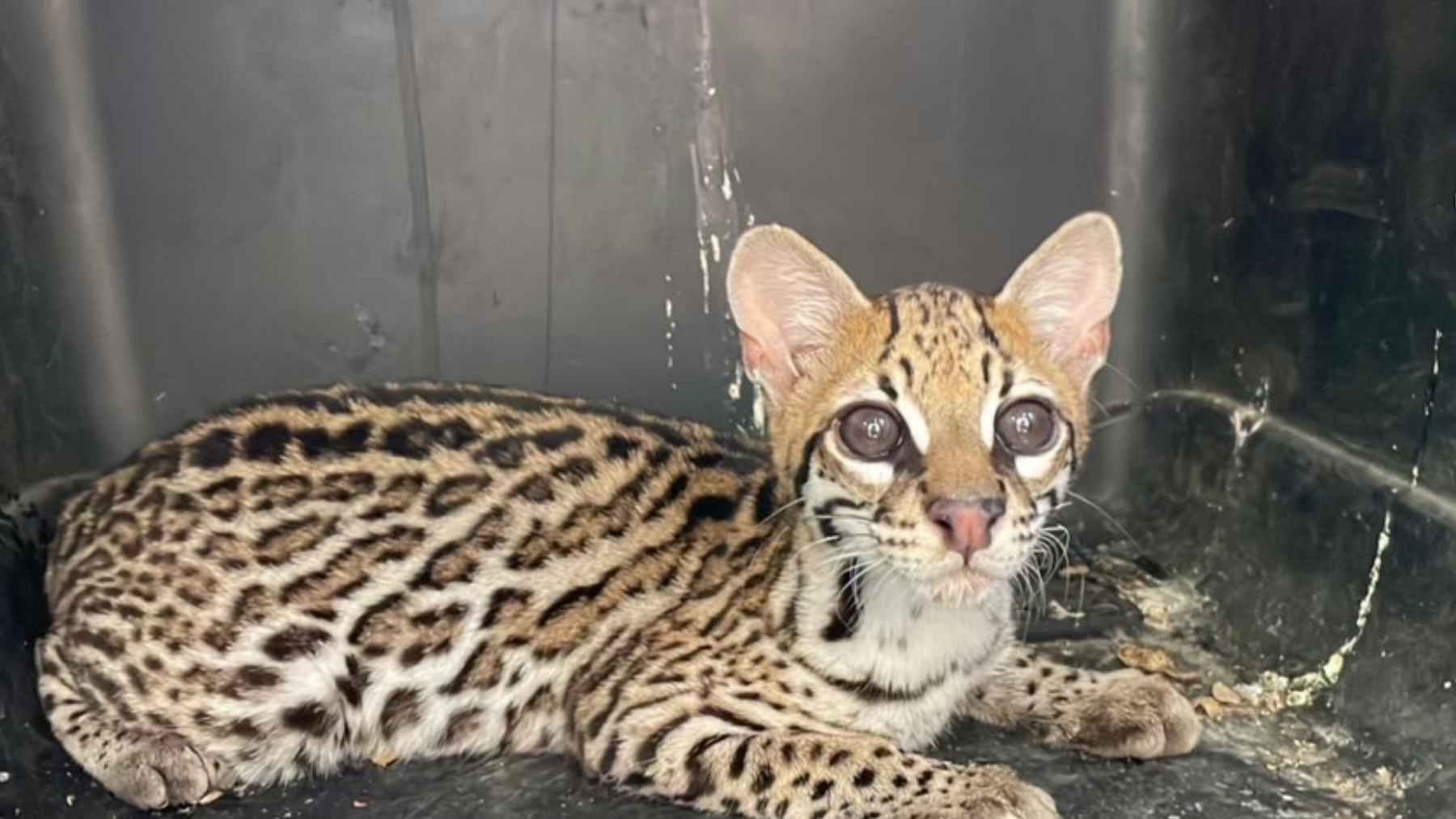
On a long drive from Colombia’s Caribbean coast to the interior, a traveler spotted something unexpected on the roadside. Lying by the pavement near the town of Fusagasugá, just outside Bogotá, was a weakened ocelot, a wild cat with spotted fur and a steady stare.
Instead of driving on, the traveler picked up the animal, gave it food, and decided to seek help once he reached town. That simple choice turned a dangerous encounter on a busy highway into a rare success story for wildlife rescue in central Colombia.
From roadside encounter to wildlife rescue
According to the Corporación Autónoma Regional de Cundinamarca (CAR), the man later reported that he had found the ocelot in very poor condition on a highway while returning from the coast. He kept the animal safe, fed it during the trip, and then voluntarily handed it over to environmental officials in Fusagasugá.
This report came in through the regional wildlife attention line, which receives alerts about animals in trouble.
“The same day the call was received, our team went to the site, collected the ocelot, and provided specialized care,” explained Érika Álvarez, head of the Sumapaz Regional Directorate.
She added that the cat was stable enough to be transported to the wildlife Care and Assessment Center, known as the CAV, for further evaluation and rehabilitation. “This is the first ocelot we have received in our regional office,” she noted, highlighting how unusual this case is for the area.
At the CAV, veterinarians and biologists are now monitoring the animal’s health and behavior. Their goal is to rehabilitate the cat and, if conditions allow, return it to its natural habitat so it can live again as a truly wild predator.
A key wild cat in Colombian forests
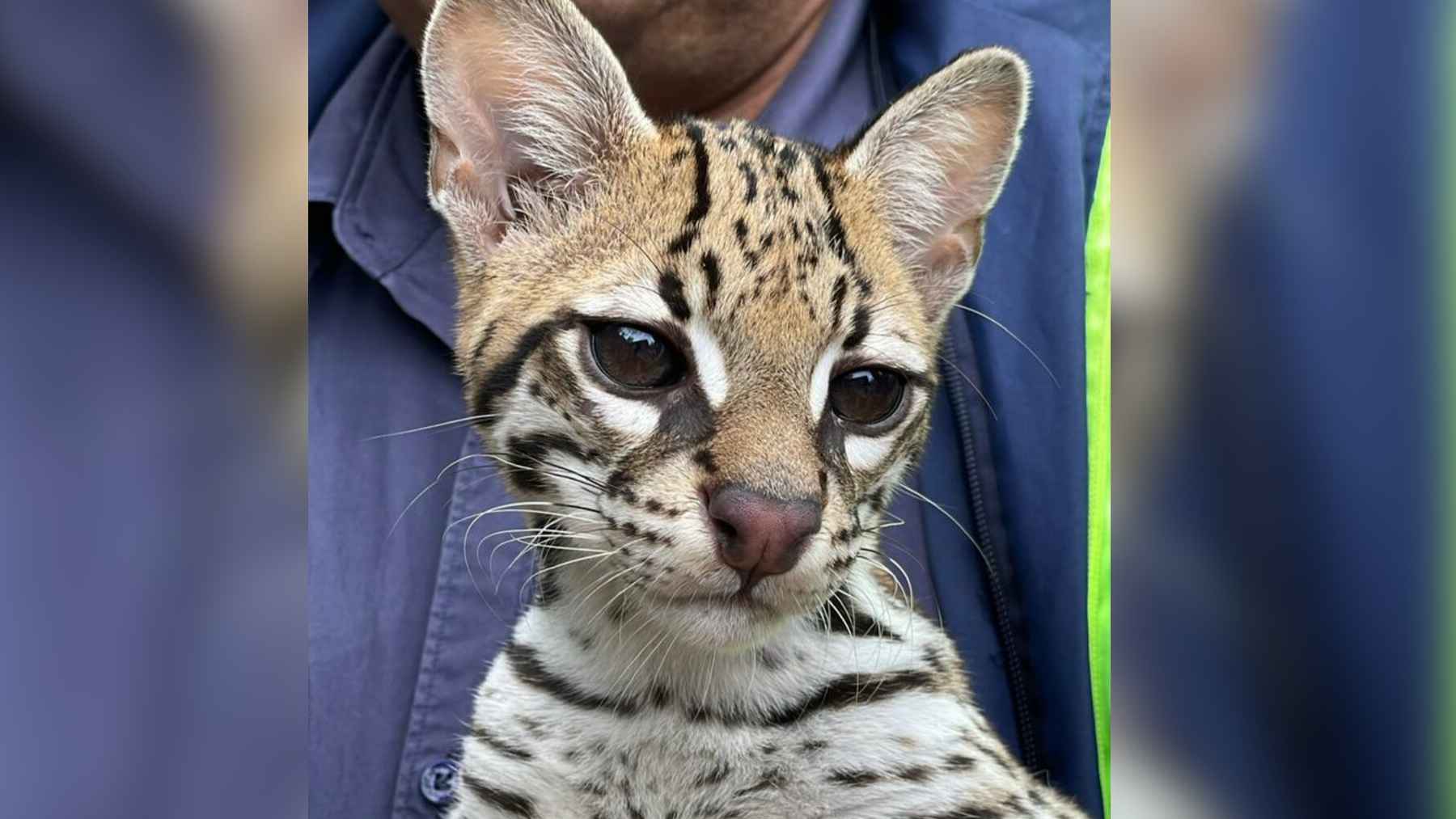
The rescued animal belongs to the species Leopardus pardalis, better known as the ocelot. It is one of seven wild cat species in Colombia and the third largest in the country, after the jaguar and the puma. In the forest, it acts as a regulator by hunting small and medium prey such as rodents, iguanas, and snakes, which helps keep those populations in balance.
Globally, the ocelot is listed as a species of least concern on the IUCN Red List of Threatened Species, thanks to its wide range from the southern United States to northern Argentina.
Yet conservation groups and scientific reviews warn that numbers are falling in many regions, including Colombia, especially where forests are cleared, fragmented, or replaced by farms and towns.
In everyday terms, as roads, housing, and crops spread across former forest, ocelots are pushed into smaller patches of habitat. That means they are more likely to cross highways, raid chicken coops, or come into contact with people who may see them as pets or threats.
Growing pressure from traffic and illegal trade
CAR points out that this species faces three major dangers in the region: captivity, vehicle collisions, and the loss of natural habitat. Recent research on the illegal trade of small wild cats in Colombia found that more than half of the seized animals in law enforcement cases were ocelots, many of them kept alive as pets or for sale.
In 2025, the Sumapaz Regional Directorate received more than eighty wild animals of different species, including sloths and weasels, along with this ocelot that now symbolizes joint action between citizens and authorities. At the end of the day, that number hints at how often wildlife is forced into contact with people on roads, in fields, and even in backyards.
“Report wildlife trafficking and captivity, protecting them is everyone’s responsibility,” stressed Alfred Ballesteros Alarcón, reminding residents to alert authorities instead of keeping or trading wild animals.
One call made the difference for this ocelot, which now has a chance to recover far from the danger of traffic and cages. The official press release has been published by the Regional Autonomous Corporation of Cundinamarca.
The official press release was published on the website of the Regional Autonomous Corporation of Cundinamarca.