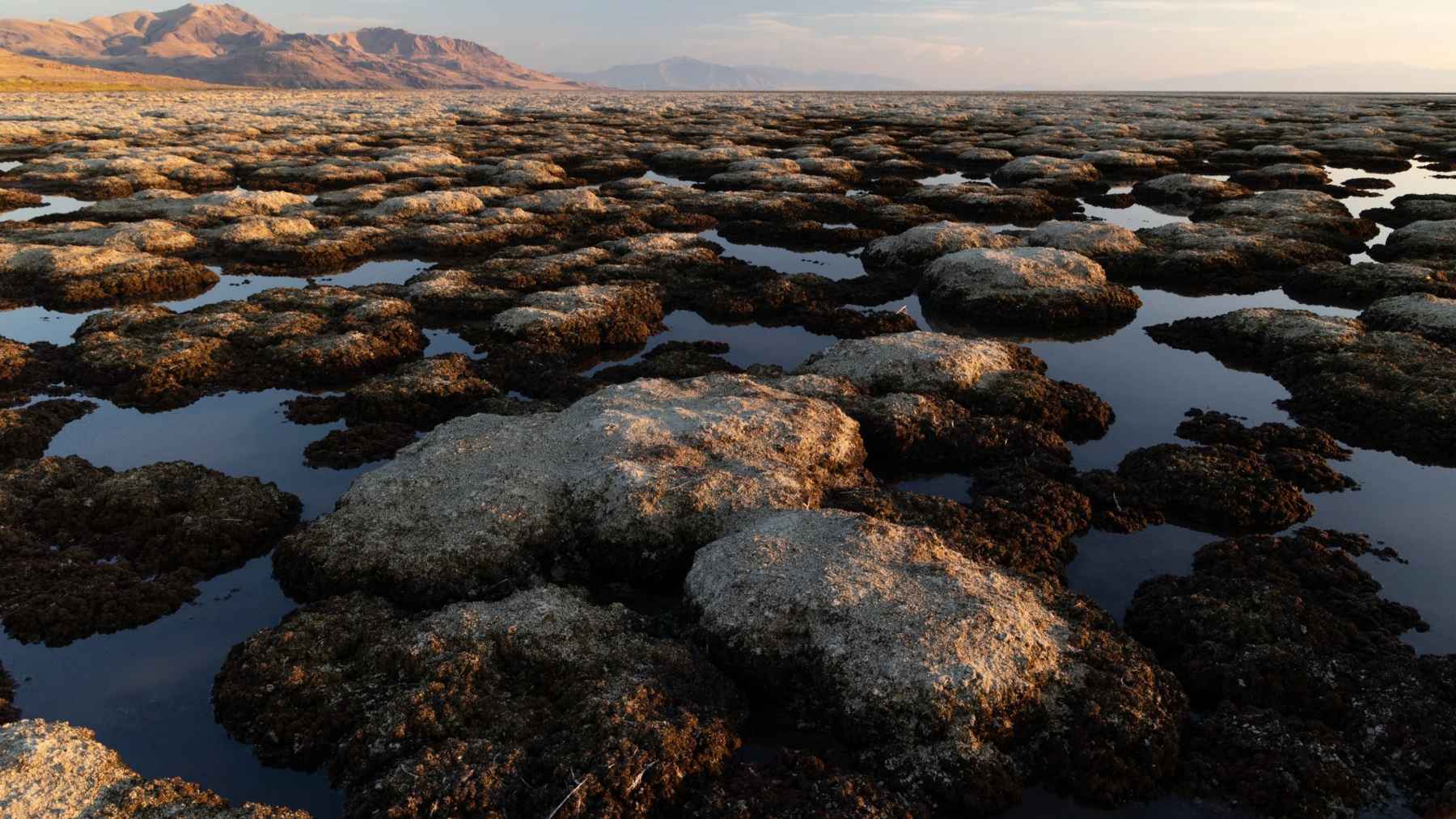
Imagine water so salty that most animals would shrivel in minutes. Now picture a tiny roundworm calmly living on the lakebed in that briny soup, as if nothing were wrong at all.
That unlikely survivor is a newly described species from Utah’s Great Salt Lake, announced by a team led by biologist Julie Jung and her colleagues and detailed in a paper in the Journal of Nematology. The worm, named Diplolaimelloides woaabi, reveals that one of North America’s most extreme lakes hides a richer web of animal life than scientists had realized.
A tiny survivor in a lake that almost nothing can handle
Great Salt Lake’s water can be three to seven times saltier than the ocean, depending on location and water level. That kind of salinity drives away fish and many other animals, even as it draws tourists who want to float like a cork. For years, the only obvious residents in the open water were brine shrimp and swarms of brine flies that feed millions of migratory birds.
The new nematode changes that picture. With its discovery, nematodes become the third known group of multicellular animals living in the lake’s hypersaline waters, alongside brine shrimp and brine flies. For a place long seen as nearly lifeless under the surface, that is a quiet but important upgrade.
From hidden microbial reefs to a new species
The story began in 2022, when researchers started sampling strange rock like structures called microbialites on the lakebed. These are “living rocks” built by layers of microbes that trap and cement sediment. Breaking them apart in the lab, the team found thousands of microscopic worms, then spent three years using detailed imaging and DNA sequencing to show that at least one of them was a species new to science.
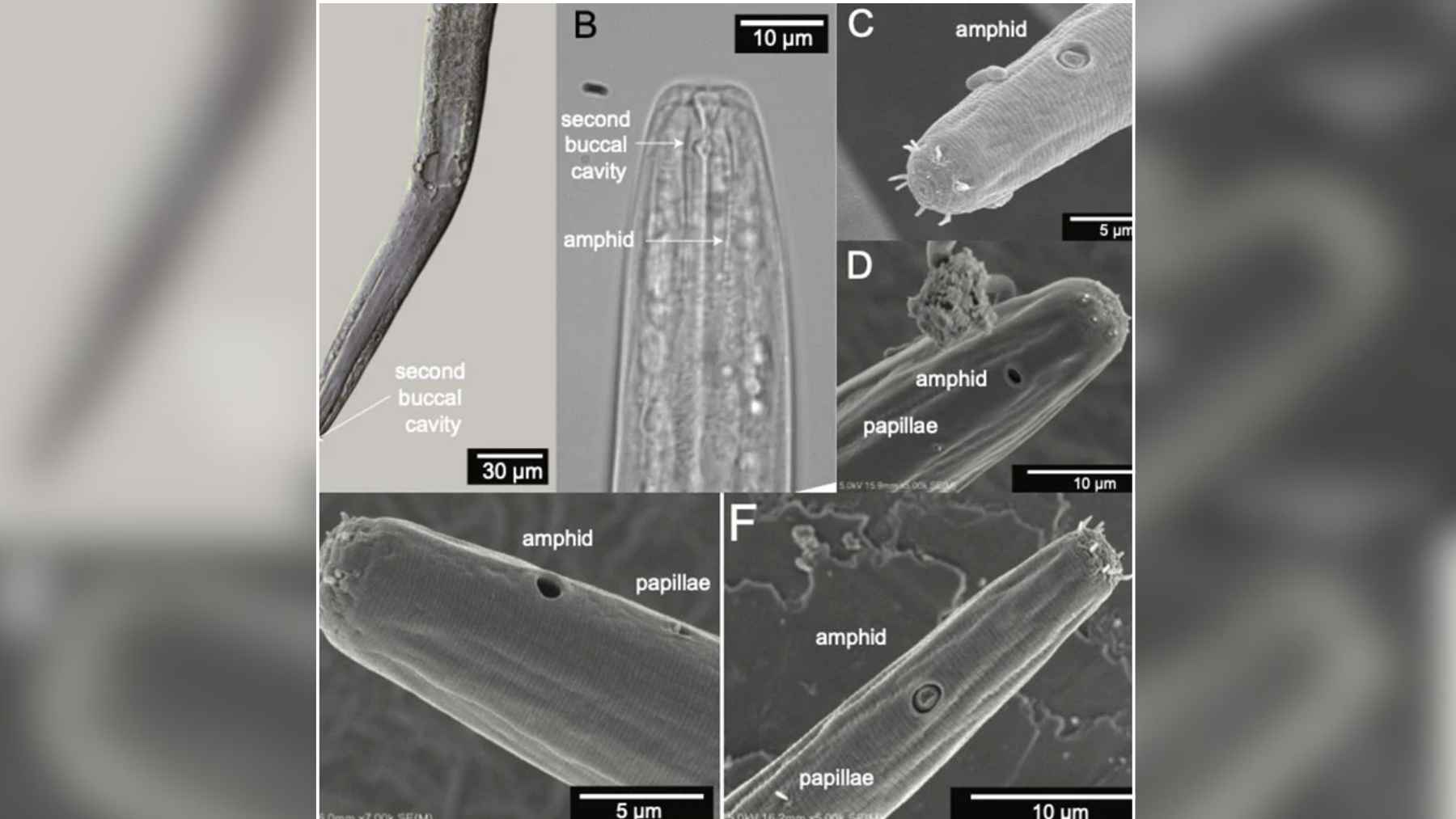
The new species is less than a millimeter and a half long and has tiny eyespots and a specialized mouth that help it feed on bacteria coating the microbialites. The study concludes that Diplolaimelloides woaabi appears to be endemic to Great Salt Lake, meaning it has not been found anywhere else.
A name that honors Indigenous ties to the lake
Naming a new species can feel like putting a pin in the map of life. In this case, the researchers turned to the Northwestern Band of the Shoshone Nation, whose ancestral lands include Great Salt Lake.
Tribal elders suggested “woaabi,” a Shoshone word for “worm,” which became the species name. That choice does more than label a lab slide. It ties a modern scientific discovery to a community that has lived with the lake for generations, and it acknowledges that Great Salt Lake is not just a chemical problem or a satellite image but a place with history and meaning.
Two worm lineages and two big origin stories
Genetic results hint that D. woaabi is not alone. The team found at least two distinct worm populations associated with the microbialites, which suggests there may be a second, still undescribed species hidden in the data.
Where did these worms come from in the first place? One idea is that they descend from marine nematodes that arrived when an inland sea covered the region during the Cretaceous Period, then rode out millions of years of change as the basin rose and the water turned salty. Another idea is more down to earth. Migratory birds might have carried eggs or tiny worms from other salt lakes stuck to their feathers, the way mud sometimes clings to your shoes after a hike.
Why this microscopic worm matters for Great Salt Lake
At the end of the day, this is not just a fun fact about a lake few people swim in. Nematodes are known bioindicators, which means their numbers and locations can reveal subtle changes in water quality, salt levels, or pollution long before problems are obvious to the human eye. With Great Salt Lake shrinking in recent decades and salinity rising in some areas, having a living “sensor” in the mud could prove vital.
The worms live on microbialites that help power the lake’s food web, supporting bacteria that in turn support brine shrimp and the birds that follow them.
If nematodes start to disappear, or shift to new zones, that might be like a smoke alarm going off for the entire ecosystem, from microscopic life all the way up to the flocks of birds that depend on the lake each year.
The main study has been published in the Journal of Nematology.